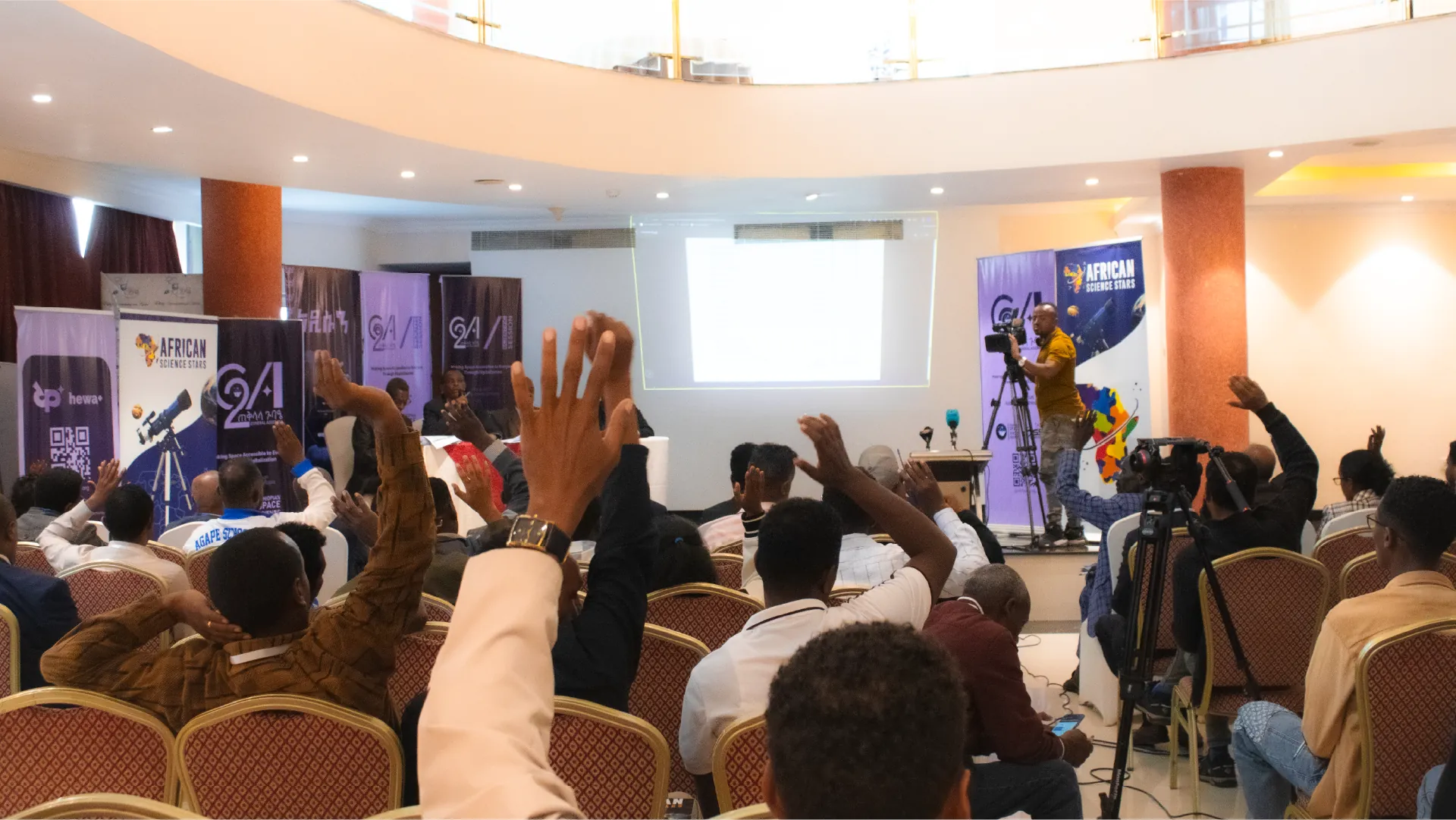


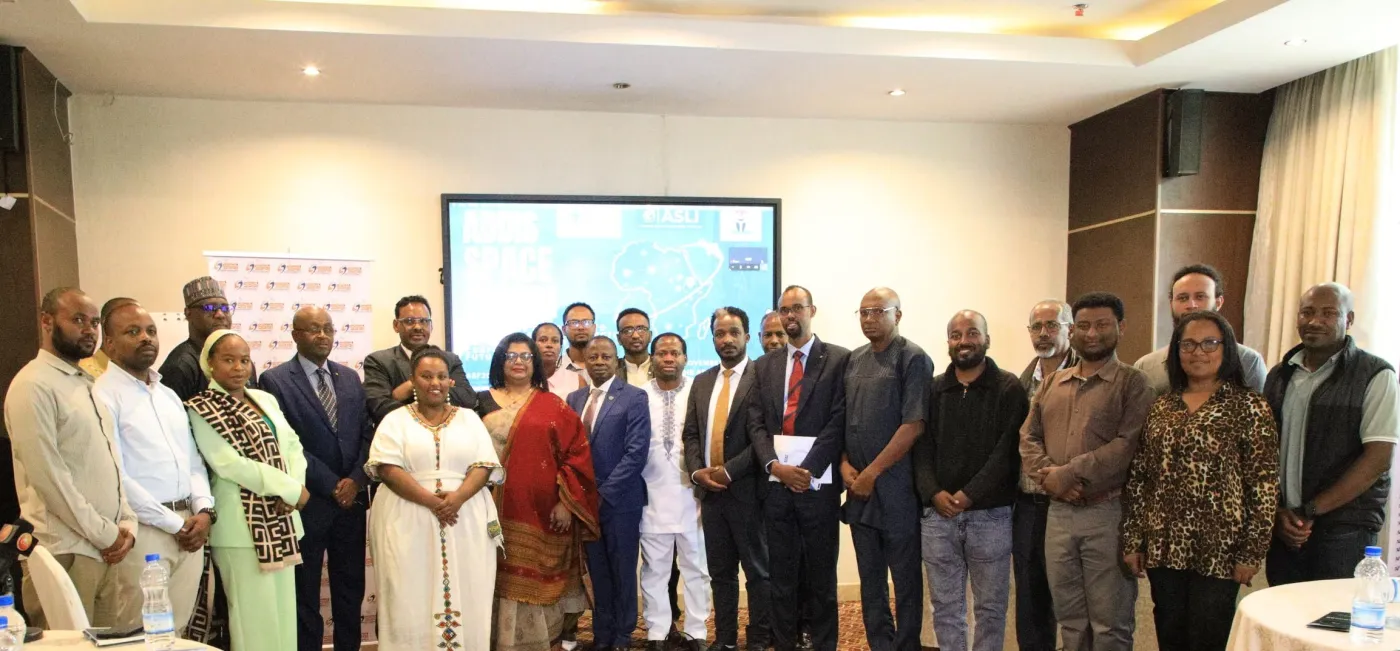
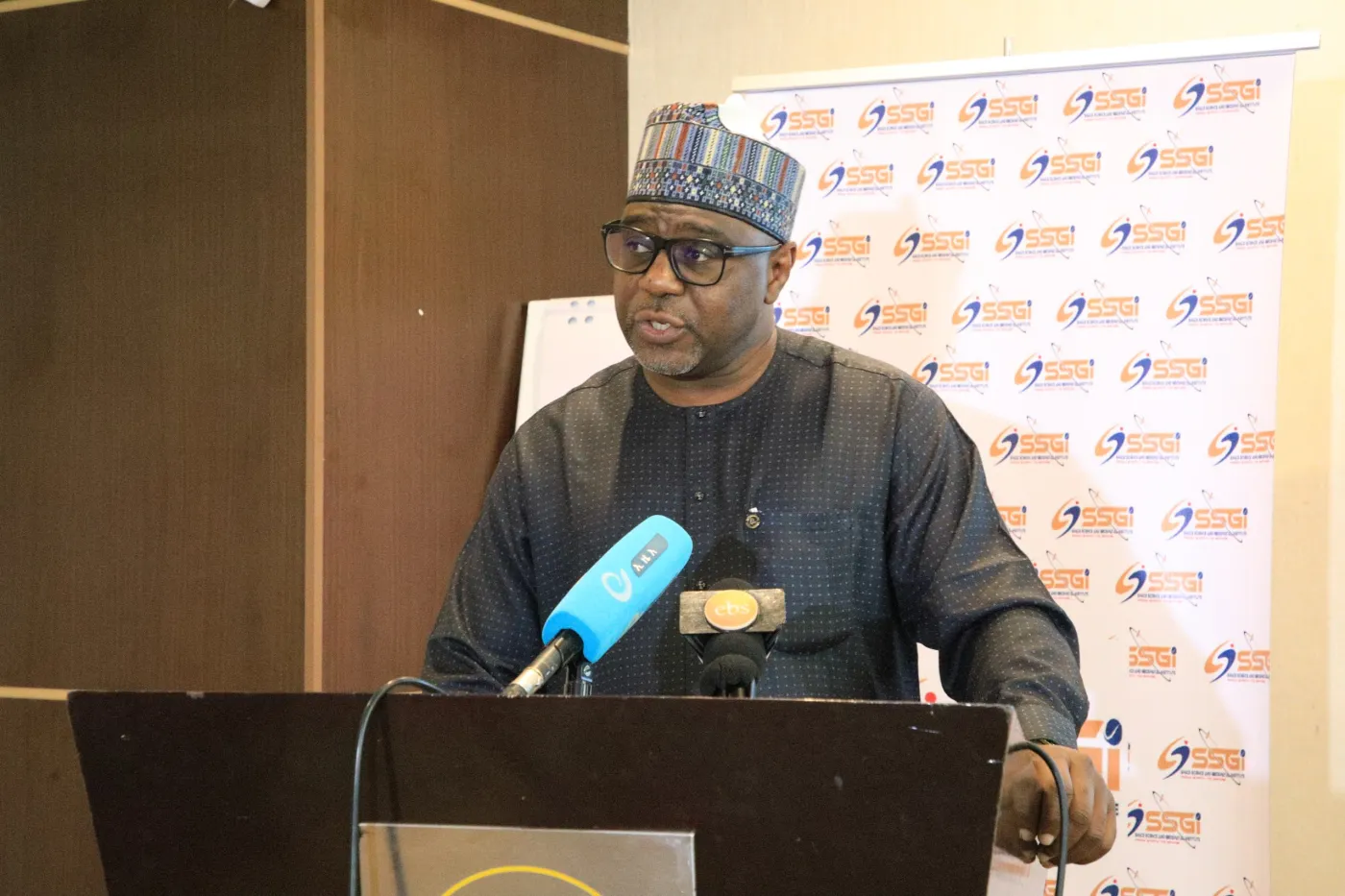
ADDIS ABABA: In a hall filled with ambassadors, space agency executives, policymakers, researchers, and international partners, Ethiopia’s capital once again positioned itself at the centre of Africa’s orbital ambitions. Today marked the official opening of the 2nd Addis Space Forum, a landmark continental gathering designed to answer a defining question for the next decade: How can African nations move beyond being passive consumers of global space services to becoming active contributors, innovators, and decision-makers?
Jointly organised by Ethiopia’s Space Science and Geospatial Institute (SSGI), the African Space Leadership Institute (ASLI), and the Nigerian Mission to Ethiopia, the 2026 edition convenes under the theme: “From Space Diplomacy to Space Leadership: Connecting Policy, Capabilities and Cooperation for Africa's Future in Space.”
Bringing together three interconnected pillars (policy, capabilities, and cooperation), the opening session revealed a continent at a historic inflection point. Africa’s space ecosystem is expanding at an unprecedented pace, yet its leaders face a critical test ahead of a decisive 2027 international calendar. From Ethiopia’s push toward indigenous satellite manufacturing to candid reflections on continental fragmentation and bold calls for a $50 billion space fund, the kickoff speeches laid out a clear roadmap for Africa’s future in space.
Building from the Ground Up: Ethiopia’s Expanding Space Capabilities
Setting the tone as the host institution, Dr. Yeshurun Alemayehu Adde, Deputy Director General of Ethiopia’s Space Science and Geospatial Institute (SSGI), emphasised that true space leadership begins with tangible technical capacity anchored in strong policy frameworks. Highlighting the synergy between SSGI’s engineering mandate and ASLI’s diplomatic expertise, he noted that the week’s engagements, including specialised training on Maximising International Space Cooperation, are designed to equip African leaders and practitioners with the practical skills needed to navigate legal frameworks, cost-sharing models, export controls, geopolitical shifts, and data-sharing agreements.
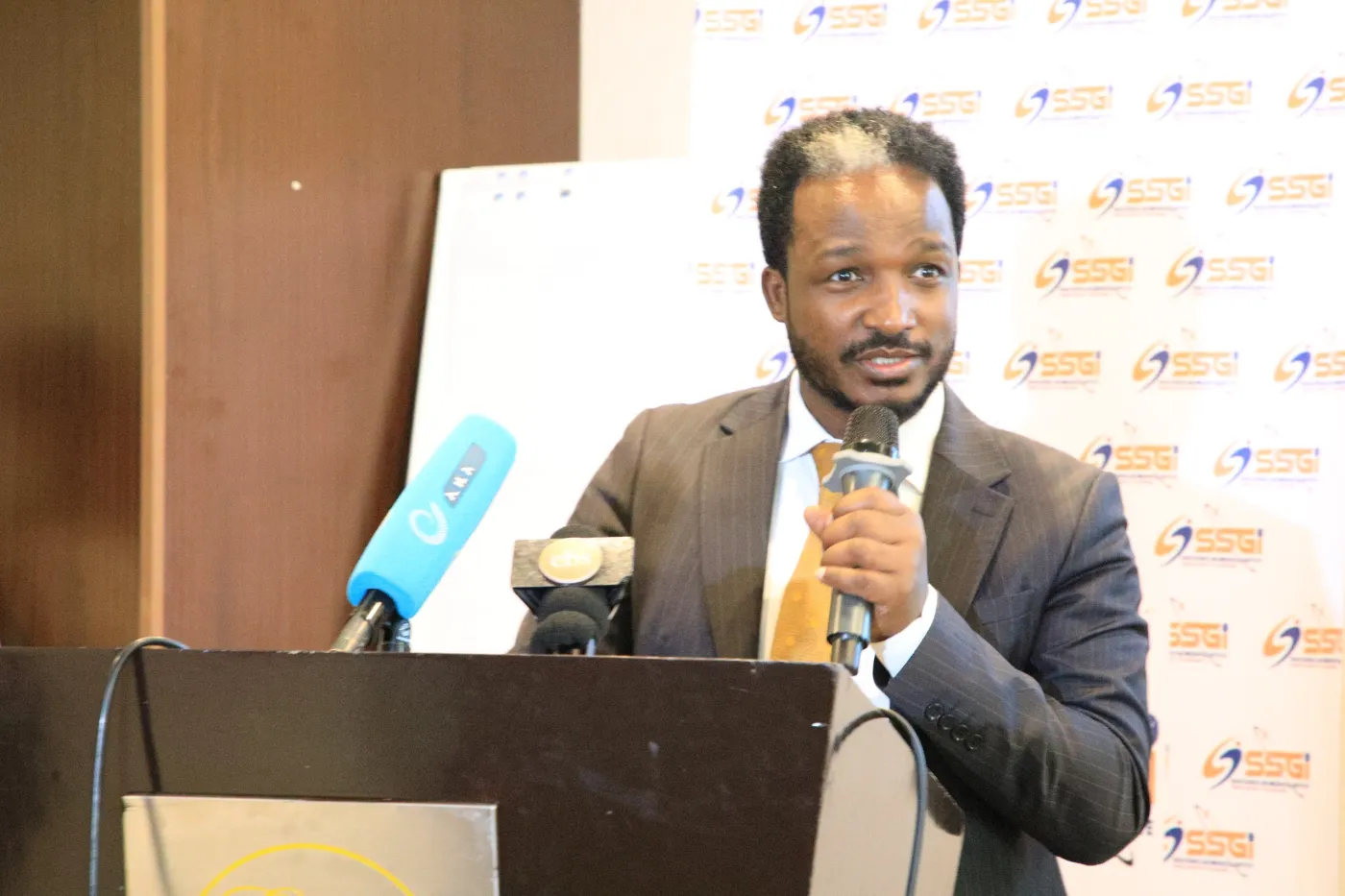
For Ethiopia, space technology is fundamentally tied to national development. SSGI was established to translate satellite data, space weather monitoring, remote sensing, and geospatial analysis into real-world solutions across agriculture, urban planning, smart city development, disaster early warning, natural resource management, climate research, and national security.
More significantly, Dr. Adde unveiled major milestones in Ethiopia’s evolving space hardware and infrastructure roadmap:
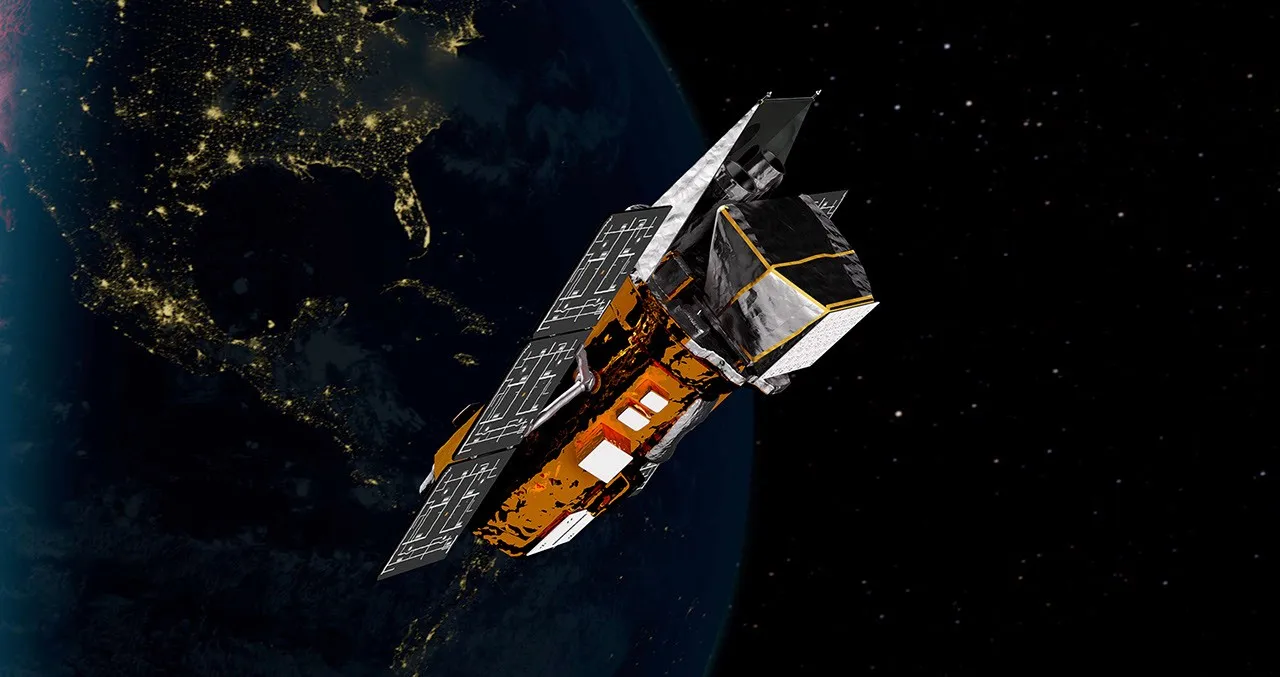
Next-Generation Satellites: Building on the operational experience of Ethiopia’s first two Earth observation satellites, ETRSS-1 and ET-SMART-RSS, SSGI is now advancing preparations for a third Earth observation satellite as well as a communications satellite. Crucially, both missions are being developed in strict alignment with the United Nations Committee on the Peaceful Uses of Outer Space (UN COPUOS) space debris mitigation guidelines.
Space Weather Infrastructure: The institute is actively developing and operationalising ground infrastructure to receive, process, and analyse space weather data, contributing directly to both regional and global monitoring networks.
Indigenous Aerospace Manufacturing: In a landmark move for East Africa’s technological sovereignty, SSGI is establishing a specialised division dedicated to the domestic design, fabrication, assembly, integration, and testing (AIT) of satellites and satellite components, laying the foundational groundwork for local aerospace manufacturing.
Grounded in principles of equity, fairness, and environmental sustainability, and echoing Ethiopia’s engagement with the United Nations Office for Outer Space Affairs (UNOOSA), Dr. Adde championed open data sharing, joint research, and equitable technology transfer. Addressing the diplomatic community in Addis Ababa directly, he urged:
Let us deepen our space diplomacy and bilateral or multilateral initiatives, linking policy frameworks with tangible technical cooperation.
Inviting universities, researchers, and institutional partners to join SSGI in advancing Earth observation, astrophysics, and satellite systems, Dr. Adde concluded with a clear call to action:
"Together, through joint ownership and practical collaboration, we can move from space diplomacy to true African space leadership."
Tracing the Continental Journey: Addis Ababa as Africa’s Space Diplomacy Capital
Providing the institutional and historical backbone for the forum, Etim Offiong, Co-founder of the African Space Leadership Institute (ASLI), traced how the Addis Space Forum evolved from a modest 2024 space briefing into a premier continental platform, situating it within a 16-year journey of African space governance.
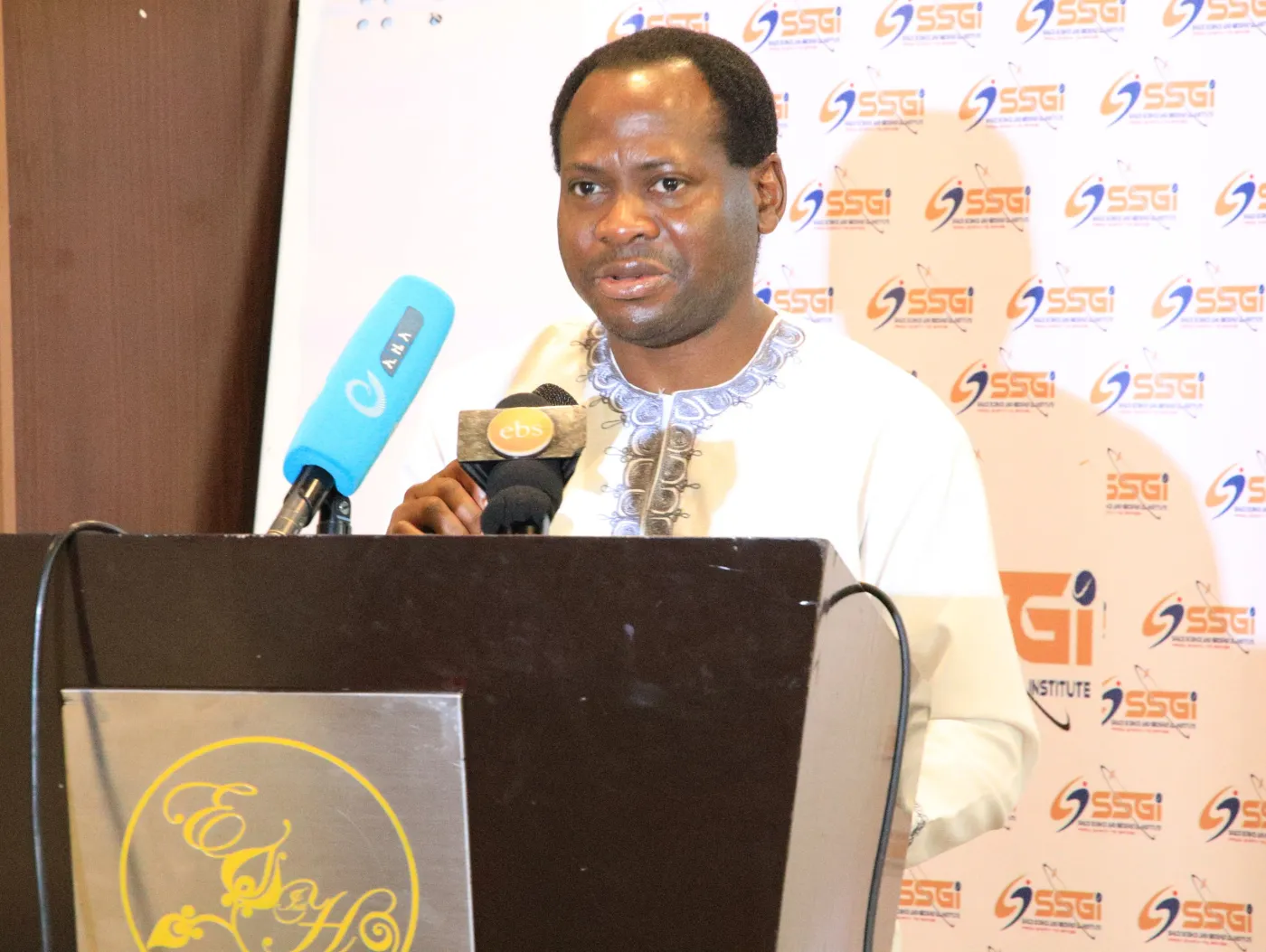
Outer space formally entered the agenda of the African Union Assembly in 2010, driven by three pivotal initiatives: a report from Algeria following the third African Leadership Conference on Space Science and Technology for Sustainable Development (an initiative launched in Abuja in 2005 and continued in Pretoria in 2007); South Africa’s historic bid to host the Square Kilometre Array (SKA), one of the world’s largest radio astronomy facilities; and the inclusion of an Institute of Space Sciences within the Pan-African University framework.
What followed was a wave of ministerial momentum across telecommunications, meteorology, and science and technology committees, each calling for feasibility studies and regional space frameworks. Recognising the need for unity, the AU Executive Council stepped in to harmonise these parallel efforts, establishing the AU Space Working Group in 2012. That working group produced the landmark African Space Policy and Strategy, adopted by African Heads of State in 2016, which paved the way for the creation of the African Space Agency (AfSA) in 2018 and its formal inauguration in Cairo in 2025.

It was during the drafting of that policy and strategy that experts identified critical gaps in governance, law, and strategic coordination, which ultimately led to the founding of ASLI in October 2022. Wearing two distinct hats as both a think tank and a training institute, ASLI focuses on what Offiong described as the "social sciences of space," covering policy, law, strategy, governance, and leadership to deliberately complement the engineering and scientific work of national agencies like SSGI.
Explaining why Addis Ababa is uniquely suited to host this dialogue, Offiong described Ethiopia’s capital as the natural space diplomacy capital of Africa. As the home of the African Union Secretariat, the United Nations Economic Commission for Africa (UNECA), and regional offices of the International Telecommunication Union (ITU) and the World Meteorological Organization (WMO), Addis Ababa sits at the intersection of continental politics and international negotiation.
Reflecting on the realities of global space affairs, Offiong underscored why partnerships and early preparation are non-negotiable:
"You cannot do space alone. It is expensive, it is risky, so usually you need to do this with international partners."
Pointing to upcoming global negotiations on radio spectrum and orbital slots, he added a blunt warning:
"You cannot do space without spectrum. You cannot do space without orbital slots, and decisions at those meetings are binding whether you are there or not."
With outer space increasingly viewed in the global community as a congested, contested, and competitive domain, Offiong stressed that the core purpose of the Addis Space Forum is to bring the diplomatic corps and technical experts into the same room long before binding international rules are finalised.
The Fragmentation Paradox: Going Together, Not Alone
If Africa’s space institutions are maturing, the continent’s biggest hurdle may now be its own rapid, uncoordinated growth. Addressing the forum on behalf of the United Nations Economic Commission for Africa (UNECA), André Nonguierma, Chief of the Geospatial Information Management Section, reframed the central debate. At the inaugural forum last year, he spoke about why space matters for Africa. This year, he posed a far more urgent question:
"Not whether Africa should go to space, but whether Africans can go together."
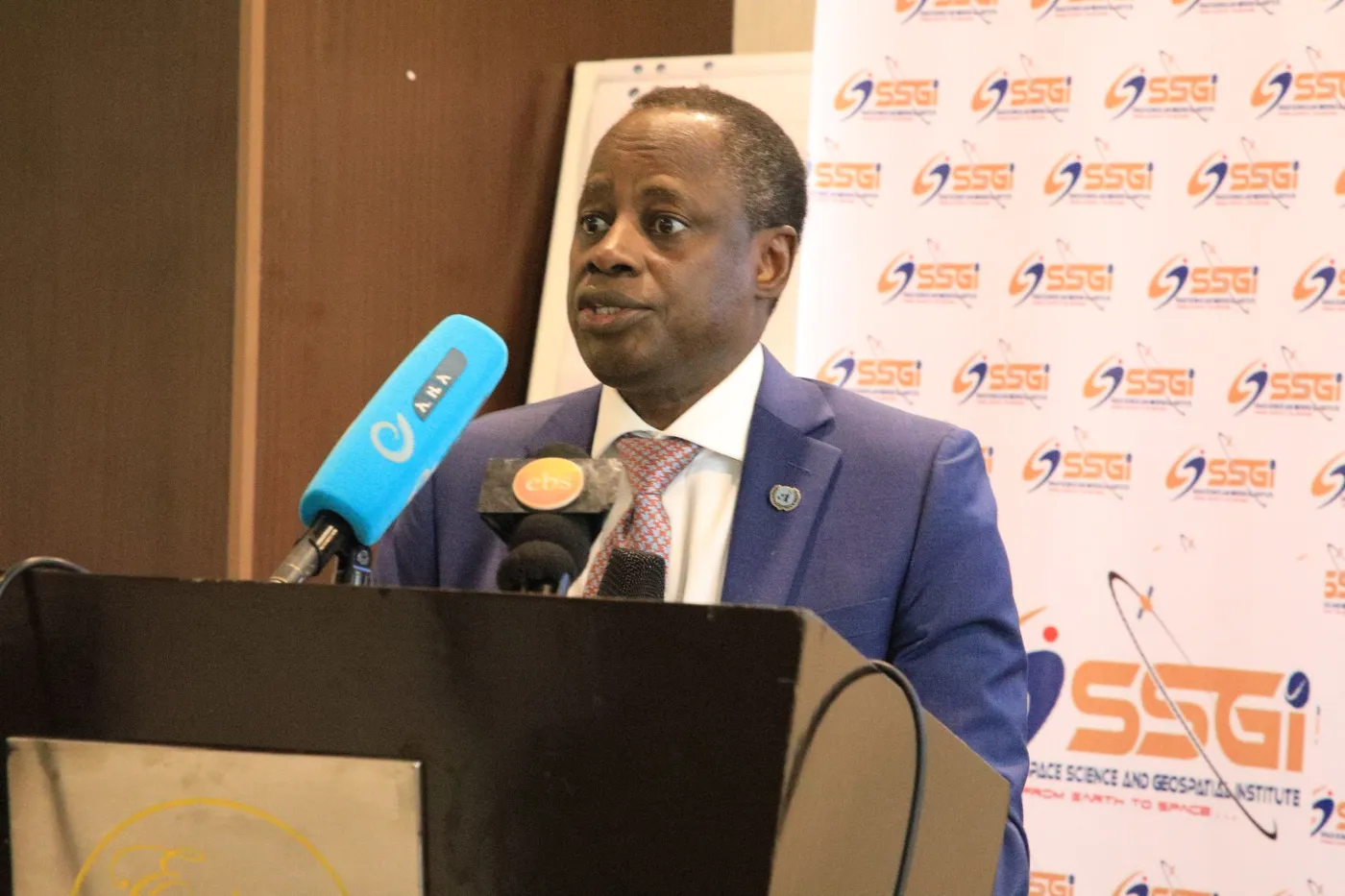
The numbers he presented illustrated a sector that is no longer a distant aspiration, but a thriving, measurable industry. Against a global backdrop where more than 15,000 operational satellites circle the Earth, including over 4,000 deployed in 2026 alone, Africa’s trajectory is striking:
Roughly 70 African satellites have reached orbit to date, with more than 30 currently active.
Over 20 operational national space agencies and more than 350 organisations are now active across the continental space landscape.
Africa’s space economy is currently valued at approximately $25 billion and is projected to surpass $50 billion by 2030.
Yet, Nonguierma warned against mistaking satellite counts for true success:
"The real significance of space is not about satellites above our heads; it is what is happening here on the ground."
It is about a farmer deciding when to plant using satellite-derived weather data, a government anticipating droughts and floods before they devastate communities, or a coastal economy monitoring and combating erosion. Offering a crisp definition for the continent’s ambitions, he described African satellites as an infrastructure for development that happens to be located in space.
However, this rapid momentum has created what he termed a paradox: Africa is growing increasingly strong, yet increasingly fragmented. To illustrate the point, Nonguierma rattled off a dizzying list of major space conferences held across Africa in 2026 alone, spanning Gabon, Zimbabwe, Nigeria, Ethiopia, Kenya, Côte d'Ivoire, Ghana, and now Addis Ababa once again. Drawing knowing laughter from the room, he joked:
"We maybe need a satellite to simply track all these conferences happening in Africa."

Crucially, however, Nonguierma offered a nuanced perspective on why this surge of activity is not inherently negative:
"Fragmentation is not always something bad. It is even good news, because it tells us that the sector is alive. Ideas are multiplying, institutions are emerging, and countries are investing in that."
Pointing to the energy of the next generation, he added:
"I can see that young Africans are keen and eager to build satellites, analyse Earth observation data, and create businesses from space services. This is vitality. This is healthy."
The danger, he cautioned, lies in letting that momentum go uncoordinated:
"Vitality without coordination can become fragmentation by itself."
If every country builds an isolated Earth observation system, every institution launches a separate platform, and every conference produces another standalone declaration, Africa risks ending up with many impressive pieces, but no unified African system. As Nonguierma argued:
"A continent with almost 55 countries does not really need 55 isolated space ambitions. It needs 55 national ambitions connected to one continental vision."
Highlighting the complementary roles of AfSA and the UN Global Geospatial Information Management (UN-GGIM) framework, he urged the continent to shift from isolated projects to operational programmes, and from duplication to complementarity. Ultimately, he concluded:

"Africa's space story will no longer be measured only by how many satellites we have launched. It will also be measured by how many lives we are improving."
One Voice for a Pivotal 2027: Operationalising the African Space Agency
Building directly on the call for continental unity, Ms. Thandikile Chisala Mbvundula, Vice-President of the African Space Council, delivered a comprehensive keynote on behalf of Dr. Tidiane Ouattara, President of the African Space Council, detailing how the African Space Agency (AfSA) is translating continental policy into operational reality and why 2027 represents a make-or-break year for African space diplomacy.
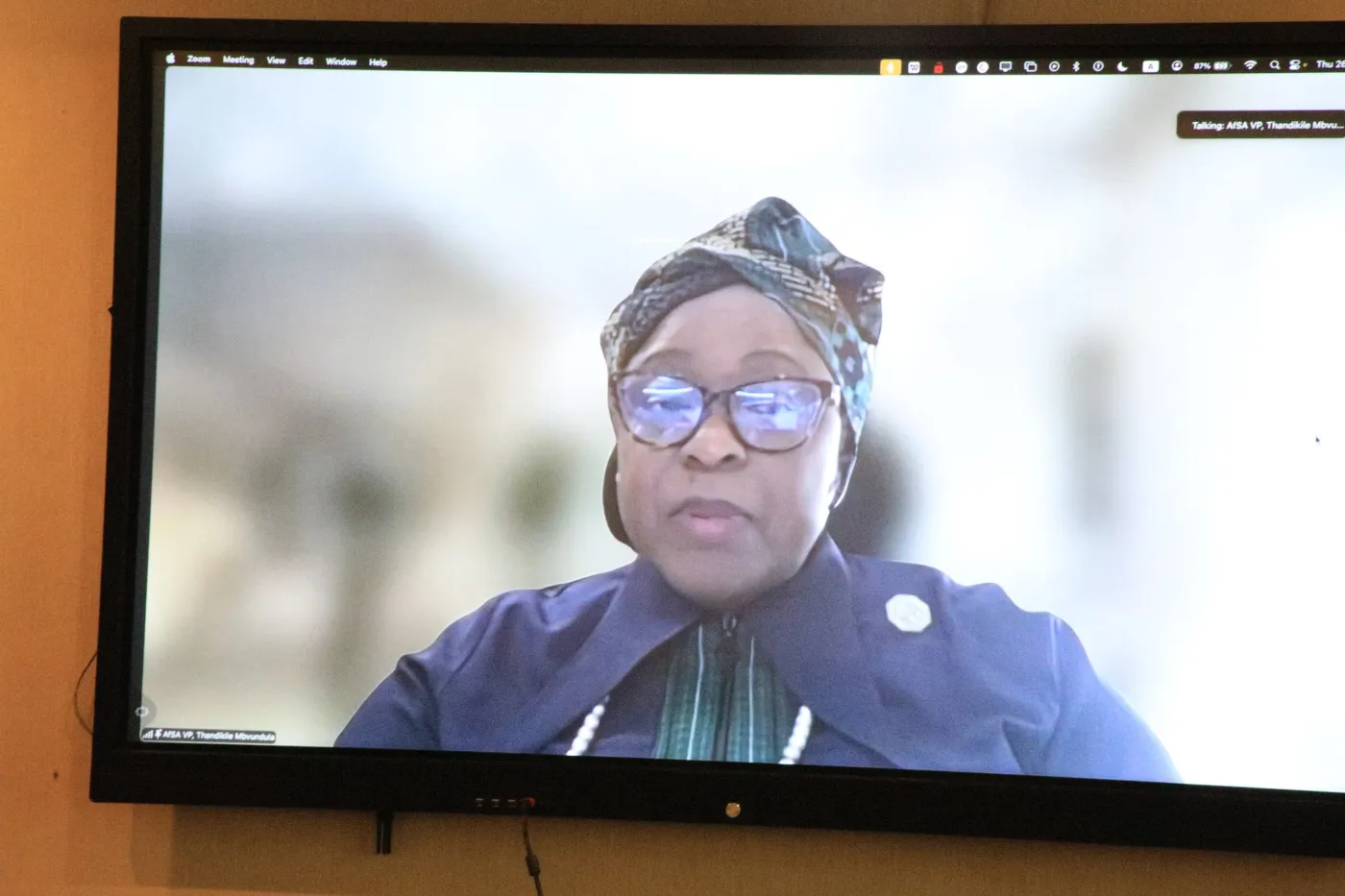
Africa, she warned, cannot afford to sit passively in international forums while decisions that shape its economic and technological future are made without its input. She singled out three critical global milestones in 2027 for which Africa must urgently prepare unified, evidence-based positions:
The World Radiocommunication Conference (WRC-27): Scheduled for October to November 2027 in Shanghai, WRC-27 will make binding decisions on finite radio spectrum and orbital slots, resources that will dictate Africa’s opportunities in satellite connectivity, Earth observation, navigation, and space science for decades. While the African Telecommunications Union (ATU) is leading continental preparations, Ms. Mbvundula emphasised that effective international negotiations begin long before delegates sit at the conference table, requiring early input from space agencies, regulators, and ministries.
COP32 in Addis Ababa (November 2027): Congratulating Ethiopia on its endorsement to host the global climate summit, she stressed that Africa’s climate negotiations must be underpinned by reliable, space-derived scientific evidence. Earth observation enables countries to monitor droughts, floods, rainfall patterns, and forest cover, directly supporting the UN’s Early Warnings for All initiative (targeting universal coverage by the end of 2027) and strengthening Africa’s hand in negotiations over climate adaptation and climate finance.
The 2027 UN COPUOS Session: Marking the 60th anniversary of the Outer Space Treaty, the session will deliberate on long-term sustainability, space debris, space resources, and lunar activities. Noting that over 4,000 satellites were deployed this year alone, she pointed out a stark injustice: even though emerging African nations are not the primary contributors to orbital debris, they will be seriously impacted by it for generations unless global frameworks preserve equitable access for developing space programmes.
Clarifying a common misconception about continental unity, Ms. Mbvundula stated:
"Speaking with one voice does not mean holding one view. It means undertaking the necessary research together, identifying common interests, respecting the sovereignty and national priorities of our member states, and supporting one another in international negotiations."
That is where AfSA, whose council was elected in 2024 and whose headquarters were formally inaugurated in Cairo in April 2025, steps in. Defining AfSA as a strategic partner and enabler, she stressed:
"Its role is to coordinate, not to duplicate."
She also highlighted a crucial distinction between AfSA and counterparts like the European Space Agency (ESA): AfSA’s mandate covers all 55 African Union member states, whether or not they possess a national space agency, ensuring no country is left behind.
Even while still building its institutional foundation and recruiting its initial executive leadership, AfSA is already delivering measurable value across four core pillars:
Shared Access to Space Capabilities: Taking over and closing out the flagship GMES & Africa programme, AfSA demonstrated that no country needs to build every space capability alone. Through a network of over 200 institutions across 45 African countries, the programme has delivered 19 operational Earth observation services to more than 20,000 end users, supporting over 60 national and regional policy initiatives in agriculture, fisheries, flood management, and environmental monitoring.
Human and Institutional Capacity: Building on GMES & Africa’s track record of training over 12,000 scientists and awarding more than 150 Master’s and PhD scholarships, AfSA, under the €100 million Africa-EU Space Partnership Programme (AESP) backed by the EU’s Global Gateway initiative, has established four joint technical task forces covering Earth observation, satellite communications, positioning, navigation and timing (PNT), and astronomy. In collaboration with ESA, 30 African professionals from all five regions of the continent underwent advanced technical training in 2026 alone, with women accounting for 40% of participants.
Strengthening Negotiation Capacity: AfSA is positioning itself to supply African diplomatic missions with technical briefings, consolidated data, and expert analysis so continental positions carry real weight in international deliberations.
Driving Economic Opportunities: Through initiatives like the NewSpace Africa Conference and the inaugural African Space Expo (ASPEX 2026), AfSA is connecting governments, investors, and entrepreneurs. Receiving over 300 applications from young innovators and startups, ASPEX 2026 facilitated business-to-business matchmaking between African and international space firms, integrating African enterprises into global value chains and directly advancing AU Agenda 2063.
Urging member states to look beyond science ministries when deploying space technology, Ms. Mbvundula reminded delegates:
"Space is a cross-cutting feature. It is a cross-cutting enabler of other services."
She left the diplomatic corps with four concrete invitations: integrate space into diplomatic portfolios by appointing dedicated focal points; champion AfSA’s institutional and financial resourcing within AU policy organs; mainstream space data across agriculture, health, water, energy, finance, and disaster risk management; and establish a sustained space diplomacy network in Addis Ababa beyond the forum.
Her closing words captured the entire spirit of the 2026 convening:
"Africa’s place in space is not measured solely by the number of satellites we launch, but by how effectively we work together... To achieve this, we need diplomats who understand space, just as much as we need space professionals who understand diplomacy."
Heritage, $50 Billion Ambitions, and the Road to COP32
Closing the opening keynote sequence, H.E. H. Ali-Gobe, Deputy Head of Mission at the Nigerian Mission to Ethiopia, delivering remarks on behalf of the Nigerian Ambassador to Ethiopia as a co-organiser of the forum, anchored Africa’s space future in its deep historical past while pointing to the massive financial scale required for what comes next. Opening his address, he reminded the audience:
"Africa is not a stranger to the skies, or to the knowledge that can be drawn from observing them."
From celestial navigation and seasonal agricultural calendars to the astronomical precision embedded in the pyramids of Egypt, African societies have observed and drawn knowledge from the heavens for millennia. Yet, while this heritage proves an enduring connection to space, the continent now faces an urgent responsibility: to document, preserve, and translate that legacy into modern scientific and industrial capability.
Echoing his fellow speakers, the Nigerian delegate grounded space ambitions in everyday human needs:
"Space, therefore, is not only about missions to the Moon or to Mars. It is also about practical tools that can help us address challenges on Earth and improve the quality of life of our people."
Marking a full decade since the AU’s adoption of the 2016 African Space Policy and Strategy, he noted that the moment is ripe to review and renew continental frameworks to match fast-evolving technological realities.
Turning to the question of financing, he highlighted Nigeria’s parallel continental engagement: the African Space Economy, Innovation and Communication Conference, running concurrently in Nigeria from 24 to 27 November 2026. At that gathering, former African Development Bank President Dr. Akinwumi Adesina issued a bold call for the establishment of a $50 billion Africa Space Future Fund, starting with an initial capitalisation of $5 billion, to accelerate space infrastructure and development across the continent. That proposal, the delegate noted, underscores the true scale of investment and political will required if Africa is to build competitive, sustainable capabilities.

Emphasising the central role of human capital, he stated:
"No nation or region can realise the full benefit of space without investing in knowledge, research, education, and the training of its people."
He commended ASLI’s capacity-building programmes and urged sustained continental momentum toward establishing the Pan-African University of Space Science to bridge higher education, scientific discovery, and industrial application. Looking ahead to the global landscape, he issued a clear warning:
"Africa must not remain a passive participant in an era of intensifying competition and cooperation in space."
He encouraged the media to sustain public awareness, called on African youth to pursue careers in the expanding space sector, and urged organisers to immediately begin preparations for the 3rd Addis Space Forum in 2027. With Ethiopia set to host COP32 in Addis Ababa next year, aligning the next forum with the global climate summit offers a timely, strategic opportunity to showcase how space applications can power climate monitoring, early warning systems, and resilience across Africa.
From Dialogue to Coordinated Action
As the opening plenary concluded, a clear consensus emerged across every institution represented on the podium. Whether viewed through Ethiopia’s push toward domestic satellite manufacturing, ASLI’s legal and diplomatic architecture, UNECA’s warning to channel vitality into unity, AfSA’s continental coordination, or Nigeria’s call for multi-billion-dollar financing, Africa’s space sector has outgrown its infancy.
Hosted by Ethiopia’s Space Science and Geospatial Institute (SSGI) at the Elilly International Hotel in Addis Ababa, the 2nd Addis Space Forum continues through tomorrow, Friday, 27 November 2026. Over the remaining sessions, delegates will dive into technical space briefings, thematic and bilateral roundtables, and a tour of Ethiopia’s Entoto Observatory and Research Centre. The real test, however, will unfold over the next twelve months, as African nations prepare to walk into Shanghai, Addis Ababa, and Vienna in 2027 not as 55 scattered voices, but as a unified continental force ready to shape the future of outer space.