
The term “black hole” often conjures a picture of a hole-like structure that eats everything around it. In reality, these peculiar objects are made of ordinary matter, just packed together extremely densely. In this article, we will take a deep dive into these mysterious creatures.
What is a black hole?
Everything with mass attracts everything else. The Sun attracts our planet, and Earth returns the favor. Ever since Isaac Newton formally described gravity in 1687, we understood it as an attractive force pulling on matter. However, the story is far deeper. Thanks to Albert Einstein’s revolutionary theory of General Relativity, we now understand gravity not as a conventional force, but as the curvature of spacetime caused by mass and energy.
This geometric description implies that even light, composed of massless photons, bends as it travels through curved spacetime along trajectories called geodesics.
Einstein’s theory of general relativity (the theory describing gravity as the curvature of spacetime) came with a set of equations, known as the field equations. The field equations were complex, and Einstein initially doubted they could be solved exactly for realistic systems. However, in 1916, the German physicist and astronomer Karl Schwarzschild found the first exact solution. He demonstrated that compressing a mass within a critical radius creates a region of spacetime from which nothing, not even light, can escape.
The basic reasoning goes as follows. Suppose there is a massive star; Light passing by it follows a curved path, but maintains enough outward velocity to escape into deep space. Now compress this same star into a smaller volume and the gravitational field near its surface intensifies, steepening the curvature of surrounding spacetime. Around an ordinary star, the trajectories available to light (its "light cone") tilt slightly inward toward the center of mass, but outward paths are plenty.
Now squeeze the star smaller and smaller. The bending grows stronger, and the entire possible paths tilt further inward. At the Schwarzschild radius, a threshold is reached. A beam of light aimed straight outward from exactly this boundary just hovers in place, neither escaping nor falling in. Cross that line, and the tilt is complete. Every possible path, whether aimed outward, sideways, or anywhere in between, ends up closer to the center. Nothing is holding the light back, and no force is dragging it in. The paths leading out simply no longer exist.
Just as you cannot turn around and travel into yesterday, it is geometrically impossible inside the horizon to take a step away from the center. The singularity becomes a point in your unavoidable future.
The event horizon
Suppose you came across a black hole with the mass of Earth on your favorite evening walk. How far away should you stay? A black hole with the mass of the Earth wouldn’t pull on you any harder from a safe distance than the Earth already does. The difference lies in how close you can get to its concentrated mass before getting to a point of no return.
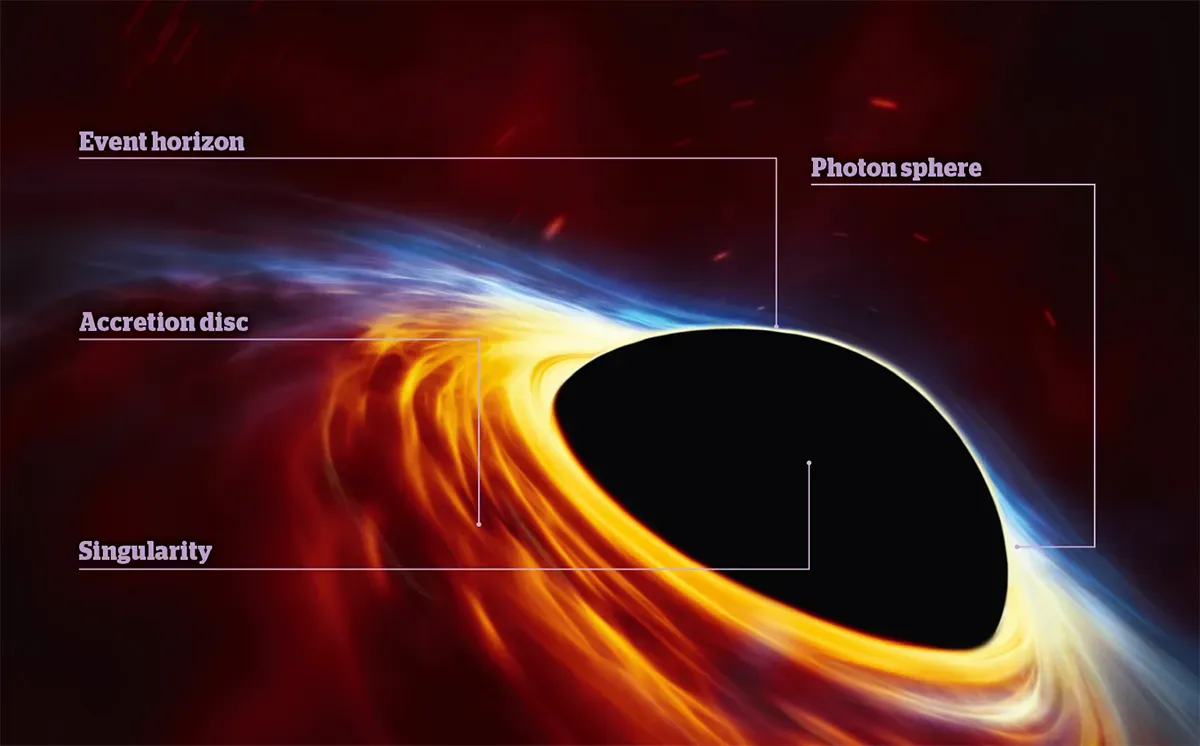
The boundary marking the point of no return is the event horizon. If light, or anything else, crosses it, there is no going back. It is not a physical surface, but a mathematically defined hypersurface enclosing the region of trapped spacetime. Its scale is determined directly by the black hole’s mass (for a static, non-rotating Schwarzschild black hole).

The event horizon sits exactly at the Schwarzschild radius, the same size a mass must be squeezed to in order to become a black hole. Once an object shrinks below this size, its matter collapses into a central point called a singularity, while the boundary stays behind in empty space. For Earth, this radius is about 9 millimeters. Squeeze the Earth into a ball that small and it becomes a black hole, with its mass continuing to collapse toward the center.
How do we know they exist?
Black holes sound like a concept out of a science fiction book. These peculiar objects were first predicted by John Michell in 1783. The English man calculated that a sufficiently massive and compact star would have an escape velocity exceeding the speed of light. While his math coincidentally produced the exact same formula for the radius of a black hole as modern physics, his underlying scientific framework was completely different from our modern understanding. Michell relied on Isaac Newton’s "corpuscular theory," which viewed light as tiny, massive particles . He believed gravity slowed these light particles down until they fell back to the star. Today, we know light has no mass and always travels at a constant speed.

When Schwarzschild solved Einstein’s field equations, Einstein himself treated the horizon as a mathematical curiosity without physical reality, believing nature would prevent such extreme conditions. Before 1965, many physicists, just like Einstien, believed black holes were just a mathematical flaw that wouldn't actually happen in our universe.
In 1965, mathematician Roger Penrose transformed the field by introducing the concept of trapped surfaces. Using topological methods, Penrose proved that once gravitational collapse passes a certain threshold, the formation of an event horizon and a singularity is an unavoidable consequence of general relativity under realistic conditions—work that earned him a share of the 2020 Nobel Prize in Physics.
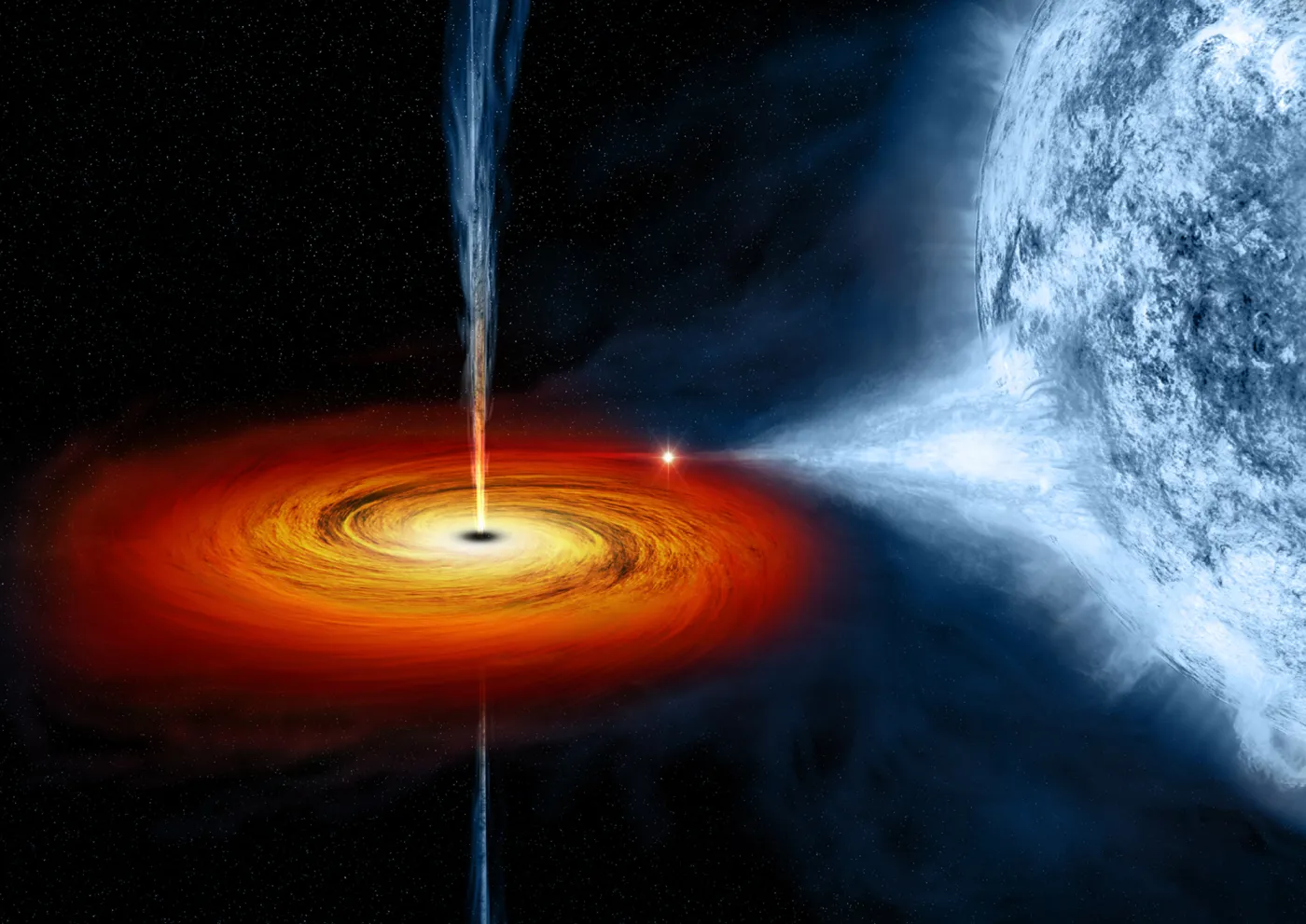
Few years later, in 1971, the first widely recognized stellar-mass black hole candidate, Cygnus X-1, was found. Because black holes do not emit light, astronomers could not see it directly. Instead, they detected its presence through its intense gravitational effects on its surroundings. Space-based detectors picked up powerful, fluctuating X-ray emissions coming from the constellation Cygnus. By tracking the source, scientists found a massive, visible blue supergiant star (HDE 226868) that was rapidly orbiting a completely invisible space every 5.6 days.
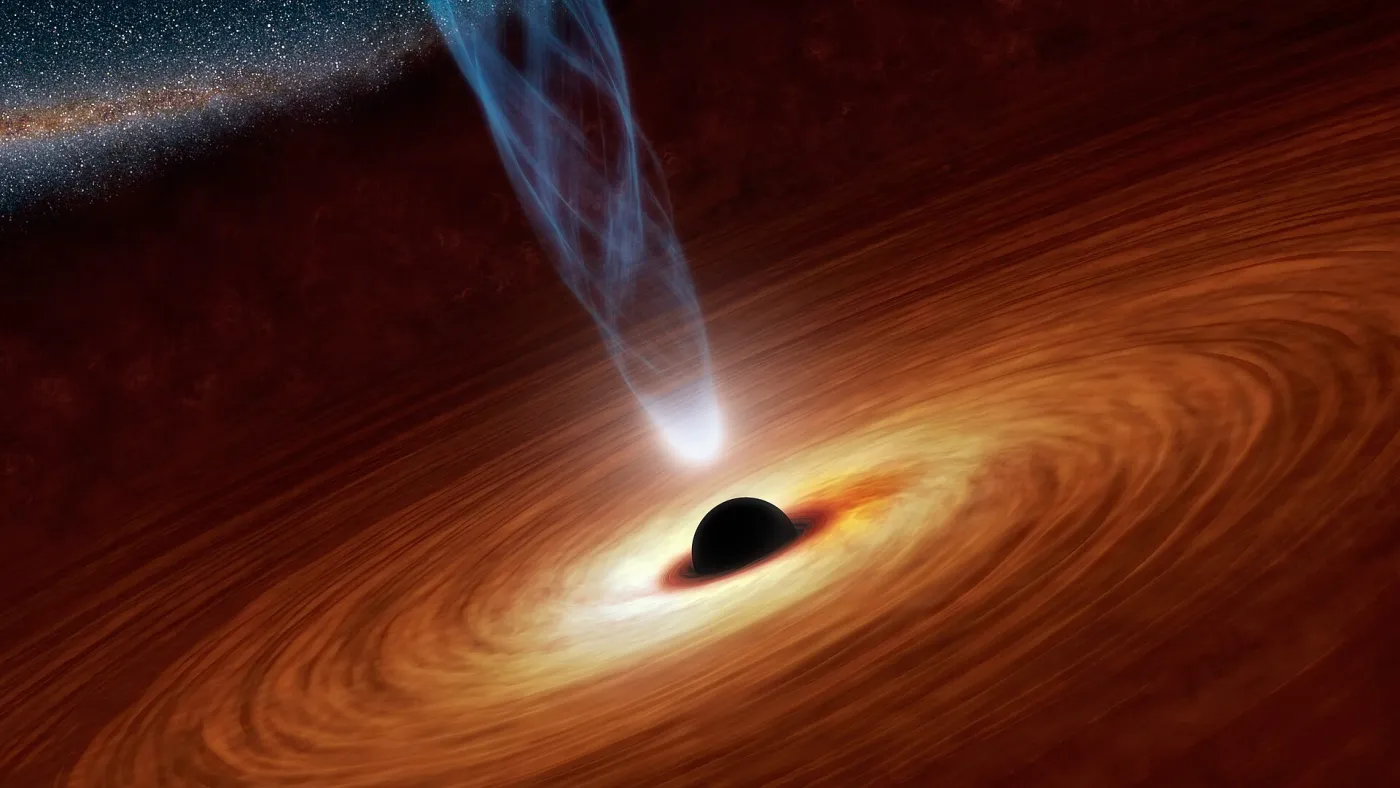
By analyzing the "wobble" and orbital speed of the visible star, astronomers calculated that the invisible object had to be roughly 15 to 21 times the mass of our Sun. Because it was far too massive to be a dying white dwarf or a neutron star, it could only be a black hole. The blinding X-rays that tipped off scientists were actually caused by the black hole as it pulled gas from its companion star into a swirling "accretion disk" that heated up to millions of degrees as it spiraled into the event horizon.
While Cygnus X-1 was a major breakthrough, the broader scientific community remained cautious. Because it was so far away and could only be observed through indirect X-rays, critics argued it might just be an unusual cluster of dense white dwarfs or neutron stars, with Stephen Hawking famously betting on it not being a black hole.
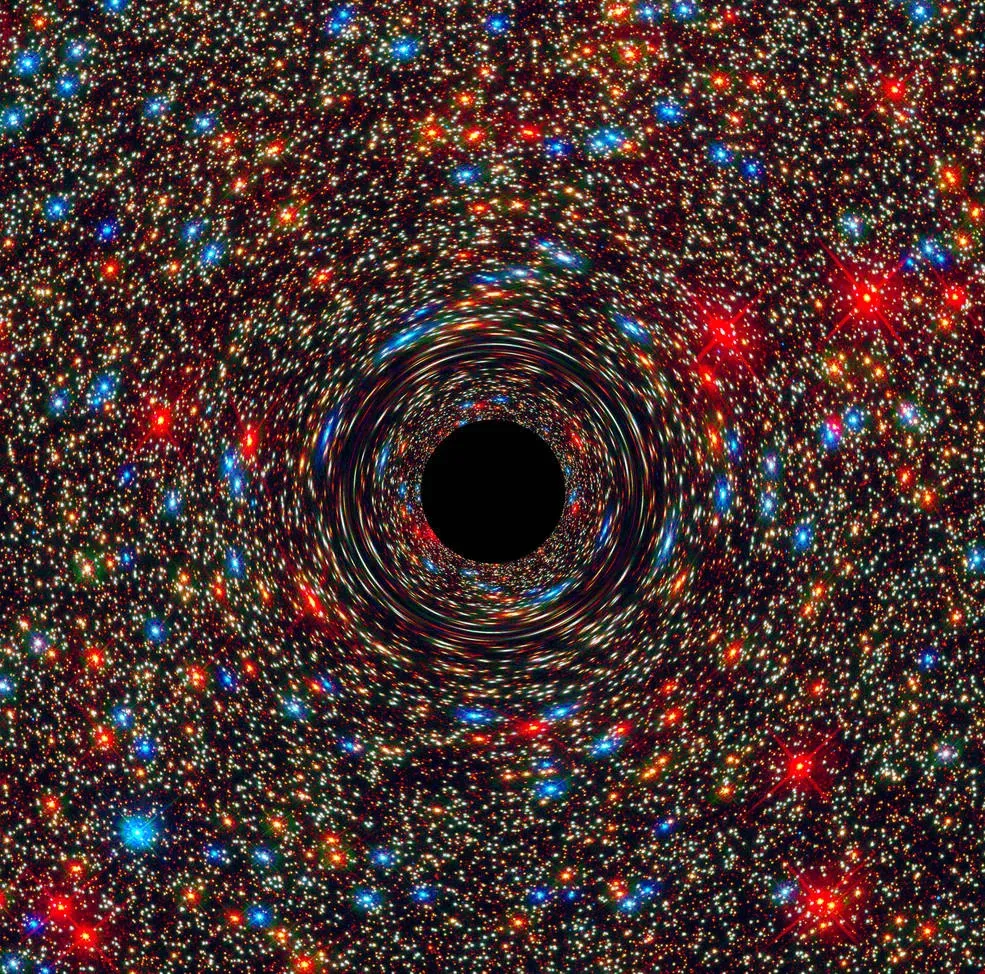
What really convinced the scientific community was the discovery of the supermassive black hole at the center of our galaxy, Sagittarius A*. Two teams of astronomers, led by Andrea Ghez and Reinhard Genzel, spent over two decades tracking a group of fast-moving stars (known as S-stars) using massive infrared telescopes. They watched one particular star, S2, perform a complete orbit around an invisible point. At its closest approach, S2 was moving at roughly 3% the speed of light. To pull a giant star at that blistering speed, Ghez and Genzel calculated that 4 million times the mass of our Sun had to be crammed into a space no larger than our solar system. Because it is physically impossible to pack that much mass into such a tight space without it collapsing into a black hole, this discovery left critics with no alternative explanations. Ghez and Genzel shared the 2020 Nobel Prize in Physics for this work. A visual constructed from UCLA galactic center group tracking few stars as they orbit Sagittarius A* is linked below.
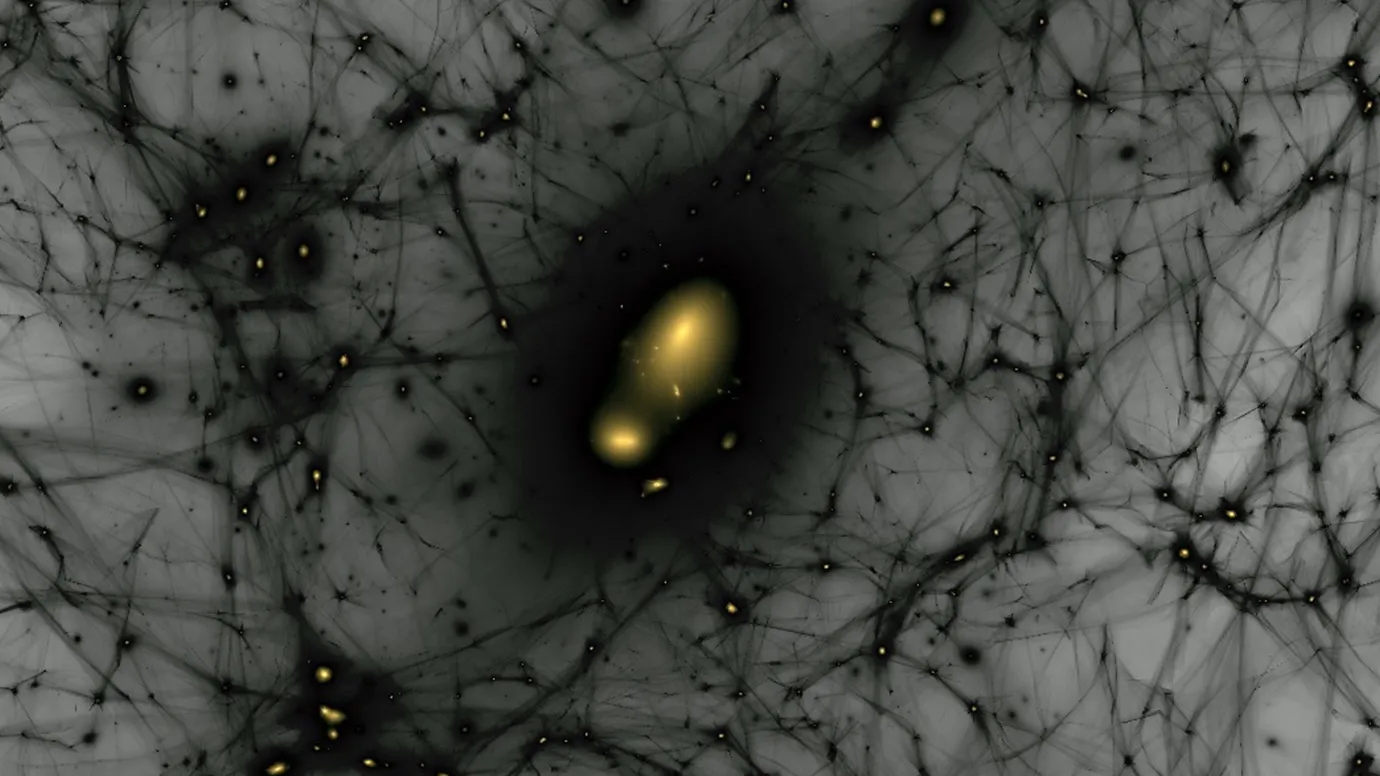
Since this discovery, scientists have then gone on to capture actual images of black holes with the first and most iconic one being the black hole at the center of the galaxy M87.
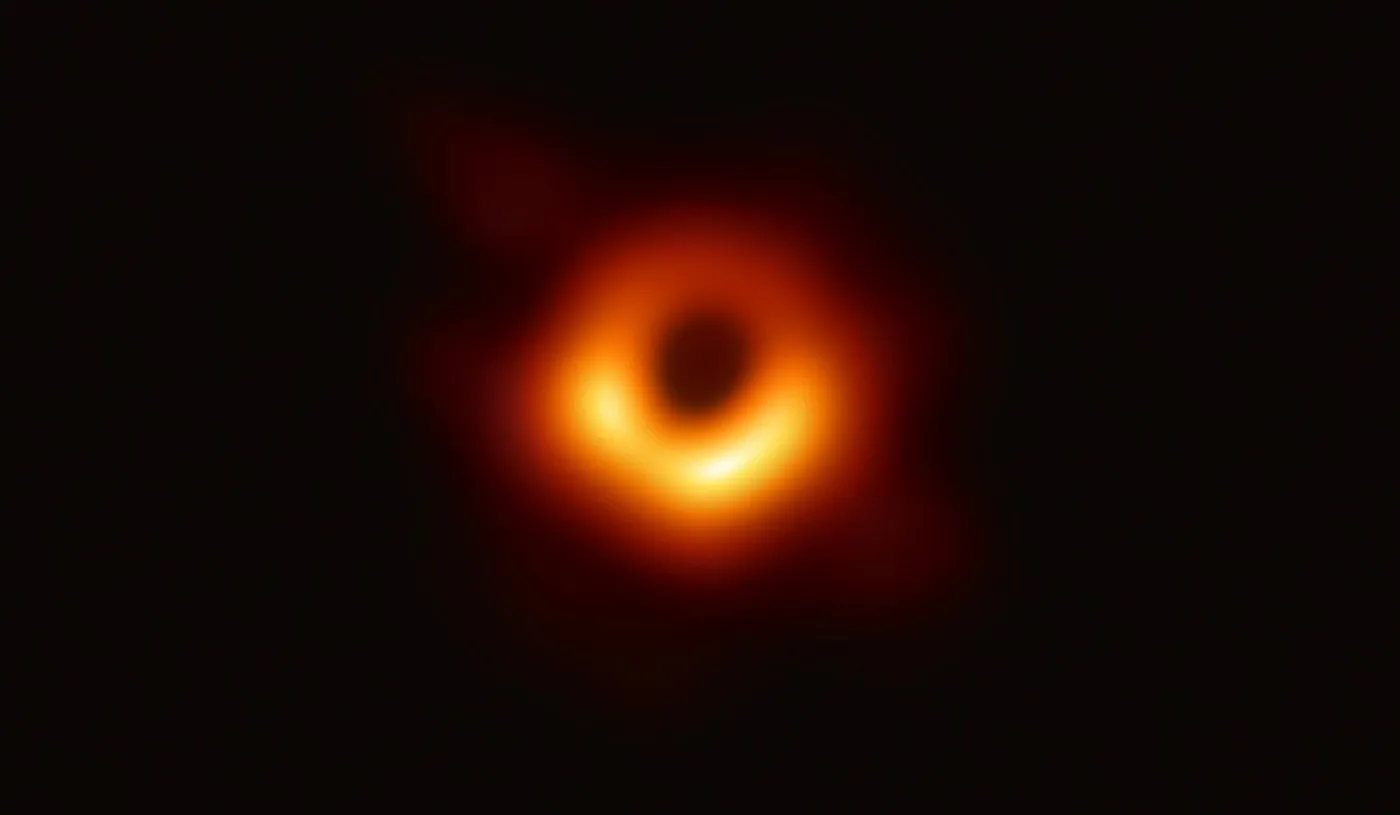
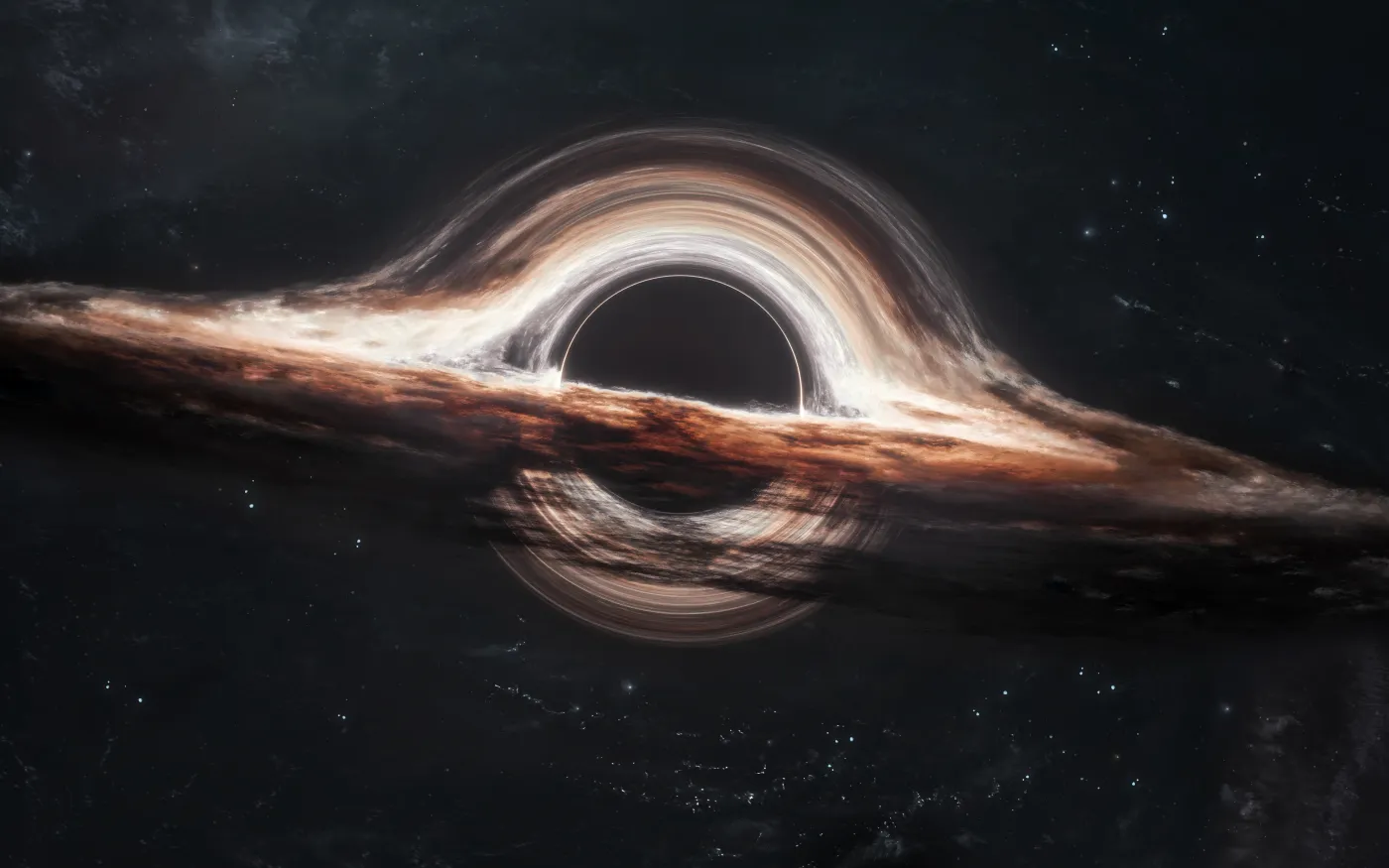
When scientists imaged the black hole, they are not actually imaging the black hole itself because a black hole's gravity is so strong that no light can escape it. Instead, they are imaging the shadow of the black hole and the glowing ring of superheated gas and plasma (accretion disk) swirling around it. The central dark patch is not the event horizon (the point of no return) itself; it is about 2.5 times larger than the event horizon. It represents the shadow cast by the black hole as it traps light and bends the paths of surrounding rays. The glowing ring of light is made of hot, glowing gas (plasma) orbiting the black hole at near-light speeds.
Why do we study them?
Fundamental astrophysics often generates practical technological solutions. Research into extreme astrophysical signals led Australian radio astronomer John O'Sullivan and his team to design fast Fourier transform (FFT) hardware and mathematical filtering techniques to detect radio bursts from evaporating primordial black holes. The multi-path signal-cleansing algorithms they developed became one of the key components for modern indoor Wi-Fi networks.
Beyond technological spin-offs, black holes serve as nature's most extreme testing laboratories. Because human laboratories cannot generate the extreme spacetime curvature found near an event horizon, black holes provide an envrionment to test general relativity, frame-dragging (the Lense-Thirring effect), and high-energy plasma physics.

Furthermore, supermassive black holes play an essential role in cosmic evolution through active galactic nucleus (AGN) feedback. In active phases, matter falling toward a central supermassive black hole powers relativistic jets and radiation that heat and blow away interstellar gas, self-regulating star formation across the host galaxy's central bulge.
The Biggest Mysteries Still Unsolved
The most profound unsolved problem in black hole physics is the Information Paradox. According to Einstein's General Relativity, anything that falls into a black hole is trapped forever, and according to quantum mechanics, the fundamental information about what that object was can never be completely destroyed. However, Stephen Hawking discovered that black holes slowly leak radiation and eventually evaporate out of existence entirely. If the black hole disappears, the information trapped inside vanishes with it, creating a catastrophic contradiction where either quantum mechanics or general relativity must be fundamentally wrong.
The second mystery lies at the very center of the black hole: the Singularity. Current mathematical models state that when a giant star collapses, its entire mass crushes down into a point of zero volume and infinite density. Because "infinity" cannot exist in physical reality, this tells physicists that our current math is incomplete. Resolving what actually happens at the center requires a unified "Theory of Everything" that successfully merges gravity with quantum physics, something that physicists have been chasing for decades with no concrete answers so far.