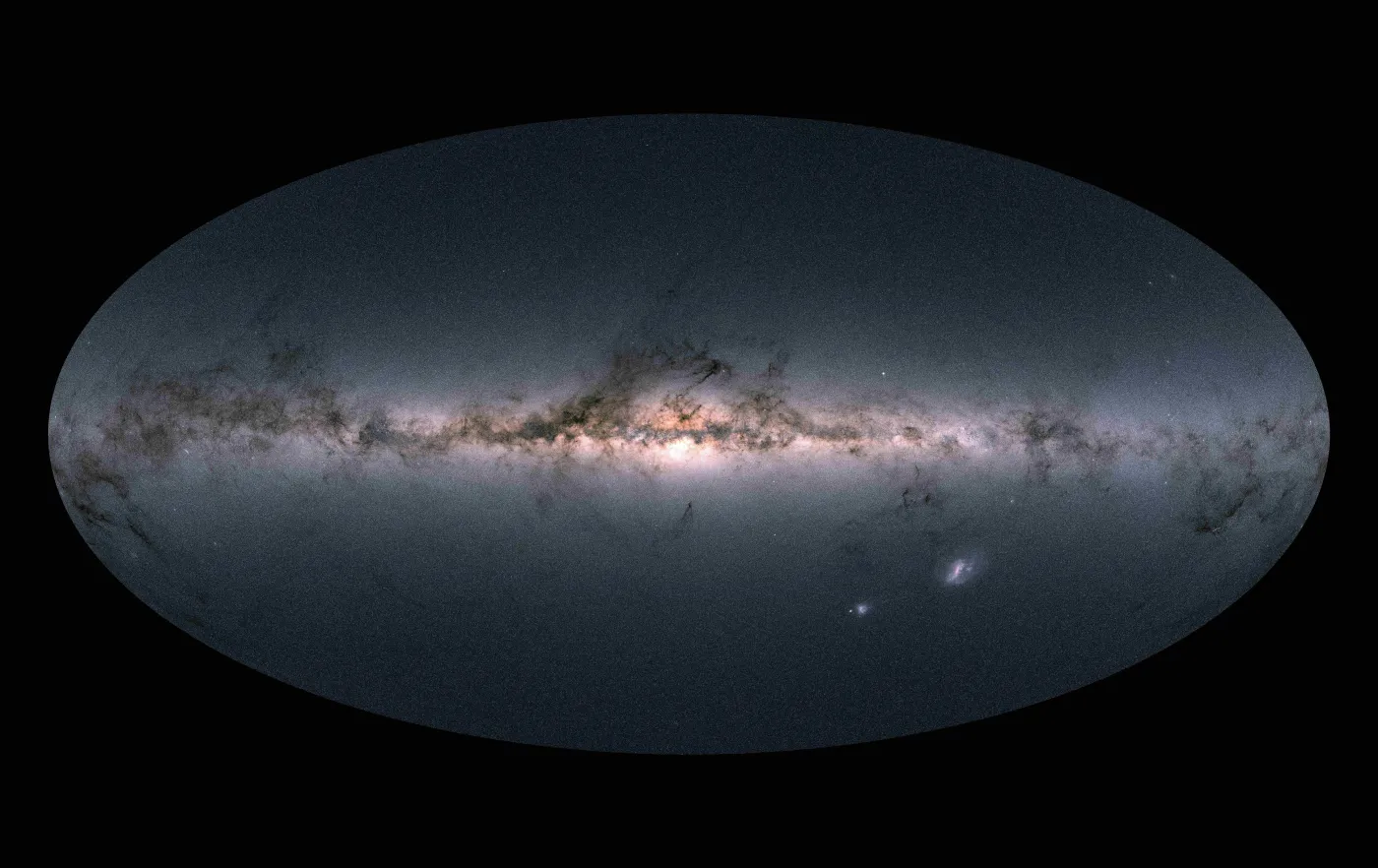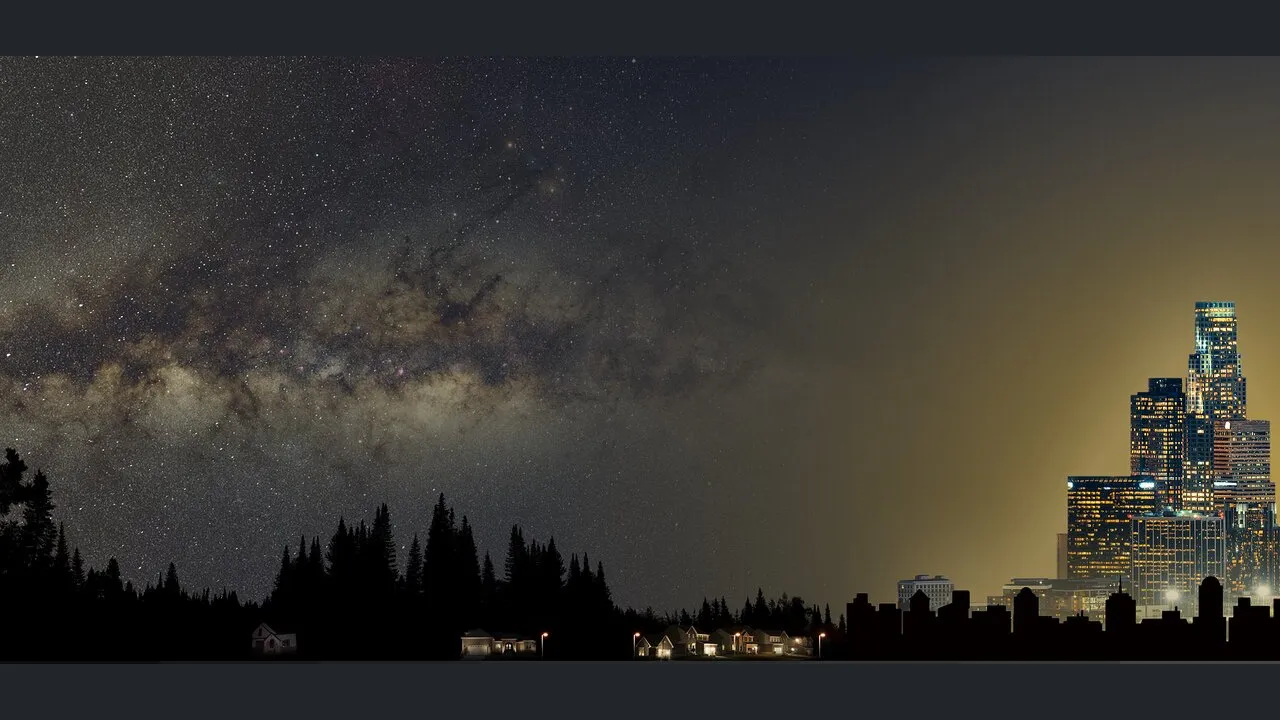



Curiosity has always been one of the driving forces behind discovery. Questions such as “why?” and “how?” seem almost built into human nature. Long before modern science existed as a formal discipline, people watched the heavens, tracked patterns in the stars, and tried to understand what they were seeing. Under dark skies with very little light pollution, the Milky Way would have stretched clearly across the heavens, inviting wonder as well as observation. In that sense, astronomy is one of humanity’s oldest scientific pursuits.

For centuries, the unaided eye was the main tool of astronomy. That changed drastically in the early seventeenth century with the invention of the telescope. Galileo Galilei began using improved telescopes for astronomy in 1609, opening the door to a much deeper view of the universe. Since then, increasingly powerful instruments have revealed galaxies, exoplanets, star clusters, and structures earlier generations could hardly imagine.
Astronomy and the Many Forms of Light
For most of modern astronomy, light has been our main messenger. Visible light is only one part of the electromagnetic spectrum. Radio waves, microwaves, infrared radiation, ultraviolet radiation, X-rays, and gamma rays all carry information about the universe. Different objects and events shine more strongly in different parts of that spectrum, so astronomers use many kinds of telescopes to study them.
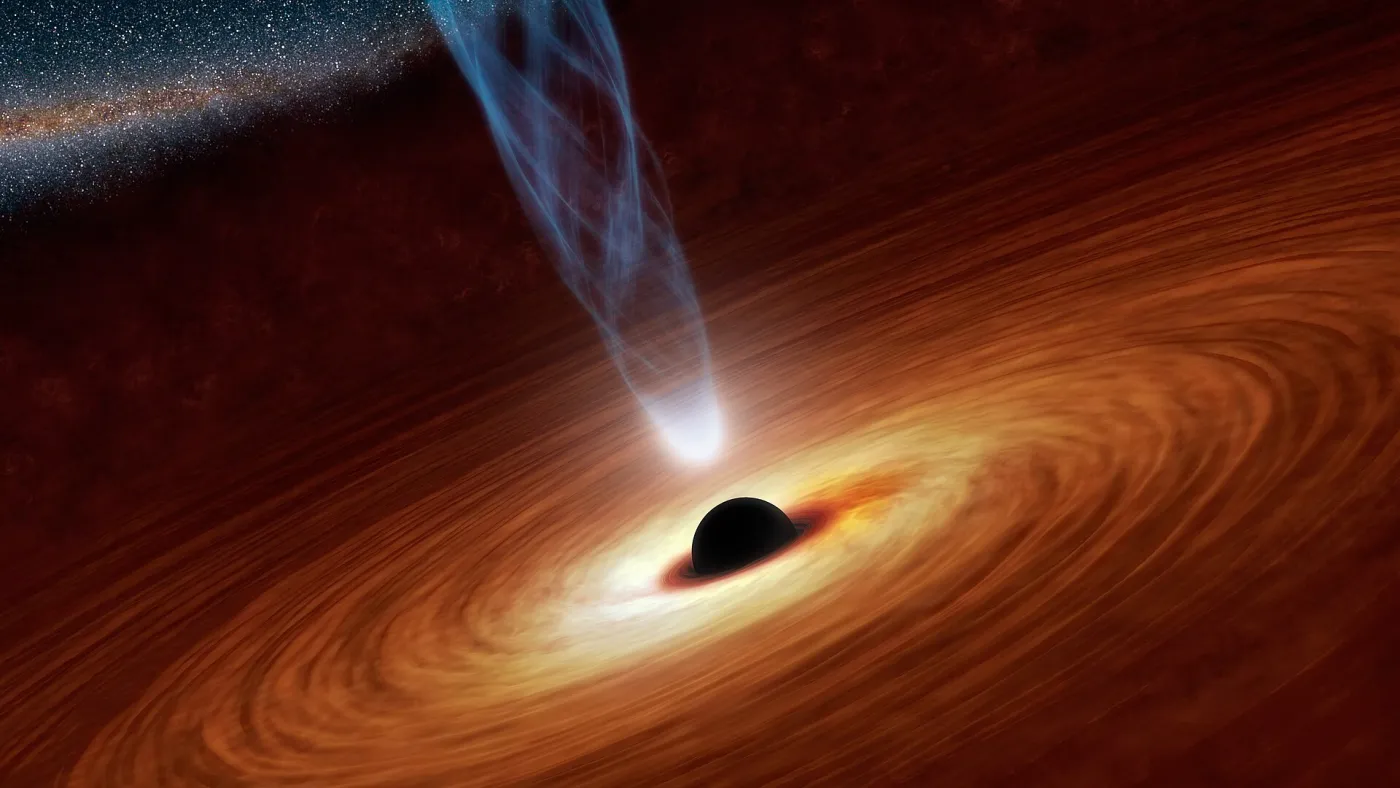
A radio telescope, for example, can reveal cold gas and large-scale cosmic structures. X-ray observatories can detect extremely hot environments such as matter falling toward black holes. Infrared instruments such as the James Webb Space Telescope can peer through dust and help us study the early universe. Each wavelength gives us a different piece of the story.
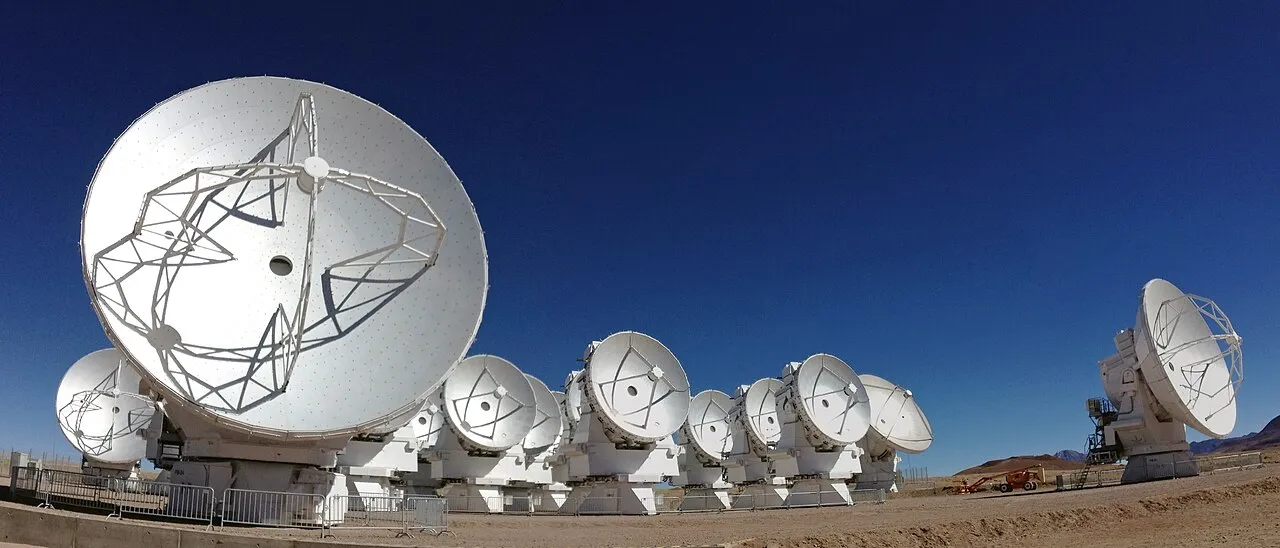
In recent years, astronomy gained another messenger altogether: gravitational waves. Instead of detecting light, we can now detect tiny ripples in space-time itself.
A New Window on the Universe
The first direct detection of gravitational waves came from LIGO, the Laser Interferometer Gravitational-Wave Observatory. The signal was recorded on September 14, 2015, from the merger of two black holes about 1.3 billion light-years away, and the discovery was announced in 2016. This was a historic moment. It confirmed a major prediction of Einstein’s general theory of relativity and opened an entirely new way of observing the cosmos.To understand why that matters, we first need to look more carefully at gravity itself.
What Is Gravity?
Imagine that the Sun suddenly vanished. What would happen to Earth? Would our planet immediately fly off into space, or would it continue as if nothing had changed—at least for a short time?
At first glance, it may seem obvious that Earth should instantly move away once the Sun is gone. But Einstein’s theory of general relativity gives a more subtle answer. In that theory, gravity is not described as a force pulling objects together in the ordinary sense. Instead, mass and energy curve space-time, and objects move through that curved geometry.
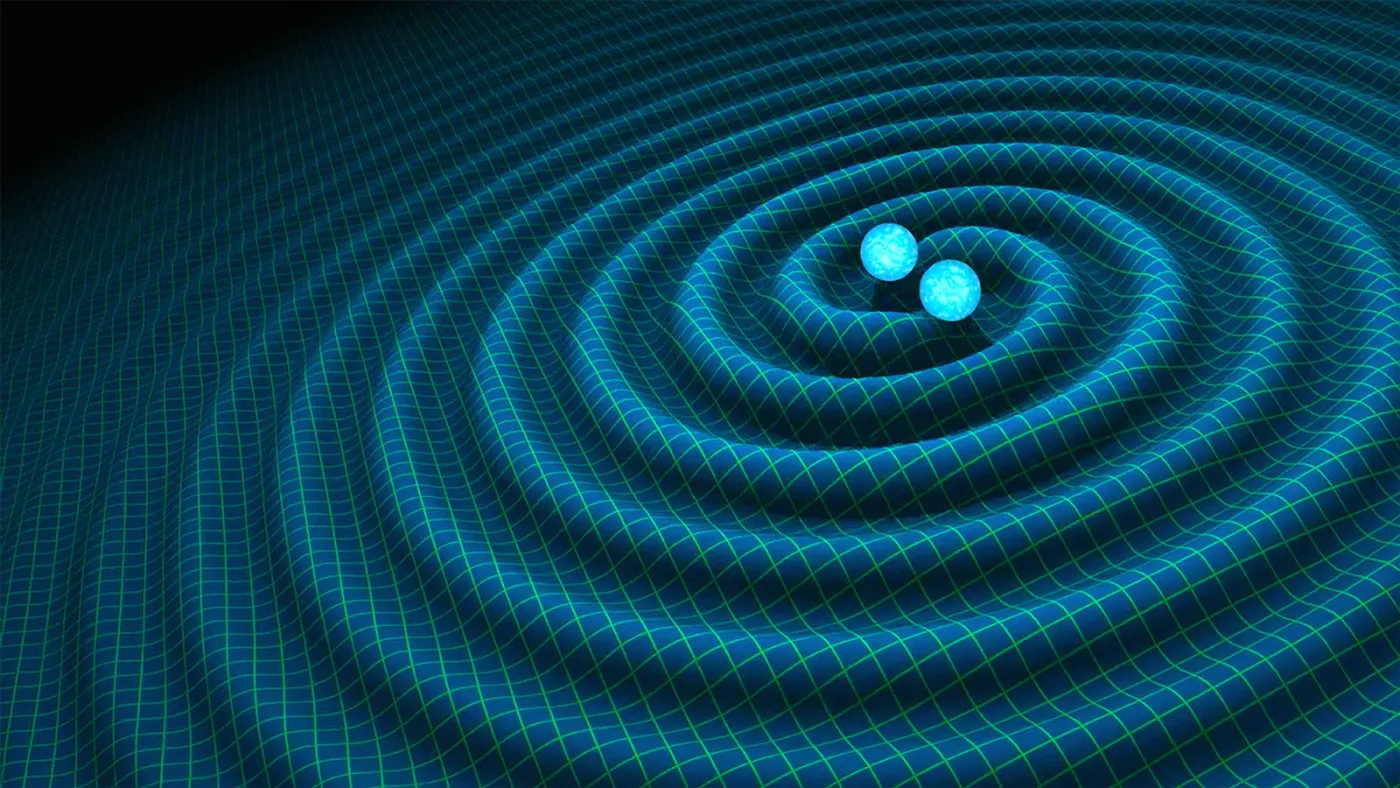
A useful, though imperfect, analogy is a stretched sheet with a heavy ball placed on it. The sheet bends, and smaller balls rolling nearby follow curved paths. In real life, the situation is more complicated because space-time is four-dimensional, but the analogy helps us picture the central idea: objects move along the straightest paths available within curved space-time.
This is why planets orbit stars. They are not being pulled around by an invisible rope. They are moving through curved space-time shaped by the mass of the Sun.

Just as importantly, changes in gravity do not travel instantly. They propagate at the speed of light. Since sunlight takes about eight minutes to reach Earth, any sudden change in the Sun’s gravitational influence would also take about eight minutes to reach us.
So in this thought experiment, Earth would continue along its usual orbit for about eight minutes. After that, it would move off along a path tangent to its orbit, no longer bound to the Sun.
How Are Gravitational Waves Formed?
A wave is a disturbance that travels through a medium or field. Sound waves are disturbances in air pressure. Electromagnetic waves are disturbances in electric and magnetic fields. Gravitational waves are ripples in space-time itself.
These ripples are produced when massive objects accelerate in a strongly changing and asymmetric way. One of the best examples is a pair of black holes or neutron stars orbiting each other. As they spiral inward and eventually merge, they disturb space-time and send gravitational waves outward across the universe.
Einstein predicted the existence of gravitational waves in 1916, but they are extraordinarily difficult to detect. By the time they reach Earth, their effects are unbelievably small. Even strong cosmic events produce only tiny distortions here. That weakness is exactly what made the first detection so impressive.

How Does LIGO Detect Them?
LIGO stands for the Laser Interferometer Gravitational-Wave Observatory. Unlike traditional astronomical observatories, LIGO does not use dish antennas to capture light or radio signals. Instead, it is a ground based physics experiment designed to measure tiny changes in distance caused by passing gravitational waves. The observatory consists of two identical facilities in the United States—one in Hanford, Washington, and the other in Livingston, Louisiana.
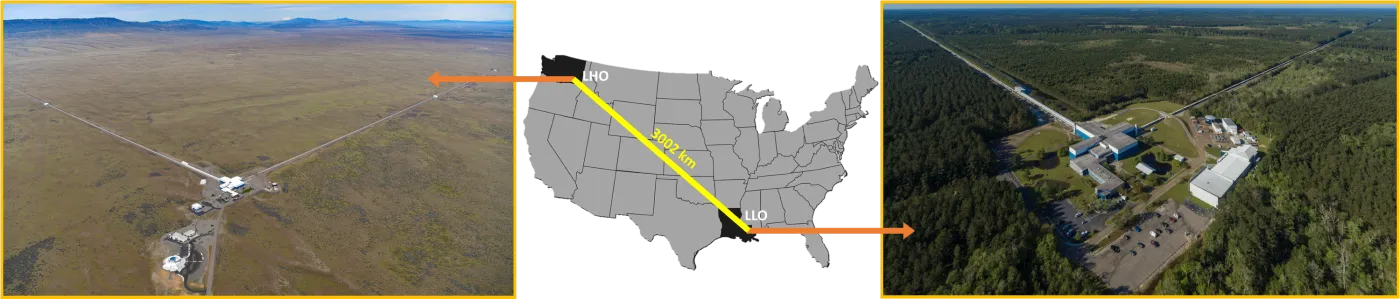
Scientists operate two twin detectors thousands of miles apart so they can compare readings: if an environmental disturbance like an earthquake or heavy traffic triggers a sensor in Washington, the Louisiana site will not record it. A real gravitational wave, however, passes through the entire planet and leaves matching signatures at both locations almost simultaneously.
The full engineering details of LIGO are highly technical, but the core idea is surprisingly elegant. Each LIGO observatory has two perpendicular vacuum arms, each 4 kilometers long, with mirrors placed at the ends. A laser beam is split into two parts and sent down the two arms. The beams reflect off the mirrors, return, and are then combined again.
Under ordinary conditions, the returning light produces a predictable interference pattern. But if a gravitational wave passes through the detector, it stretches space in one direction while squeezing it in the perpendicular direction. That slightly changes the effective lengths of the two arms, which in turn changes the interference pattern of the light. A slightly more detailed description and tour of the facility is linked below.
These changes are incredibly small—on the order of about  meters, far smaller than an atom. Detecting such a tiny signal requires extraordinary isolation from vibration, advanced optics, precise calibration, and very careful data analysis.
The historic signal detected by LIGO was designated GW150914 (named after the date it reached Earth: September 14, 2015). The wave was triggered by two massive black holes (one roughly 36 times the mass of our Sun, and the other about 29) that spent millions of years spiraling toward each other and eventually collided. Because black hole collisions emit no light, astronomers could not pinpoint a single named host galaxy or cluster; instead, the 7-millisecond delay between LIGO's two detectors narrowed the source down to a broad arc in the southern sky containing hundreds of thousands of distant galaxies. When those ripples finally reached Earth, they changed the length of LIGO's 4-kilometer laser arms by less than one-thousandth the diameter of a proton.
Why Gravitational Waves Matter
Gravitational waves offer several important advantages as an astronomical tool.
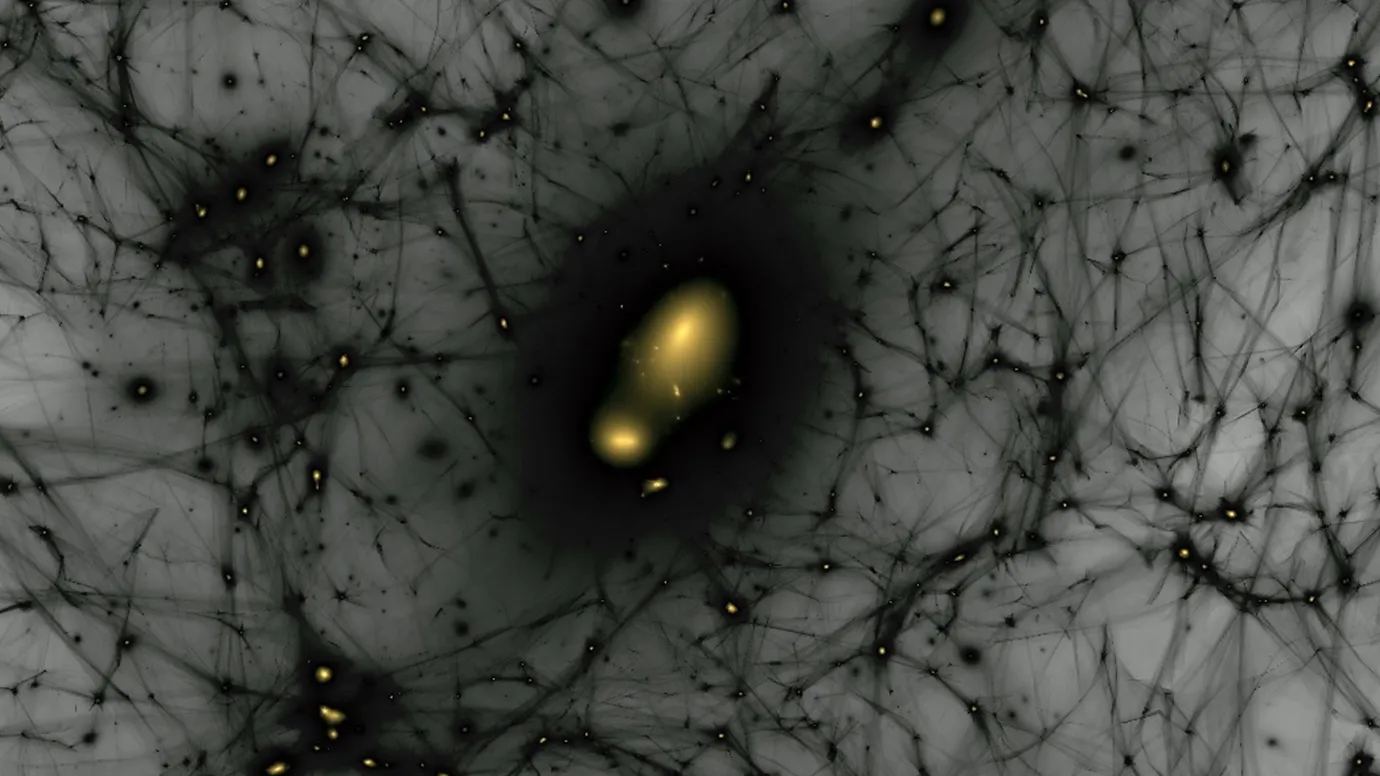
Most importantly, they interact very weakly with matter. Light can be scattered, absorbed, or blocked on its journey to us, but gravitational waves can travel through matter with very little disturbance. That means they can carry relatively direct information about violent events in distant parts of the universe.
Additionally, they allow us to study systems that are difficult to observe with light alone. Black holes do not emit light by themselves, so isolated black holes are hard to detect directly with ordinary telescopes. But when black holes orbit each other and merge, they produce powerful gravitational-wave signals.
Looking further back, gravitational waves may eventually help us learn more about very early cosmic history. The early universe was once filled with hot, dense plasma that scattered light, limiting how far back ordinary telescopes can see. Gravitational waves could, in principle, reveal information from earlier epochs that electromagnetic observations cannot easily access.
Finally, gravitational waves are especially powerful when combined with ordinary astronomy. This is called multi-messenger astronomy. When telescopes and gravitational-wave detectors observe the same event, scientists can learn much more than they could from either signal alone. For example, neutron-star mergers can be studied through both their gravitational waves and their light, helping us understand how some of the universe’s heavy elements are produced.
Limits
Gravitational wave astronomy is not a replacement for traditional astronomy. It is a complement to it. Gravitational wave signals are weak, difficult to localize precisely, and often need support from other observations to build a fuller picture of what happened.
Unlike optical or radio telescopes that pinpoint an exact star or host galaxy, gravitational wave detectors act more like microphones. A network of two or three detectors can only narrow down a signal's origin to a broad region of the sky, often containing thousands of galaxies.
Furthermore, gravitational waves are only strong enough to be detected when massive objects undergo violent, asymmetric accelerations. Steady systems, perfectly spherical explosions (like symmetric supernovae), or single non-accelerating masses produce no detectable gravitational waves.

To make matters worse, many gravitational wave sources are non-repeating events (such as two black holes merging). Unlike a star or galaxy that can be pointed at and studied for decades, a gravitational wave merger lasts anywhere from milliseconds to minutes and is gone forever.
Even so, their importance is enormous. For centuries, we explored the universe mainly through light. Now we can also listen to the faint vibrations of space-time itself.