
From working in factories as a sewing machine operator to becoming the first woman to travel to space and do it solo, a story of grit and determination.
Among those whose names are written in gold in the history of space is the Russian (former Soviet Union) cosmonaut Valentina Tereshkova, the first woman to travel to space. On June 16, 1963, she achieved this remarkable, once in a lifetime mission by leaving Earth aboard the spacecraft “Vostok 6”. Not only did her journey show the potential of women in the world of science, but at the time it was also a major political win for the Soviet Union in the space race between the United States and the Soviet Union.
Childhood and growing up
Valentina Vladimirovna Tereshkova was born on March 6, 1937, in a small village called 'Maslennikovo' in the Yaroslavl region of Russia. She was born into low income farmer family. Her father, Vladimir Tereshkov, was a tractor driver, and when Valentina was two years old, her father was sadly killed on the Finland front during World War II. Leaving her mother, Elena Tereshkova, to take charge of the family by working in a textile factory, and raised their three children alone.

Valentina began school in 1945 at the age of eight. However, due to economic difficulties in her family, she was forced to drop out of formal education in 1953 at the age of 16. She began working as a sewing machine operator in a tire factory, and later in a textile factory, in order to help her mother and manage herself. Her interest in education did not fade away, so she continued her education remotely while she was at work.
While working at the factory, Valentina developed a passion for skydiving in her spare time. In May 1959, at the age of 22, she made her first parachute jump at the local 'Yaroslavl Air Sports Club'. This spare time passion led her to parachute jump 150 times, which completely changed her life trajectory, eventually opening the door for space.
Space Competition and Recruitment Process
In the early 1960s, the United States and the Soviet Union were in the midst of the Cold War. This competition was also very challenging in the field of space research. Following the departure of Yuri Gagarin, an astronaut of the Soviet Union, as the first man to go into space in April 1961, Sergei Korolev, who was the chief designer of the Soviet space program, became their next target to send the first woman into space. This idea was quickly implemented by the fact that information reached the Soviets that the Americans were preparing to train female astronauts.

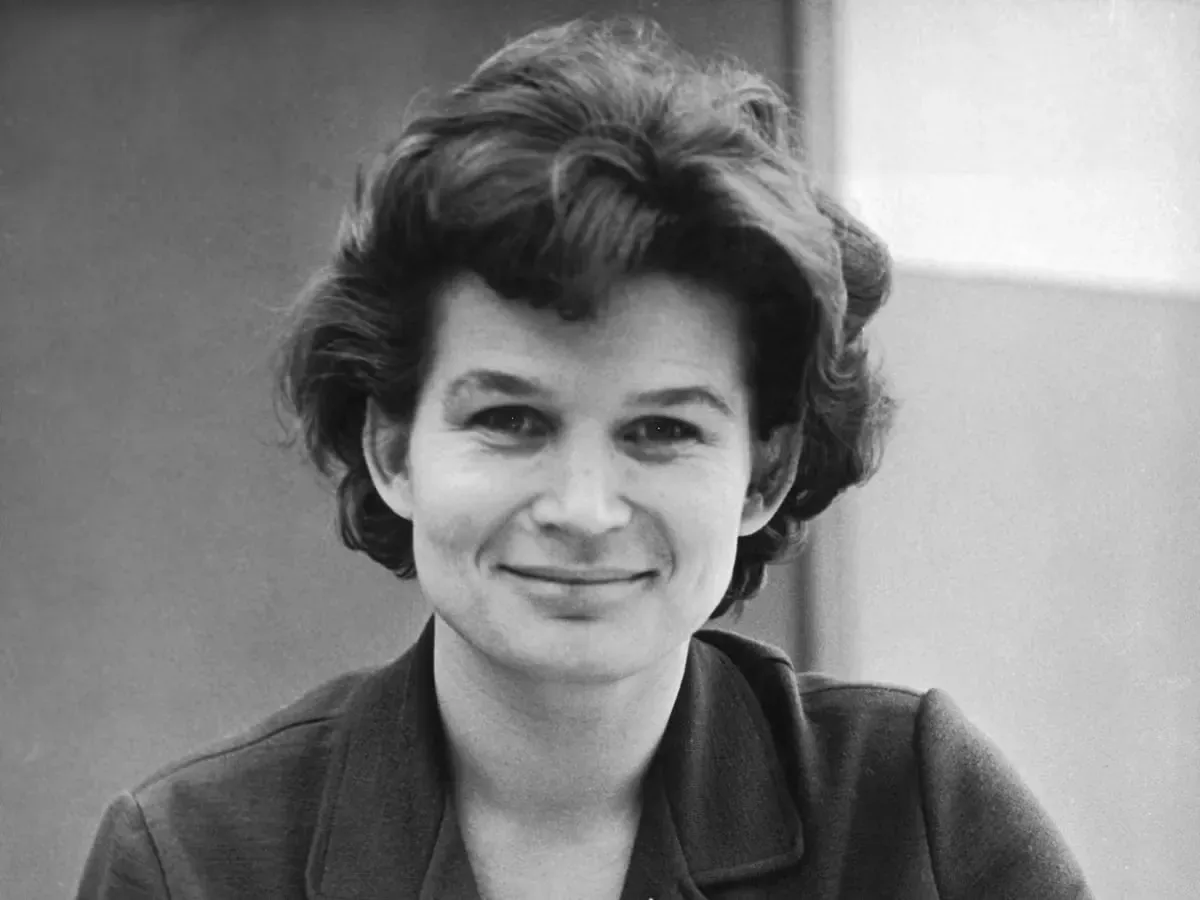
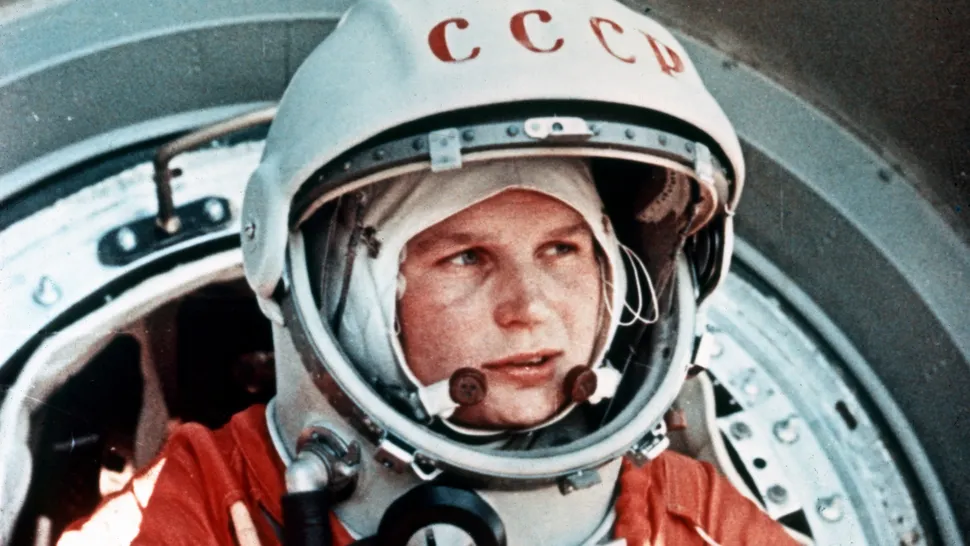
Valentina Tereshkova
The Soviet government began the recruitment process, wanting the first female astronaut to become a Soviet citizen. Valentina's parachute jumping experience gave her a huge advantage. Since the 'Vostok' spacecraft in use at the time were difficult to maneuver on their return to Earth, astronauts had to be dismounted from their seats and parachute a few seconds before they touched the ground. Thus, women with high parachute experience were in demand. In addition, the candidate had to be under 30 years old, less than 170 centimeters tall, and weigh less than 70 kilograms. Of the more than 400 applicants submitted, five women were selected on February 16, 1962, with Valentina Tereshkova joining Tatyana Kuznetsova, Irina Solovyova, Zhanna Yorkina and Valentina Ponomaryova. The fact that Valentina came from the ordinary working class (proletariat) made her a favorite for the Soviet Communist Party's propaganda consumption.
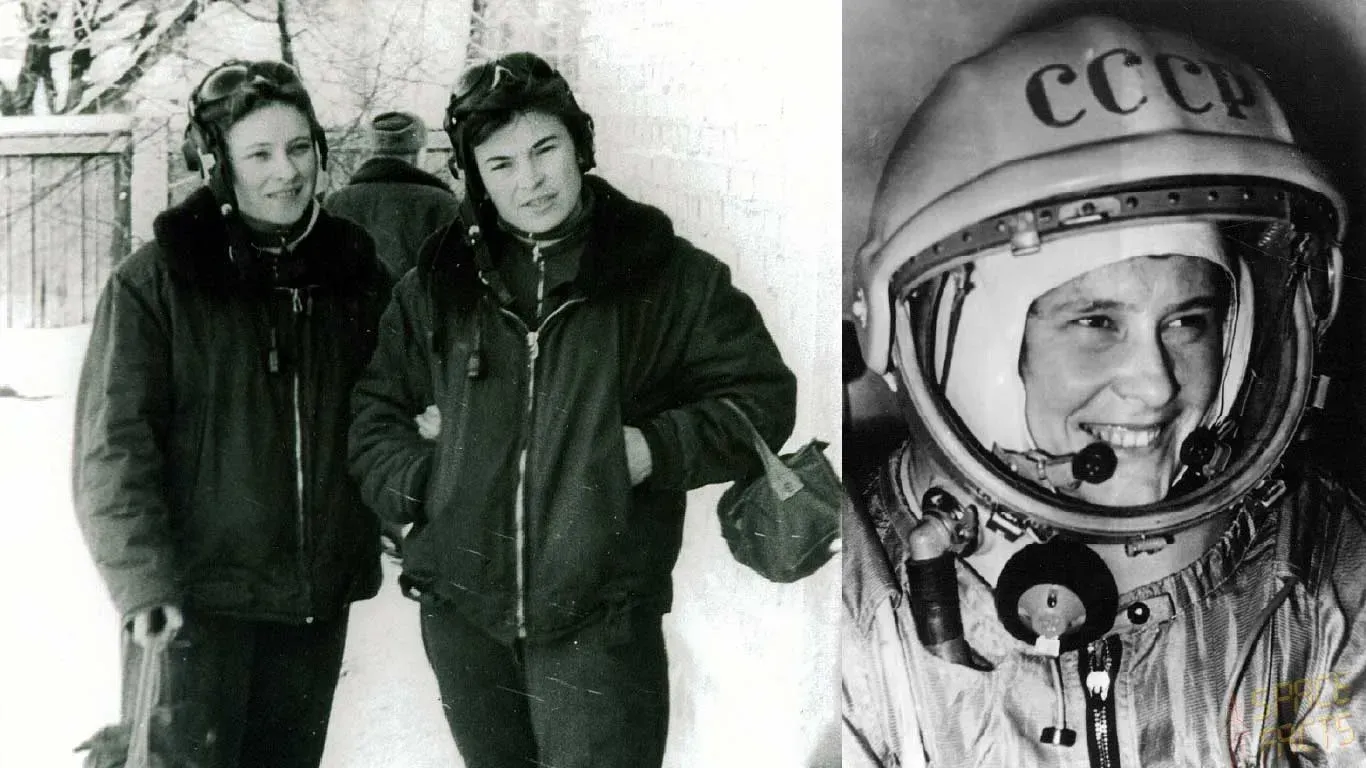
Valentina Tereshkova and her backup crew (from left to right): Irina Solovoyova, Valentina Tereshkova, Valentina Ponomaryova


Difficult space training
The five women underwent months of extremely intense and physically demanding training. The training consisted of flying in zero gravity simulated planes and isolation tests of being psychologically isolated for days, testing in centrifuge machines that produce heavy rotational force, 120 parachute jumps, and pilot training on jet planes.
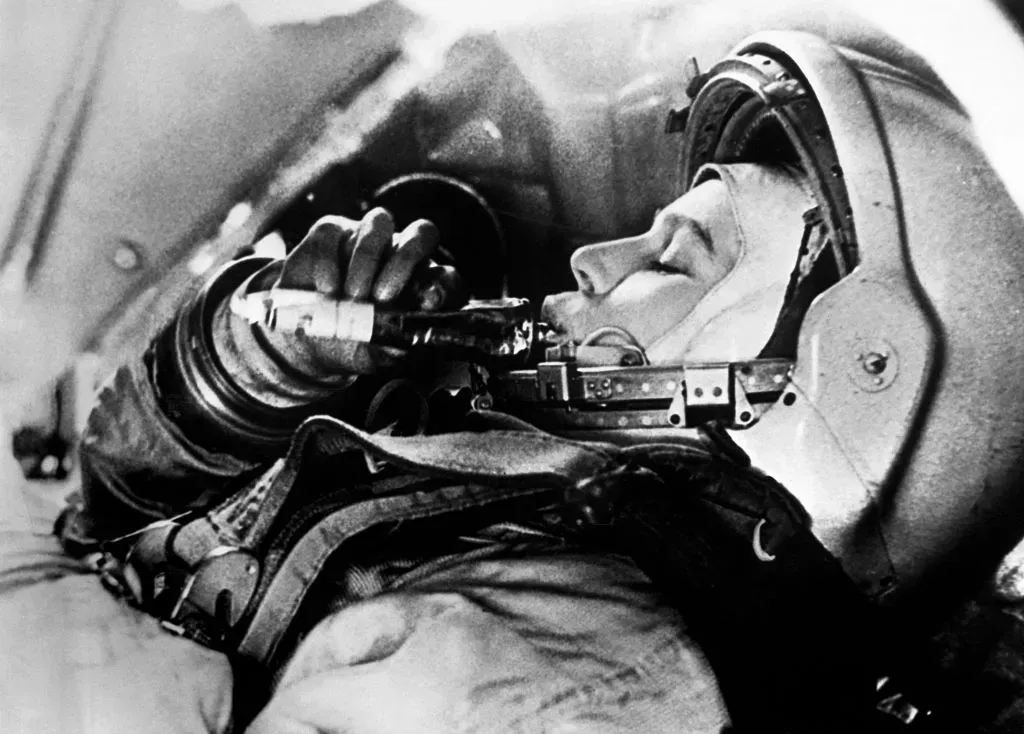
Valentina Tereshkova practicing eating food in the capsule flight simulator training
In November 1962, four candidates completed the final exam. At this time, they were given the rank of lieutenant in the Soviet Air Force. But since this title was only an honorary one, Valentina Tereshkova traveled not as a soldier, but as a civilian, thus setting the record for the first civilian to go into space.
The Historic Journey of 'Vostok 6'
Originally, the Soviet space agency's plan was to launch two women on two spacecraft (Vostok 5 and Vostok 6) on consecutive days. However, this plan was changed in March 1963; it was decided that Vostok 5 would fly a male astronaut (Valery Bykovsky) and Vostok 6 would be piloted by a woman. Valentina Tereshkova was also officially elected to this historic flight.
On June 14, 1963, Vostok 5 was successfully fired with Bykovsky. Two days later, 26 year old Valentina Tereshkova was found at the Baikonur Cosmodrome launch station wearing her own spacesuit. After a two-hour countdown was completed, on the morning of June 16, the 'Vostok 6' spacecraft was launched into space flawlessly.
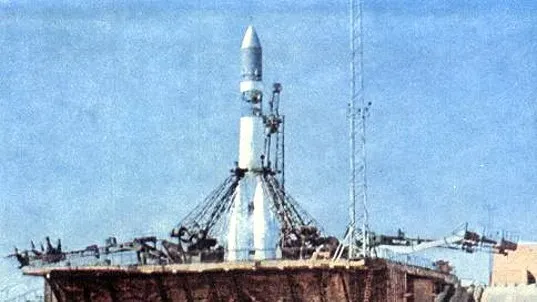
The Launching Of Vostok 6
Valentina, who was known in space by the nickname "Chaika" (seabird), was in her capsule and made contact with the ground. Since the flight of Vostok 6 was fully computerized, Valentina did not need to manually drive the spacecraft. She spent 71 hours and 12 minutes (or about three days) in space. During this time, she circled the Earth 48 times. Her journey was so successful that, while in space, they were able to communicate with the other Vostok 5 spacecraft by closing the distance to up to 3 miles. Her 71 hour stay was longer than the time spent by American astronauts in space as a whole at the time.
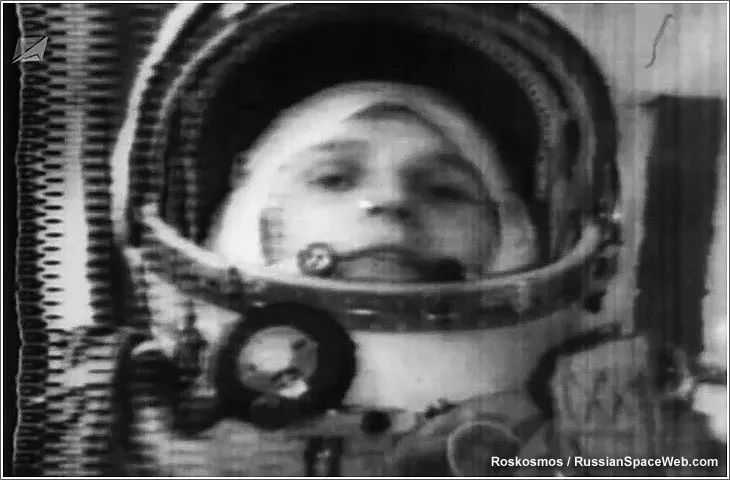
Valentina Tereshkova during the flight
During her stay, Valentina recorded data about her body strength in space, took photographs of the Earth and the sky. These photographs later became a valuable resource for scientists studying the Earth's aerosol layers. She also spoke live on television and radio with Soviet leader Nikita Khrushchev.
Returning to Earth
After three days in space, the Vostok 6 spacecraft re-entered the Earth's atmosphere on June 19, 1963. As planned, Valentina ejected from the spacecraft at an altitude of 20,000 feet before the spacecraft touched down and safely landed on the ground with her parachute. This was to be her only spaceflight.
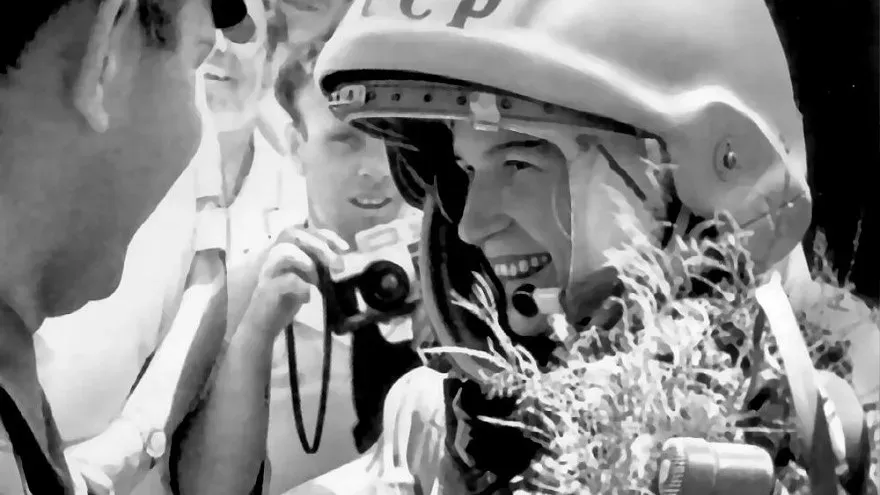
Valentina Tereshkova's homecoming
After her, the Soviet Union launched its women's space program, and waited another 19 years to send the next woman (Svetlana Savitskaya) into space.
Personal and political life after the spaceflight
Valentina was given a hero's welcome upon her return to Earth. She received the high title of "Hero of the Soviet Union" and several international awards, including the Order of Lenin. In November 1963, she married fellow cosmonaut Andrian Nikolayev. Their wedding ceremony was held in a lavish ceremony attended by high ranking government officials.
The following year, in 1964, they gave birth to their first child, Elena. Elena was the first child born after both of her parents had traveled to space, and she was of particular interest to medical scientists studying the effects of space travel on human fertility (Elena later became a medical doctor). Valentina and Nikolayev's marriage ended in divorce in the early 1980s. She later married Dr. Yuli Shaposhnikov until his death in 1999.

In politics, Valentina held a high position. She was a strong member of the Soviet Communist Party, and traveled around the world advocating for Soviet scientific progress and women's equality. She was awarded the United Nations Gold Medal of Peace and was a member of the World Peace Council. She reignited her interest in education, earning a doctorate in aeronautical engineering in 1977.
The Historic Ethiopian Visit
One of Valentina Tereshkova's extensive political and diplomatic engagements was her trip to Africa, especially Ethiopia. The name and fame of "Valentina Tereshkova" were widely known among Ethiopians. In 1974 (1982 E.C), she was warmly welcomed when she first arrived in Addis Ababa with her delegation as the chairwoman of the Soviet Women's Committee.
During her visit, she met with the then Ethiopian President, Colonel Mengistu Hailemariam, at the presidential palace. The president, appreciating the great contribution of Soviet women to peace and social progress, awarded Valentina the highest state award, the "Order of the Blue Nile, 1st Degree", for her outstanding contribution. During her 7 day stay in Ethiopia, Valentina and her delegation had the opportunity to visit many cities, industrial facilities, and agricultural cooperatives. In an interview after her visit, she said that she was able to get to know the daily life and work culture of the Ethiopian people closely. She especially enjoyed seeing the active participation of Ethiopian women in the construction of the socialist society at that time, and she return with wonderful memories.
Legacy and famous quotes
To this day, Valentina Tereshkova holds the distinction of being the only woman to have made a solo flight into space, the youngest woman to go into space (at age 26), and the first civilian astronaut.
Among her famous quotes about women's participation are;
"A Bird cannot fly with one wing only. Human space flight cannot develop any further without active participation of women."
And
"Once you go into space, you realize how small and fragile the Earth is."
She described the profound perspective that space travel gave her. Valentina Tereshkova's story is a living testament to the fact that humanity, overcoming poverty and obstacles, can reach the stars.