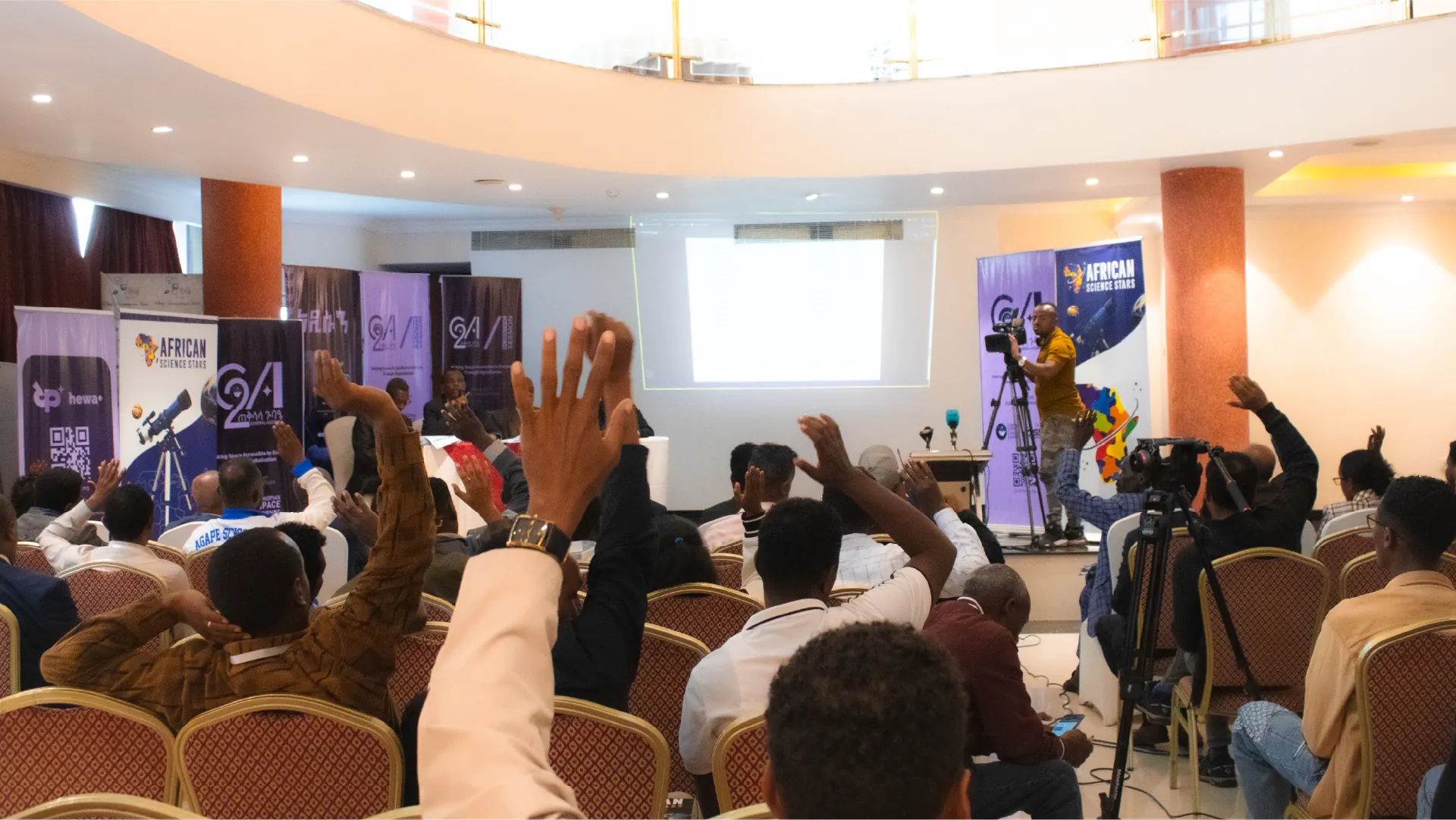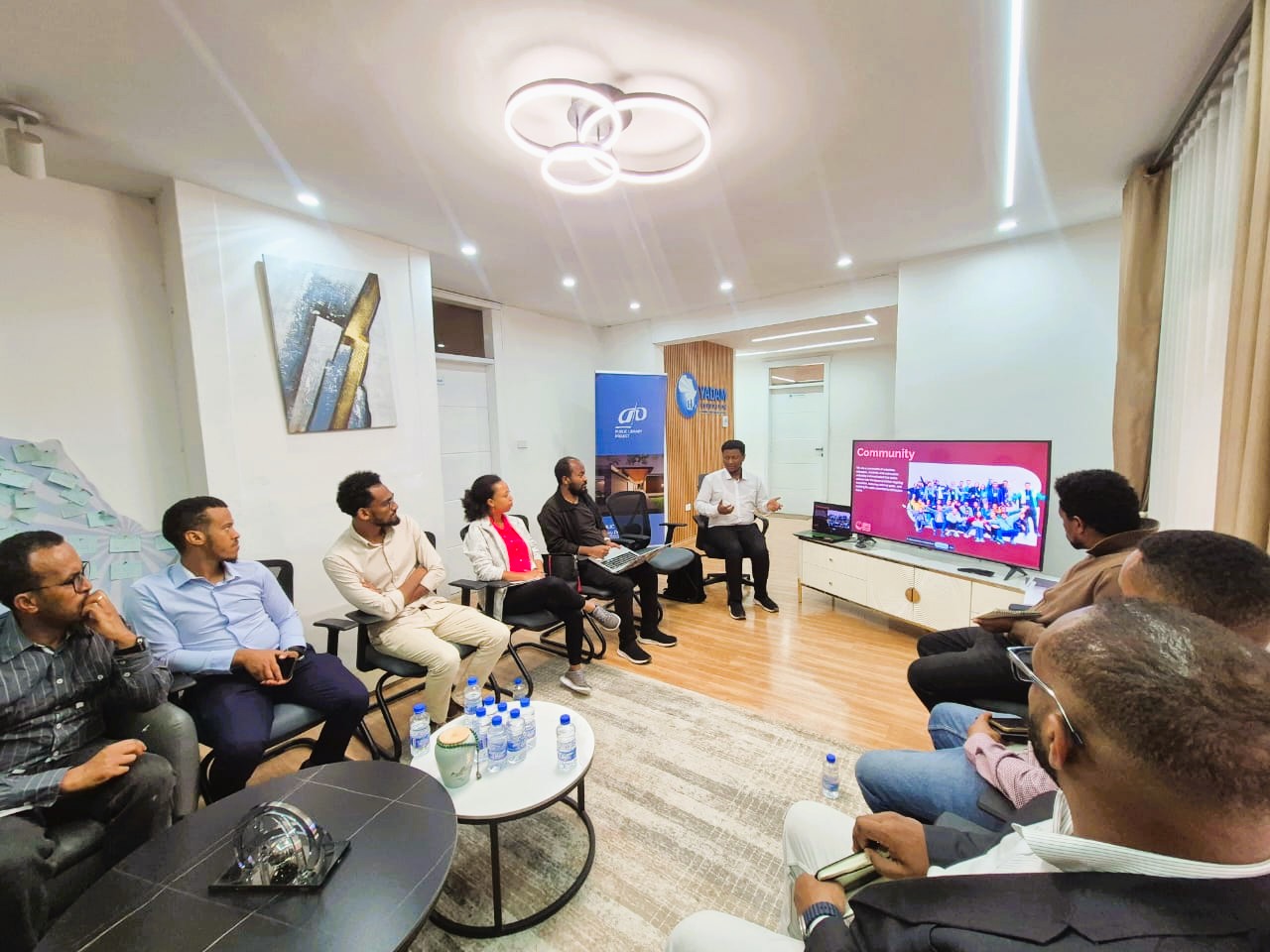

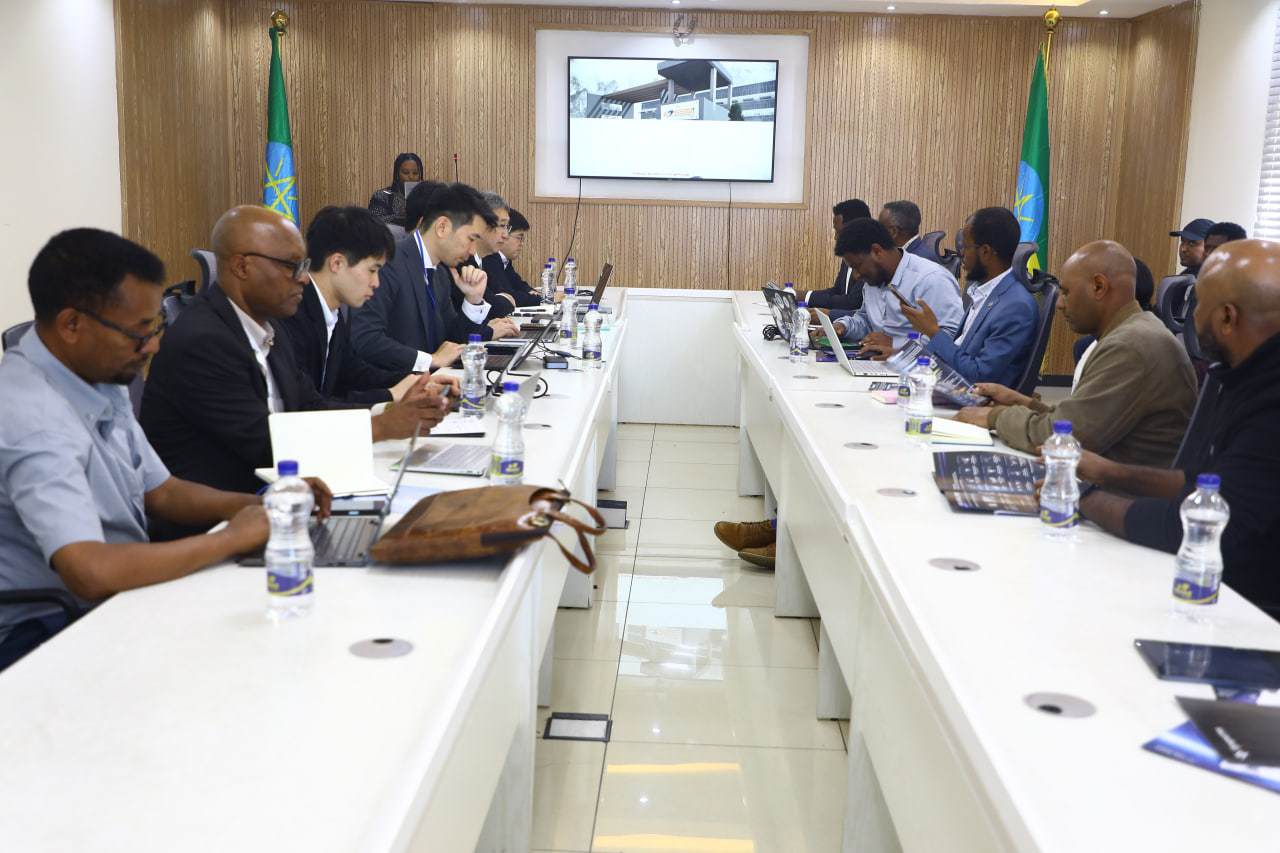
The Ethiopian Space Science Society (ESSS), in collaboration with the Japanese space business platform Cross U, successfully convened a high-level strategic dialogue on Monday. Hosted at the Space Science and Geospatial Institute (SSGI), the meeting served as a cornerstone for the creation of a sustainable commercial ecosystem, bridging the gap between space startups, established businesses, and government entities in both Ethiopia and Japan.
Opening a New Chapter in Commercial Space
The session was officially inaugurated by Dr. Yeshrun Alemayehu (Deputy Director, SSGI), Prof. Shinichi Nakasuka (President of Cross U), and Mr. Kirubel Menberu (Managing Director, ESSS). The leadership underscored that the program transcends traditional research-led initiatives, focusing instead on a roadmap for commercial co-creation and industrial growth.
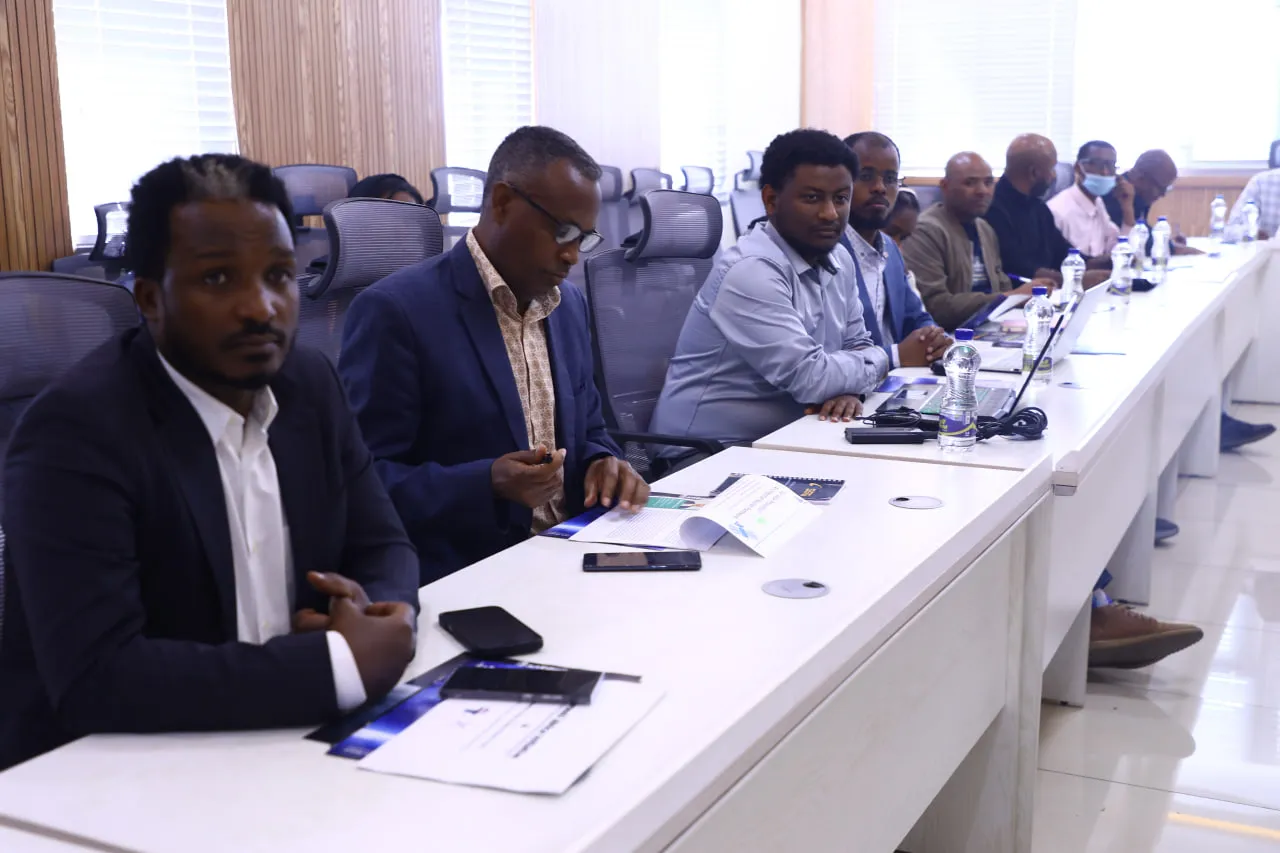
Dr. Yeshrun Alemayehu (Deputy Director, SSGI) (left) and Mr. Kirubel Menberu (Managing Director, ESSS) (2nd to far left)
As a primary facilitator, ESSS leveraged its two-decade legacy of promoting space science awareness in Ethiopia to bring a diverse range of stakeholders to the table. This included the Oromia Coffee Farmers Cooperative Union, JICA, the United Nations Industrial Development Organization (UNIDO), Jethi Software Development, and the GIS Society of Ethiopia. By integrating agricultural cooperatives and software developers with satellite providers, the dialogue established a tangible link between space technology and the private sector.
Strategic Partners and the Japanese Ecosystem
The meeting featured insights from prominent Japanese organizations that form the backbone of Japan’s space business landscape:
- Cross U: Established as an open innovation platform, Cross U specializes in "space business co-creation." They work to revitalize the global space industry by connecting diverse players—ranging from startups and established corporations to academia and government—enabling business matching and international expansion.

Prof. Shinichi Nakasuka of Cross U

- Axelspace Corporation: With over 17 years of history in microsatellite technology, Axelspace is recognized for its "AxelGlobe" Earth observation platform. The company’s activities are centered on delivering actionable insights for industries such as agriculture and disaster monitoring, with a strategic focus on expanding constellation capacity to provide near real-time global data in the coming years.

Yuya Nakamura (Axelspace)
- ArkEdge Space Inc.: Acting as a general integrator for microsatellite systems, ArkEdge Space provides end-to-end solutions from satellite design to operation, focusing on versatile satellite buses for missions like IoT communications and maritime situational awareness.
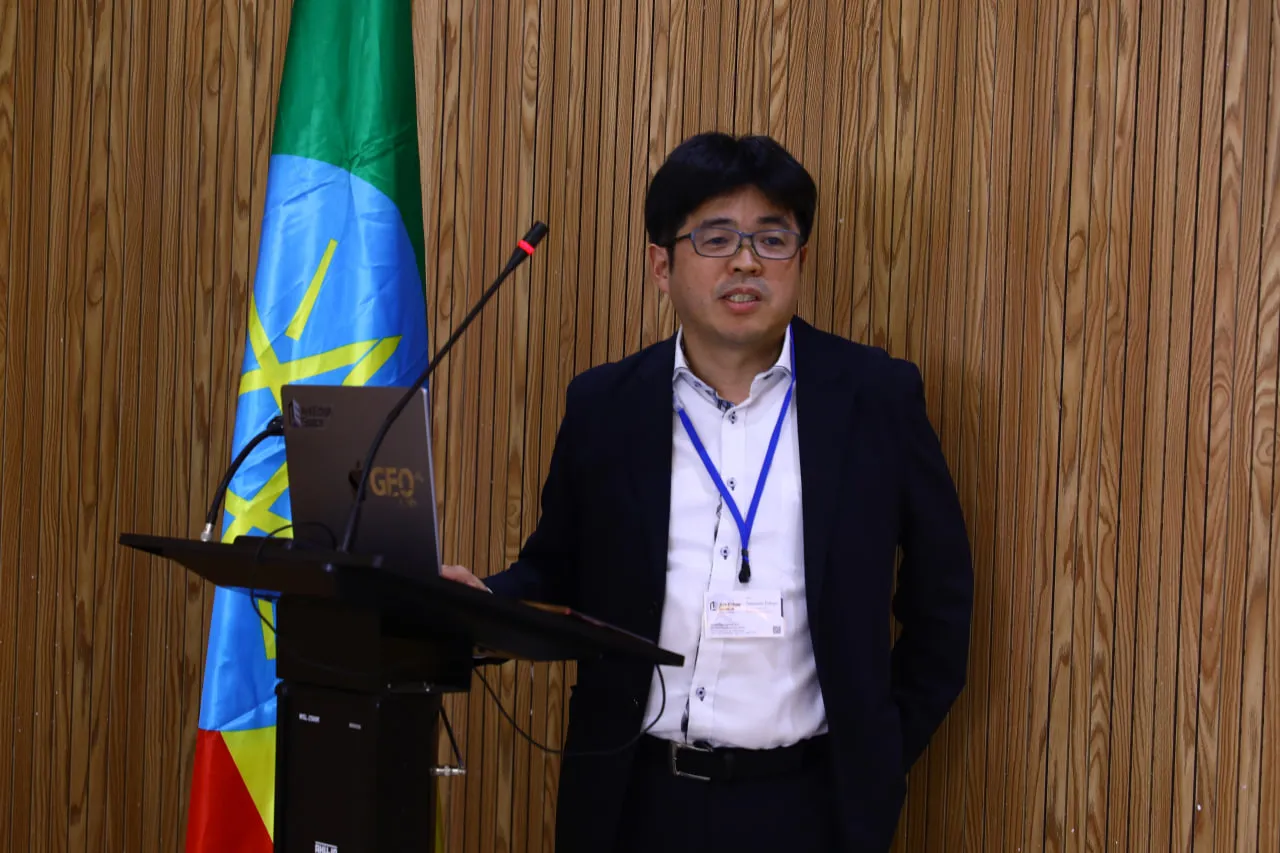
Takayoshi Fukuyo (ArkEdge Space)
- Double Feather Partners (DFP): DFP operates as an international venture capital and consulting firm, focusing on bridging the gap between Japanese investment and African high-impact ventures through capital mobilization and strategic advisory.

Kohei Muto (Double Feather Partners)
Investment and Startup Ecosystem: Enkopa Lab
A critical portion of the dialogue focused on the "Startups & Investment" ecosystem, featuring a presentation by Mr. Bernard Laurendeau of Enkopa Lab. As a key actor in Ethiopia’s tech and entrepreneurship landscape, Enkopa Lab highlighted the importance of creating a conducive environment for digital transformation and startup growth. The presentation emphasized how strategic advisory and ecosystem building are essential for unlocking the potential of the private sector and attracting the necessary investment to scale space-related startups in the region.
African Success Stories: CubeSpace
The dialogue also highlighted the maturity of the African space sector through the success story of CubeSpace. Originating as a university spin-off in South Africa, CubeSpace has become a global leader in satellite control systems (ADCS). Their journey stands as a benchmark for how African businesses can successfully compete and lead in the global space value chain, having provided components for hundreds of satellites worldwide.
Two Decades of Excellence: The ESSS Contribution
For over 20 years, the Ethiopian Space Science Society has been the vanguard of building a scientific culture in Ethiopia. From its founding in 2004, the ESSS has played a foundational role in the establishment of the Entoto Observatory and the national space institute, moving the country from basic awareness to advanced research.
This latest initiative marks the Society’s strategic evolution into nurturing the commercial startup ecosystem. ESSS reaffirmed its commitment to continuing these efforts by creating platforms that network local businesses with international space application companies, ensuring that Ethiopia’s decades of scientific investment now translate into economic growth and business innovation.