
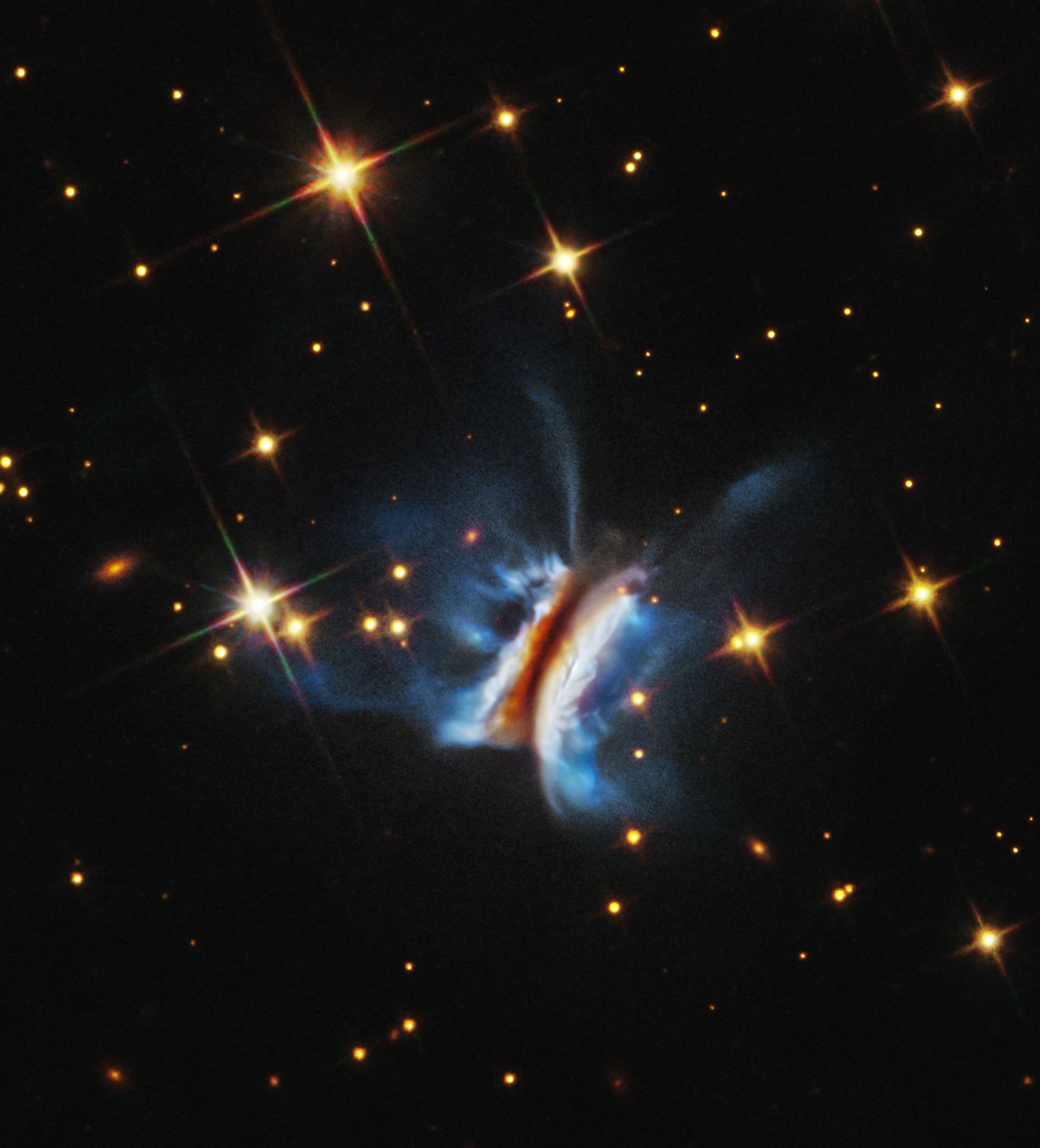
NASA's Hubble Space Telescope has captured a record-breaking image of IRAS 23077+6707, a protoplanetary disk nicknamed "Dracula's Chivito" that is now the largest ever observed.
Deep within the cosmos, approximately 1,000 light-years away, the Hubble Space Telescope has identified a structure that is redefining our understanding of how planetary systems begin. This massive nursery, a protoplanetary disk known as IRAS 23077+6707, has officially claimed the title of the largest ever observed. Spanning nearly 400 billion miles, this expanse of gas and dust is a staggering 40 times wider than the diameter of our own Solar System, reaching far beyond the limits of the Kuiper Belt.
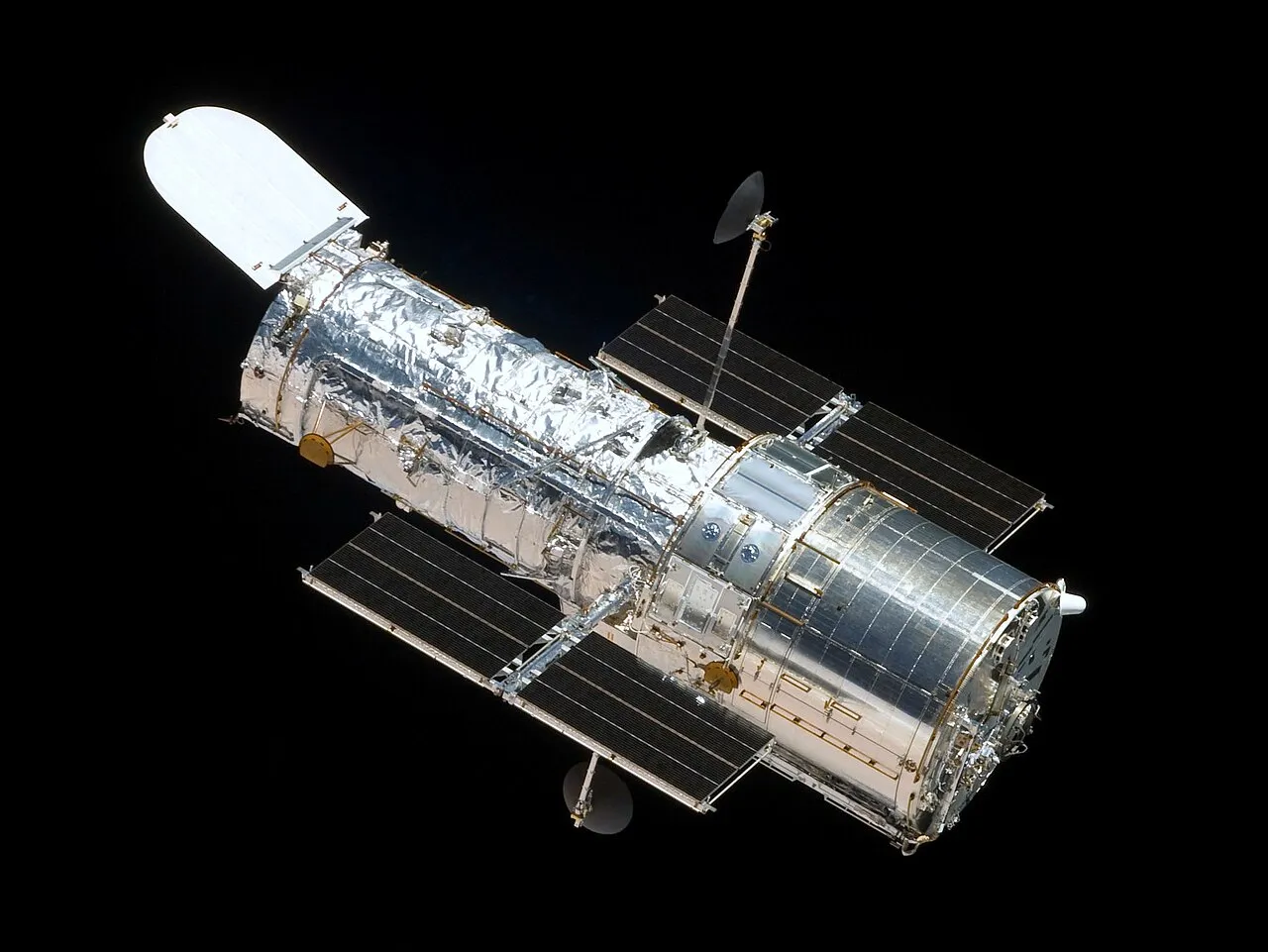
The Hubble Space Telescope as seen from the departing Space Shuttle Atlantis, flying STS-125, HST Servicing Mission 4.
Why This Discovery Matters
For a long time, the scientific consensus viewed the birth of planets as a somewhat orderly process occurring within stable, flat disks. However, the data returned by Hubble suggests a far more violent reality. Lead author Kristina Monsch from the Center for Astrophysics | Harvard & Smithsonian (CfA) explains that these images reveal nurseries can be much more active and chaotic than previously theorized.
The observation of this system is providing a "front row seat" to the messy, unpredictable processes that eventually lead to the creation of worlds. According to co-investigator Joshua Bennett Lovell, the sheer level of asymmetry found in this disk was stunning to the team, presenting a unique opportunity to study planet formation in an entirely new light.
The Mystery of the "Lopsided" Disk
One of the most striking features revealed in visible light is the disk’s profound lack of symmetry. On one side, massive, finger-like filaments of material drift far above and below the central plane. On the opposite side, the disk appears to have a sharp, clean edge with no such activity.
Astronomers believe this lopsidedness points toward dynamic external influences. It could be the result of a recent "infall" of new material being pulled into the disk, or perhaps the environment surrounding the system is actively stripping or reshaping its outer layers. This chaos suggests that the environment where planets are born is rarely a vacuum of stillness.

Inside the "Dracula’s Chivito"
The system has earned a colorful nickname: "Dracula’s Chivito." This moniker is a nod to the international team behind the research, with one member hailing from Transylvania and another from Uruguay. In Uruguay, a "chivito" is a popular national sandwich. When viewed from its side (edge-on), the disk bears a resemblance to a sandwich or a hamburger, with a dark "filling" of dust sandwiched between two glowing layers of gas.
Kristina Monsch emphasizes the importance of this specific orientation and the rare opportunity it provides for the scientific community:
“The level of detail we’re seeing is rare in protoplanetary disk imaging, and these new Hubble images show that planet nurseries can be much more active and chaotic than we expected. We’re seeing this disk nearly edge-on and its wispy upper layers and asymmetric features are especially striking. Both Hubble and NASA’s James Webb Space Telescope have glimpsed similar structures in other disks, but IRAS 23077+6707 provides us with an exceptional perspective — allowing us to trace its substructures in visible light at an unprecedented level of detail. This makes the system a unique, new laboratory for studying planet formation and the environments where it happens.”
Hidden behind this thick veil of dust is the central engine of the system. While the star itself is obscured, scientists hypothesize it is either a singular, high-mass star or a binary pair. Regardless of the star's nature, the disk contains an immense amount of raw material (estimated at 10 to 30 times the mass of Jupiter), providing more than enough ingredients to form a complex system of multiple gas giant planets.
A Scaled-Up Ancestor
IRAS 23077+6707 essentially functions as a "giant" version of what our own Solar System might have looked like 4.6 billion years ago. By utilizing the visible light capabilities of Hubble alongside the infrared precision of the James Webb Space Telescope, researchers are piecing together a comprehensive map of this extreme environment.
While many questions remain regarding what is driving the specific turbulence seen here, the discovery marks a milestone in space exploration. It reminds us that the universe is far more dynamic than our early models suggested, and that even the birth of a planet can be a beautifully chaotic event.