
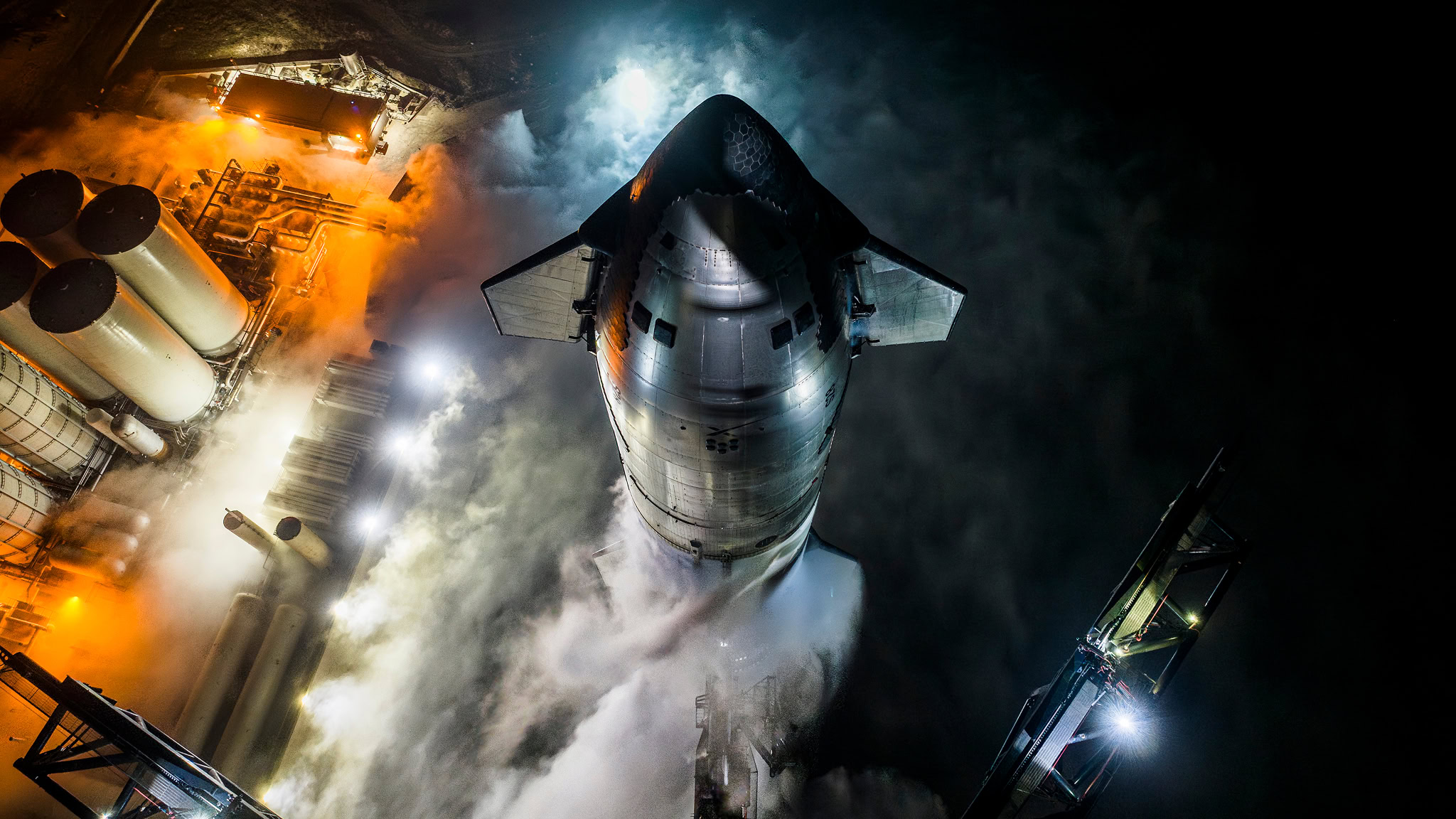
You simply cannot build the world's most powerful rocket without breaking a few along the way. Throughout 2023 to 2025, SpaceX’s Starship flight campaign did exactly that, intentionally pushing massive vehicles to their absolute limits to expose hidden flaws and refine the technology for the future.
Block 1: The Early Crucible and Finding the Balance
The early era of Starship, known as Block 1 or Version 1, was defined by spectacular explosions and massive leaps in learning. Standing roughly 121 meters (397 feet) tall, these early vehicles proved the core concept of a fully reusable super-heavy lift rocket but faced severe growing pains.
The very first orbital attempt in April 2023 famously obliterated its launch pad, forcing SpaceX to completely redesign the ground infrastructure with a massive water deluge system. By Flight 4 in mid-2024, SpaceX had solved the pad issues and mastered the delicate "hot-staging" separation technique. They finally guided both the booster and the upper stage ship to controlled, albeit fiery, splashdowns in the ocean.

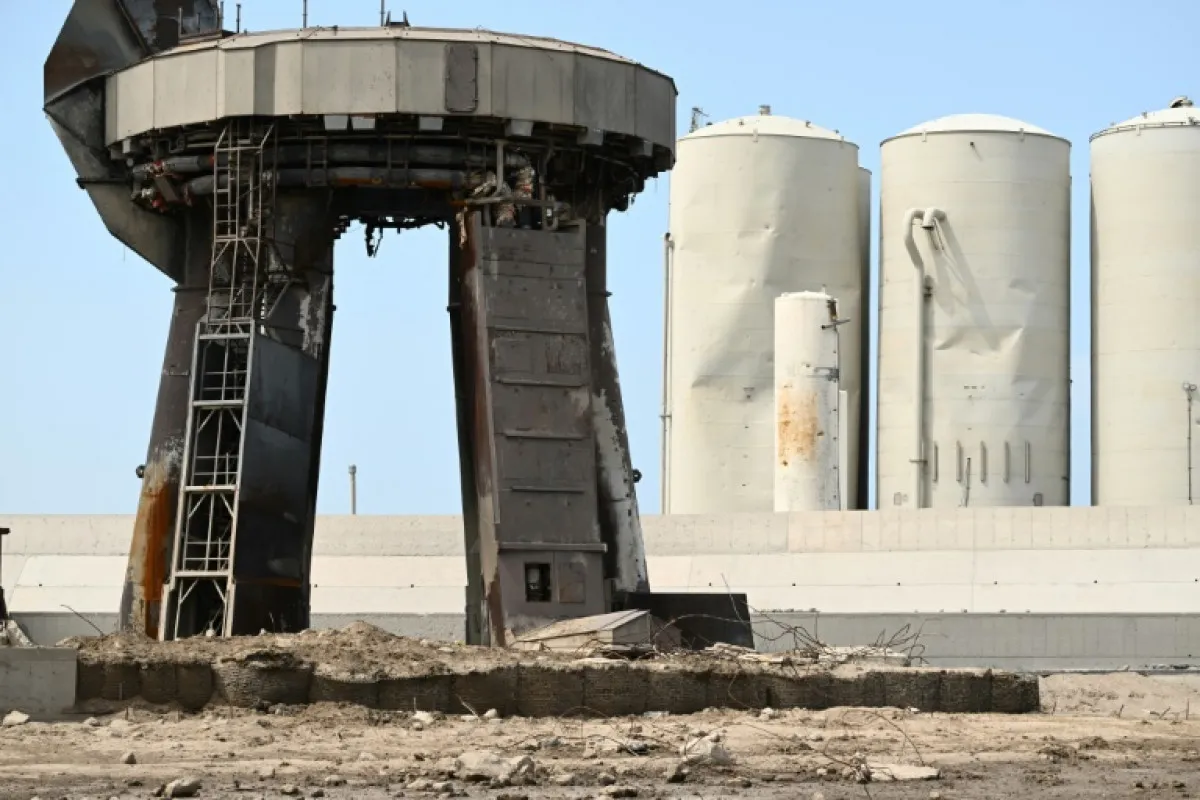
A photo from April 22, 2023 showing the damage to the area around the launch pad.
However, Block 1 highlighted critical weaknesses. The ceramic heat shield tiles were incredibly fragile and prone to cracking. Furthermore, the giant steering flaps on the ship suffered extreme plasma burn during re-entry because their hinges were directly exposed to the brutal friction of the atmosphere.

The Breakthrough of Flight 5
If there is a single mission that changed the trajectory of the Starship program, it was Flight 5 in late 2024. While previous flights focused purely on surviving the journey to space and back, Flight 5 introduced an entirely new paradigm in rocket recovery.

Instead of landing in the ocean or touching down on traditional landing legs, the massive Super Heavy booster returned to the launch site in Texas. Hovering precisely next to the launch tower, it was caught mid-air by the tower's giant mechanical arms, affectionately dubbed "Mechazilla" by the engineering team.
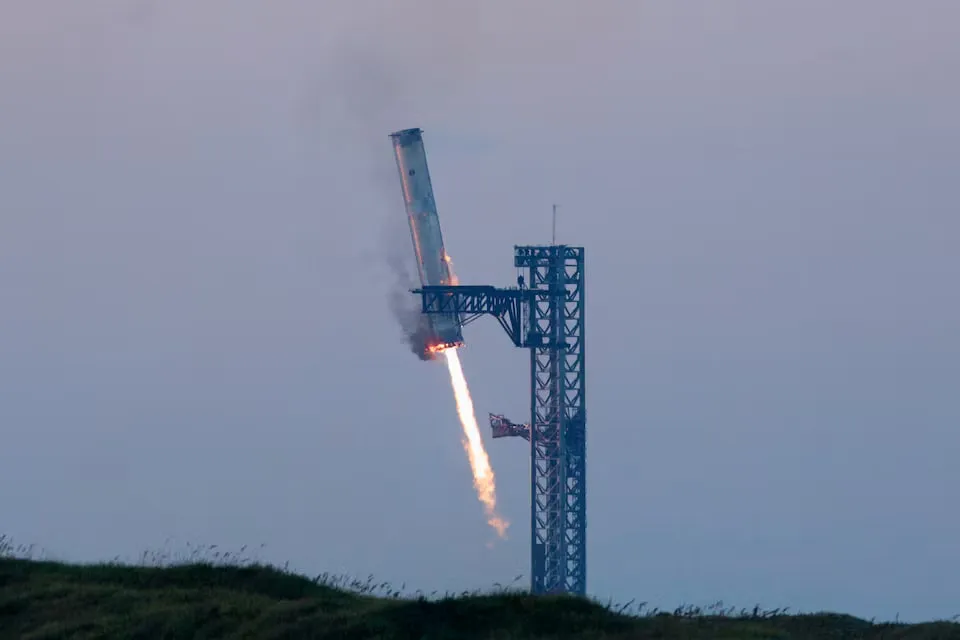
SpaceX's Super Heavy booster lands during SpaceX Starship's fifth flight test, in Boca Chica, Texas, U.S., October 13, 2024. (REUTERS/Kaylee Greenlee Bea )
This breathtaking maneuver proved that rapid reuse of a super-heavy lift rocket was not just science fiction but an achievable reality. Catching the booster directly on the launch mount means it can be inspected, refueled, and theoretically flown again in a matter of days rather than months. Flight 6 followed shortly after, pushing the limits of the vehicle's thermal protection system, demonstrating in-space engine relights, and officially closing out the Block 1 era.
Block 2: Toughening the Armor
Before introducing the towering Version 3 (V3) upgrades, SpaceX needed to prove the fundamental physics of launching, catching, and landing the existing Block 2 vehicles. This sequence of five flights (Flights 7 through 11) was characterized by aggressive envelope expansion, demonstrating the viability of SpaceX's mechanical launch tower catch mechanism while dramatically exposing critical vulnerabilities in unshielded propulsion bays and pressurization systems.


Flight Test 7: The Block 2 Debut and Structural Vibrations
Launching on January 16, 2025, Flight 7 kicked off the campaign with a mix of triumph and destruction. The mission's primary success lay in executing the second-ever successful launch tower catch of a Super Heavy booster. However, the mission ended in a catastrophic failure for the upper stage. Before the Starship could complete its ascent, strong, unanticipated mechanical vibrations resonated throughout the hull. These vibrations shattered hardware within the propulsion system, sparking a massive fire and triggering a Rapid Unscheduled Disassembly (RUD), the aerospace industry's polite term for a mid-air explosion. Engineers swiftly implemented 11 distinct corrective actions to dampen these vibrations prior to the next flight.
Flight Test 8: Pre-Launch Hurdles and Engine Bay Anomalies
Flight 8 lifted off on March 6, 2025, and continued the trend of hard-won lessons. The vehicle successfully passed through Max Q, the moment during ascent when the rocket faces the absolute highest level of physical and aerodynamic stress from the atmosphere. While the booster was successfully caught by the tower's chopstick arms, its return was sloppy, with several engines failing to relight.
The upper stage, however, met a fiery end. At just eight minutes into the flight, a hardware fatigue failure in a sea-level Raptor engine allowed liquid oxygen and methane to mix and ignite within the unshielded engine bay. The resulting fire severed the vehicle's telemetry, causing an uncontrolled spin that activated the automated Flight Termination System (FTS), blowing the ship to pieces over the Atlantic Ocean.
Flight Test 9: Booster Reflight and Pressurization Failures
Conducted on May 27, 2025, Flight 9 marked a profound milestone in aerospace history: the very first reflight of a Super Heavy booster. To push the envelope, SpaceX intentionally flew the booster back through the atmosphere at a much higher angle of attack to maximize aerodynamic drag and save on landing fuel. Unfortunately, the booster suffered a rapid disassembly during its landing relight sequence in the Gulf of Mexico.
The upper stage achieved orbit, but a massive methane leak developed within its autogenous pressurization system. Autogenous pressurization is a clever system that uses the rocket's own heated, expanding fuel gases to keep the liquid propellant tanks perfectly pressurized as they empty out. The leak caused a total loss of steering control, resulting in the crippled vehicle tumbling and disintegrating during reentry.

Flights 10 and 11: Turning the Tide
By Flight 10 (August 2025), the campaign found its footing. Despite suffering an engine compartment explosion caused by blocked chill lines during reentry, the ship maintained enough aerodynamic authority to execute its landing flip and splash down exactly on target in the Indian Ocean.
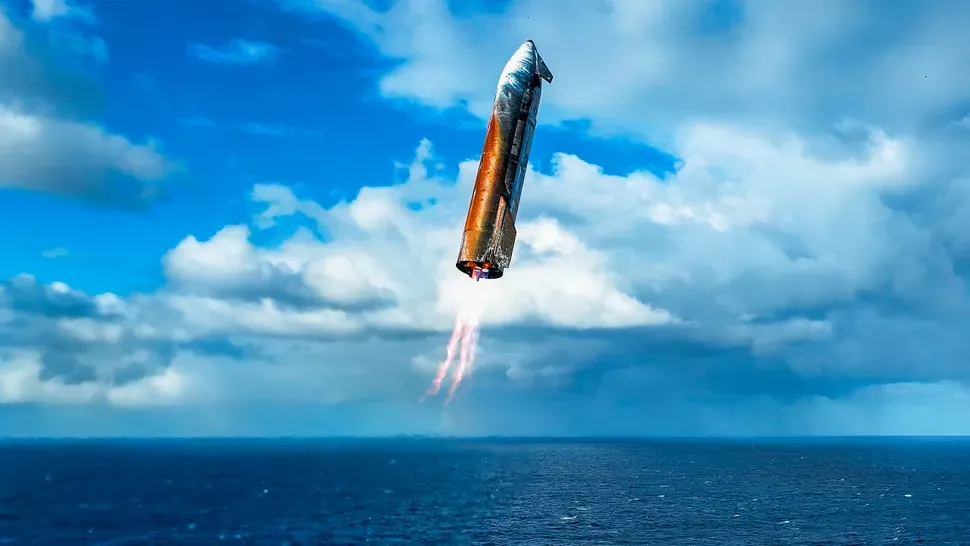
SpaceX's Ship upper stage comes down for a splashdown in the Indian Ocean to wrap up Starship's successful Flight 10 test on Aug. 26, 2025. (Image credit: SpaceX)
Flight 11 (October 2025) served as the grand finale of the Block 2 architecture. The upper stage seamlessly deployed 16,000 kg [35,274 lb] of dummy satellites and performed a successful in-space engine relight. Both the ship and the booster successfully completed their flight profiles, executing highly controlled splashdowns in their respective maritime target zones.
The successful conclusion of Flight 11 formally closed out the Block 2 era. By relentlessly pushing the hardware to the point of failure, SpaceX gathered the vital thermodynamic and aerodynamic data needed to validate the massive architectural leaps of Block 3.