

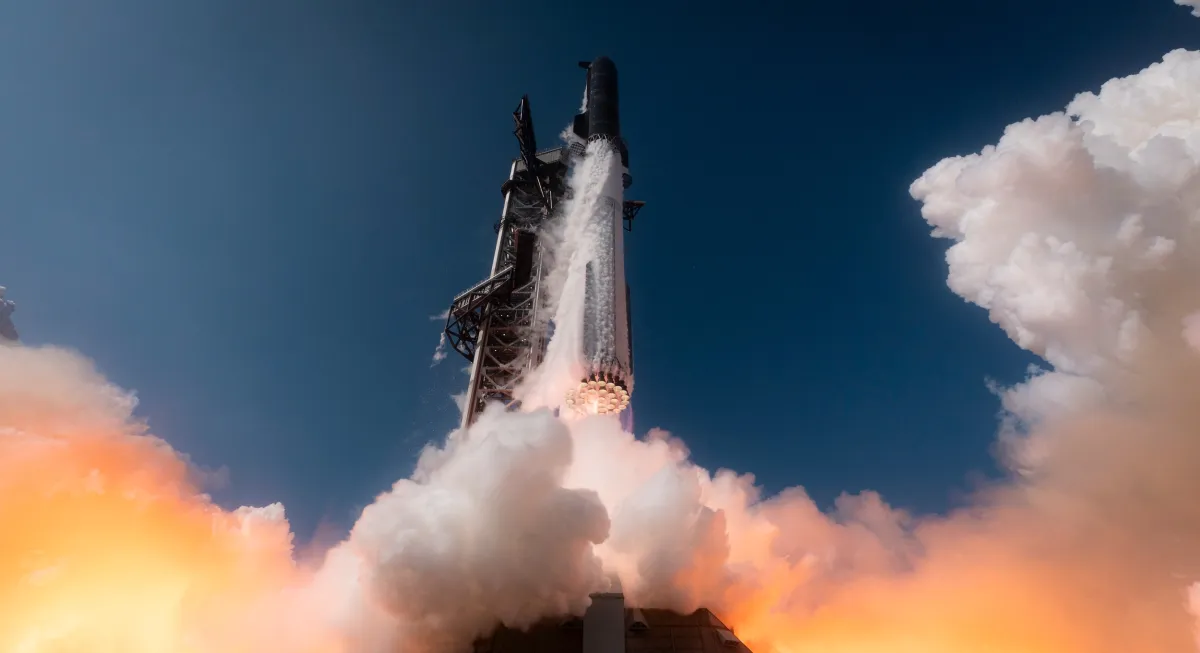
SpaceX's next-generation Starship V3 rocket got off to a glorious start for its first test flight on May 22, 2026. Although the massive vehicle encountered a few snags and not all of its engines fired exactly to plan, SpaceX CEO Elon Musk celebrated the mission, stating it "scored a goal for humanity" by proving the fault tolerance of the new architecture.
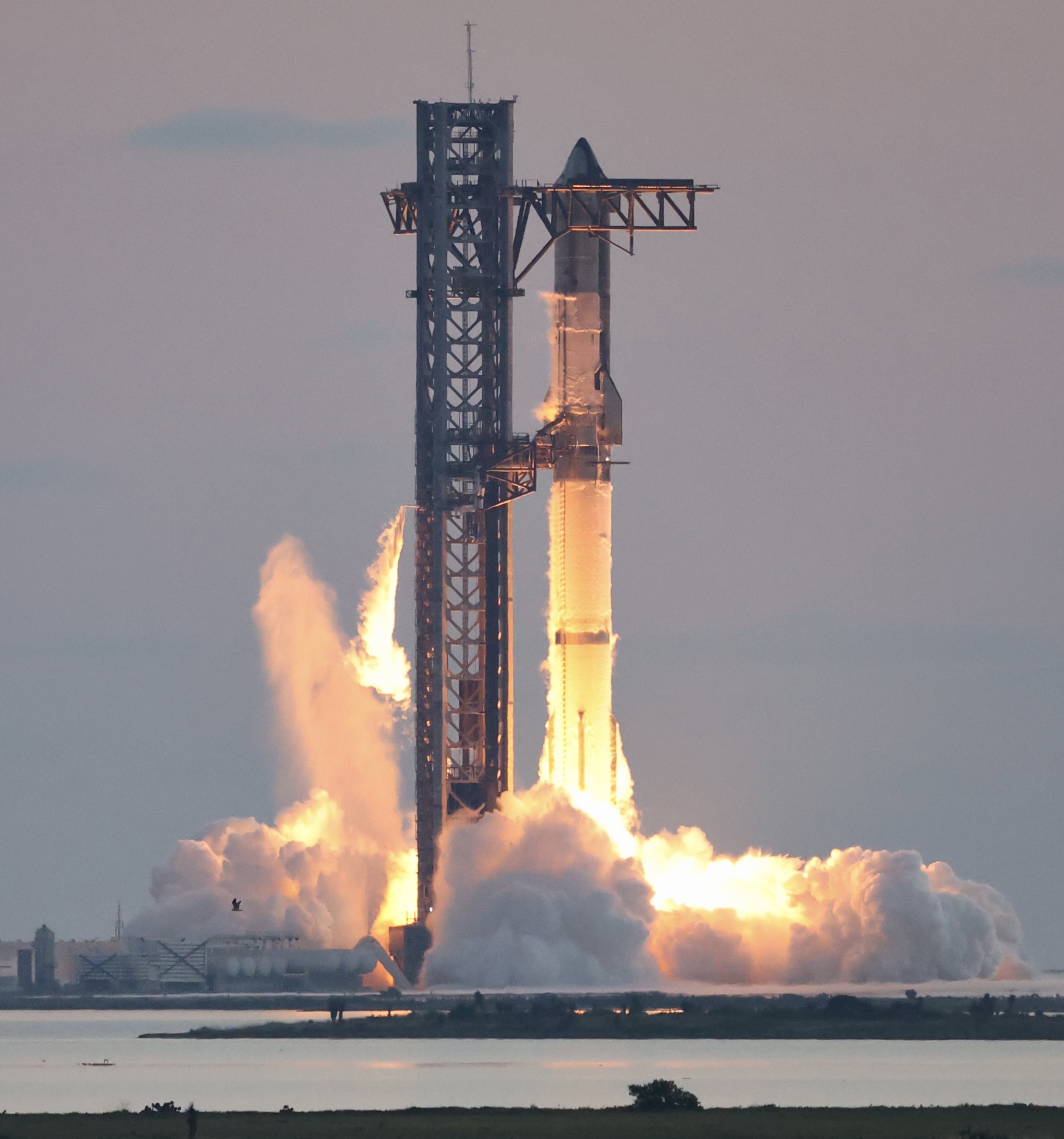
Following a fiery and highly educational testing campaign throughout 2025, SpaceX transitioned its towering rocket to the eagerly anticipated Version 3 (V3) design. Standing 124.4 meters [408 ft] tall and launching from a brand-new pad at Starbase in South Texas, Flight 12 represented a radical leap in propulsive power, structural payload capability, and internal systems integration.
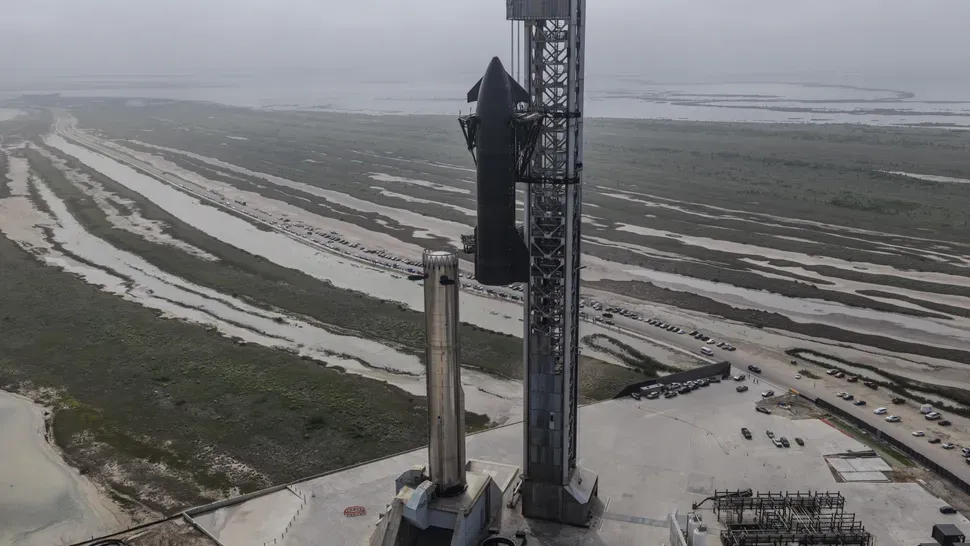
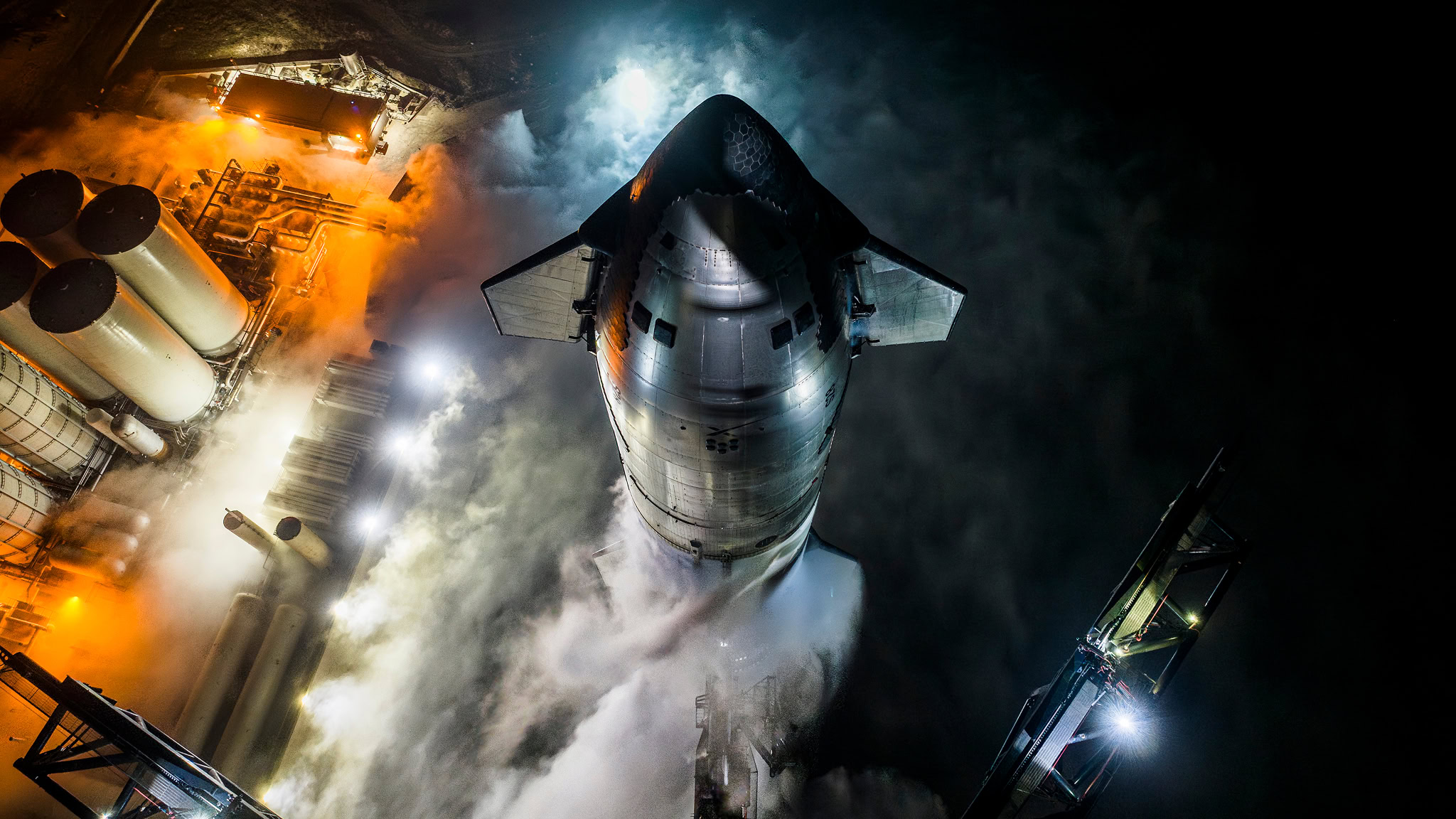
SpaceX raises Ship 39 onto its Super Heavy booster ahead of the Flight 12 test launch and debut of Starship V3. (Image credit: SpaceX)
To appreciate the scale of Flight 12, one must look at the immense physical changes inside the rocket. The V3 architecture eliminated the heavy, complex carbon dioxide fire suppression systems entirely. Instead, the vehicle leans on the vastly improved reliability of the stripped-down Raptor 3 engines.
Ascent Profile and the Booster Dynamics
The immense power of the 33 newly integrated Raptor 3 engines was immediately apparent at liftoff. Producing nearly 9% more total thrust than previous iterations, the vehicle accelerated off the pad with unprecedented ferocity. It reached Max Q, the point of maximum aerodynamic stress, at just 45 seconds. This was a full 17 seconds earlier than older models.
Stage separation was executed flawlessly using the new integrated hot-staging ring. However, the Super Heavy booster encountered a critical fluid-dynamics anomaly during its return profile. Detailed analyses from aerospace commentators indicated that the booster executed a "fatal flip" by rotating too aggressively on its pitch axis.
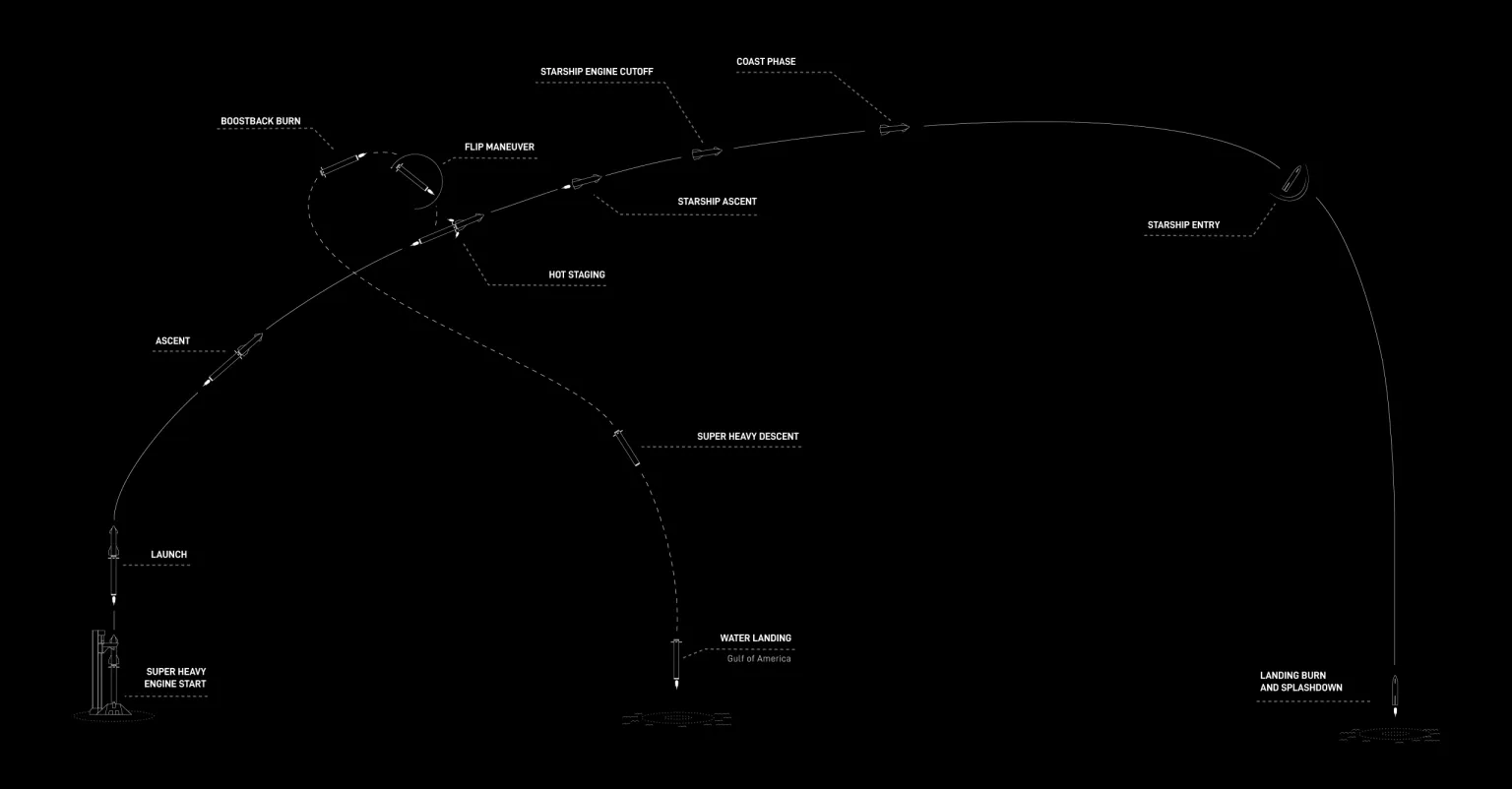

Starship flight 12 profile. Credit: Spacex
This violent rotation induced severe "propellant slosh." Imagine carrying a wide, shallow bowl of water and turning around too quickly; the water surges to one side. Inside the massive, mostly empty fuel tanks, the sloshing liquid methane and oxygen shifted away from the intake manifolds. This starved the engines of fuel and caused them to shut down prematurely. Unable to control its descent, the booster tumbled through the atmosphere to an uncontrolled but safe splashdown in the Gulf of Mexico. Because SpaceX had not planned to recover the booster with the launch tower on this specific test, the loss of the vehicle was expected.
Upper Stage Operations and Payload Deployment
Despite the violent demise of the booster, the Ship 39 upper stage successfully reached its target trajectory. During ascent, one of the three vacuum-optimized engines suffered a premature shutdown, accompanied by a visible propellant leak.
However, the vehicle's automated flight computer successfully demonstrated its "engine-out capability." The rocket's brain instantly recognized the dead engine and dynamically swiveled the remaining active engines to balance the thrust and keep the ship on course. SpaceX commentator Dan Huot noted during the broadcast that while it was not a perfectly nominal orbital insertion, the ship's trajectory was safely within bounds.
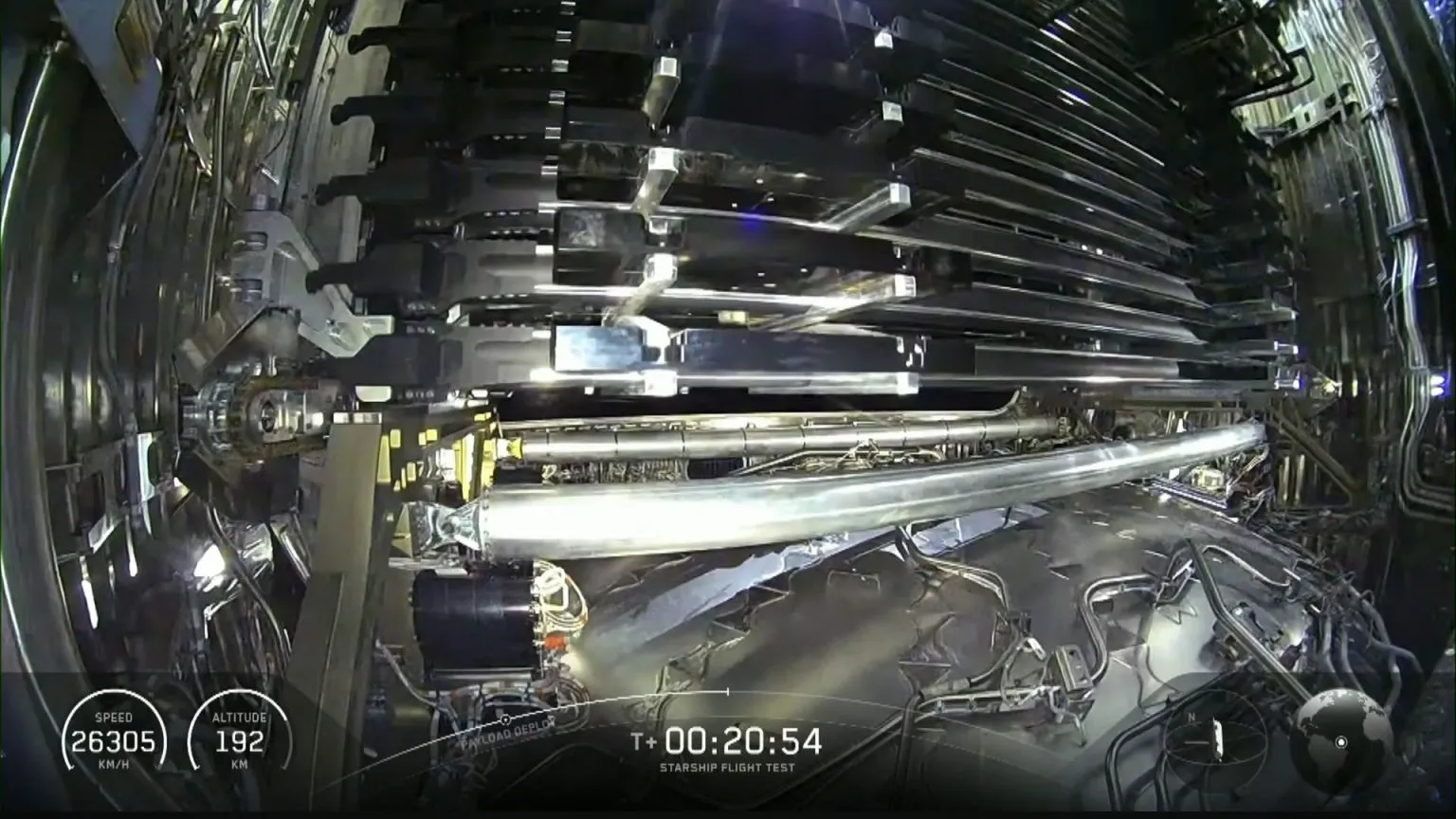
The “Pez Dispener” deploying the Starlink simulator payloads. (Credit: SpaceX)

During the orbital coast phase, SpaceX had to pass up an opportunity to try relighting one of the engines in space. It was, however, able to follow through with the deployment of 20 satellite simulators, plus two "Dodger Dog" satellites that were modified to test new technologies for SpaceX's Starlink V3 satellites. These payloads totaled approximately 44 metric tons [97,000 lb].
As the modified satellites drifted away, one of them captured live, high-definition video of the Starship's heat shield and beamed the footage back to Earth via the Starlink constellation. This was an intentional diagnostic test. Engineers had purposefully painted several tiles white and removed others to evaluate the optical system's ability to detect localized heat shield damage prior to atmospheric reentry. Huot mentioned on the broadcast that this video monitoring procedure would come in handy for making in-space inspections, adding that it is a capability they have been chasing for a while.
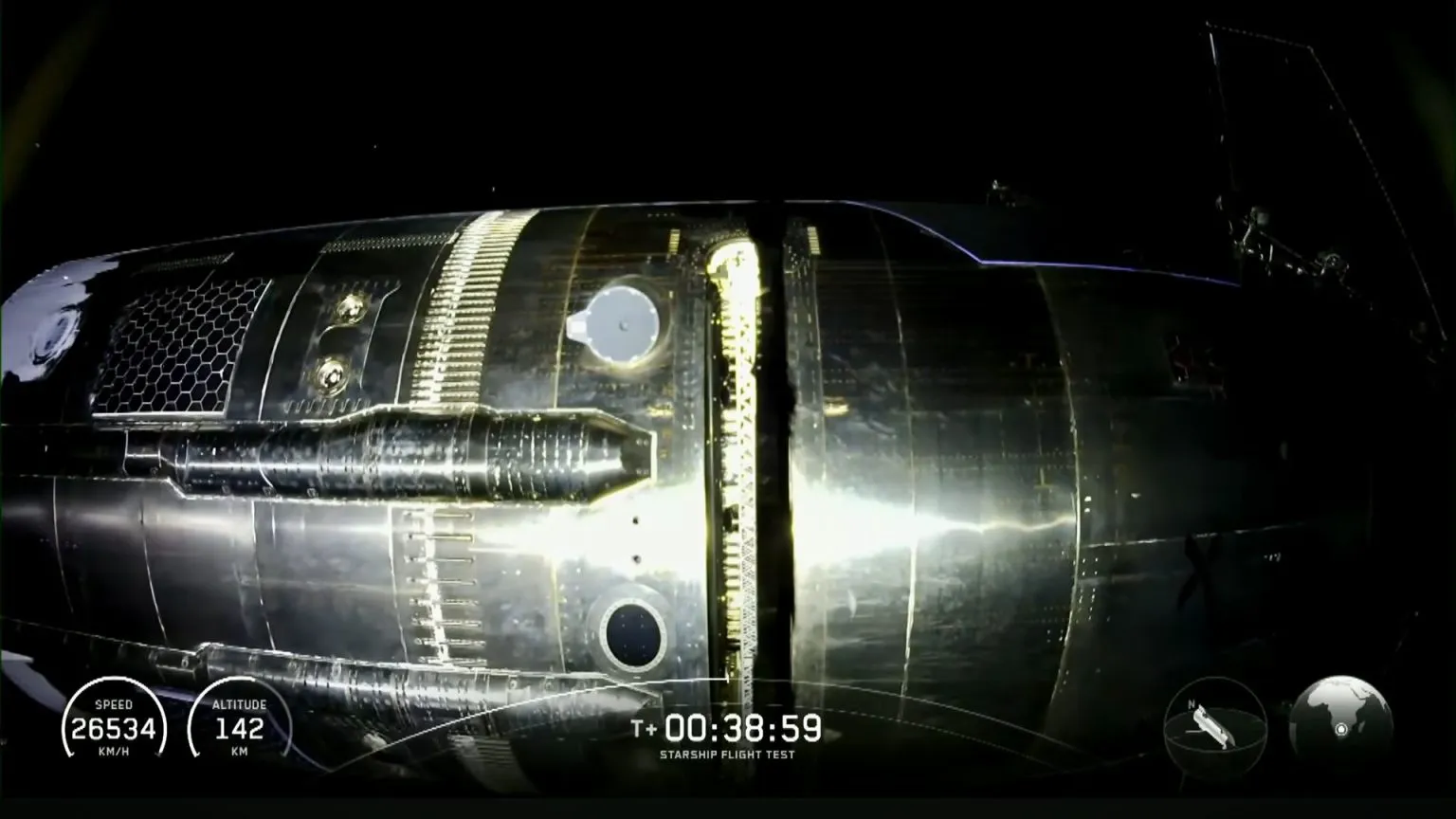
This view of Starship 39 was captured by the “Dodger Dog” Starlink simulator. The slot is the “Pez Dispenser” opening. (Credit: SpaceX)

Reentry Dynamics and Splashdown
Following payload deployment, Ship 39 initiated a fiery, high-stress atmospheric reentry over the Indian Ocean. The vehicle gathered invaluable data on plasma loading, which is the searing heat generated by friction as the ship slams into the dense atmosphere at orbital speeds. It also performed a dynamic banking maneuver to intentionally stress the structural limits of the new single-actuator rear flaps.
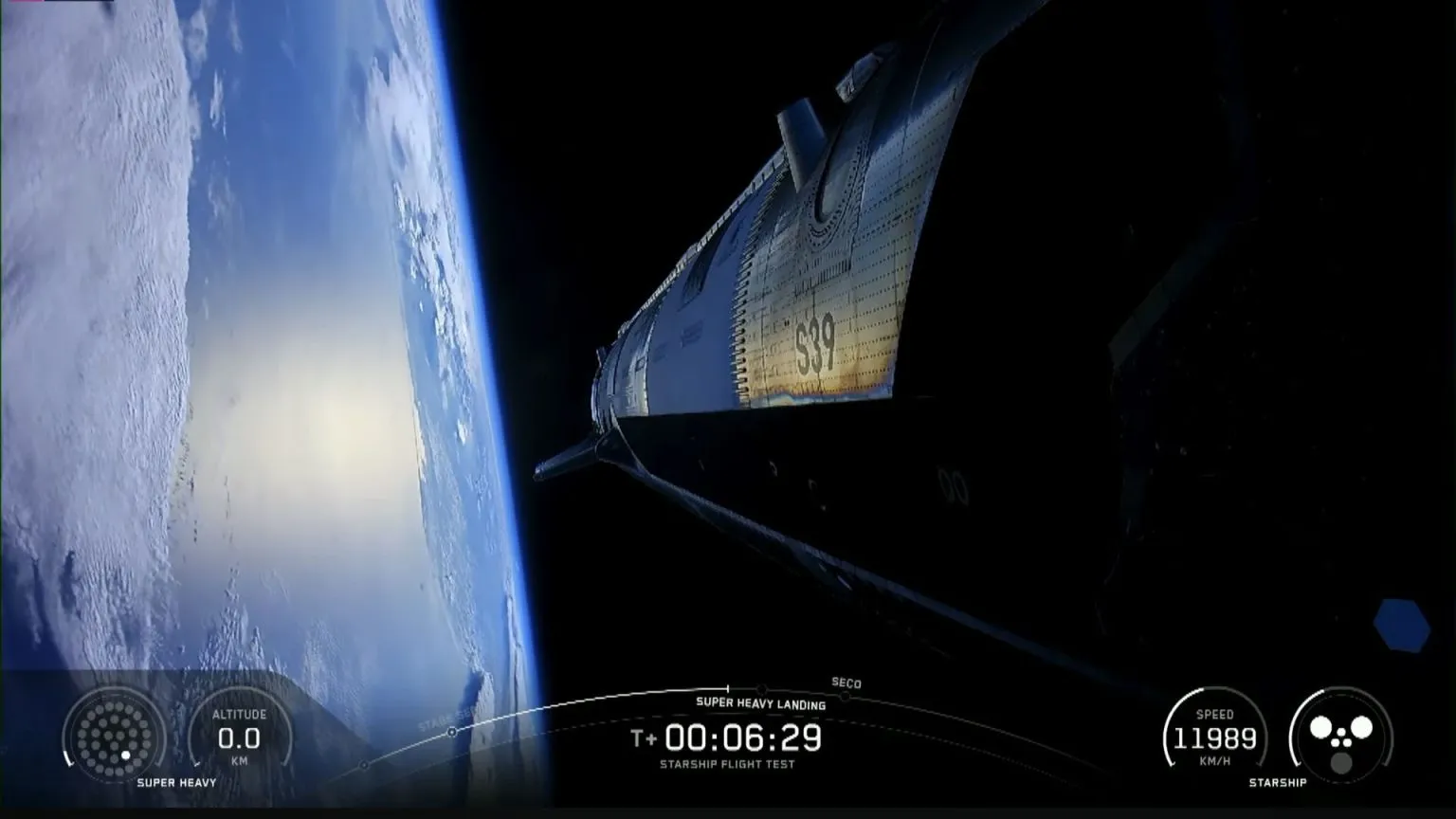
Starship 39 provides grand views of the Earth as it gets into space. Note the loss of one engine in the indicator at lower right, but Starship is designed for one engine-out capability. (Credit: SpaceX)
The final terminal landing maneuver, however, proved highly erratic. The ship executed its vertical landing flip and successfully ignited two engines, but severe aerodynamic instability forced the 50-meter-tall [164 ft] cylinder into a wild 270-degree roll just moments before a hard splashdown and explosion. Independent analysts described the final landing burn as marginally controlled and highly sketchy.
Despite the rough landing and the booster anomaly, Flight 12's primary objectives of validating V3 reentry survival, engine-out compensation, and heavy payload deployment were unequivocally achieved.
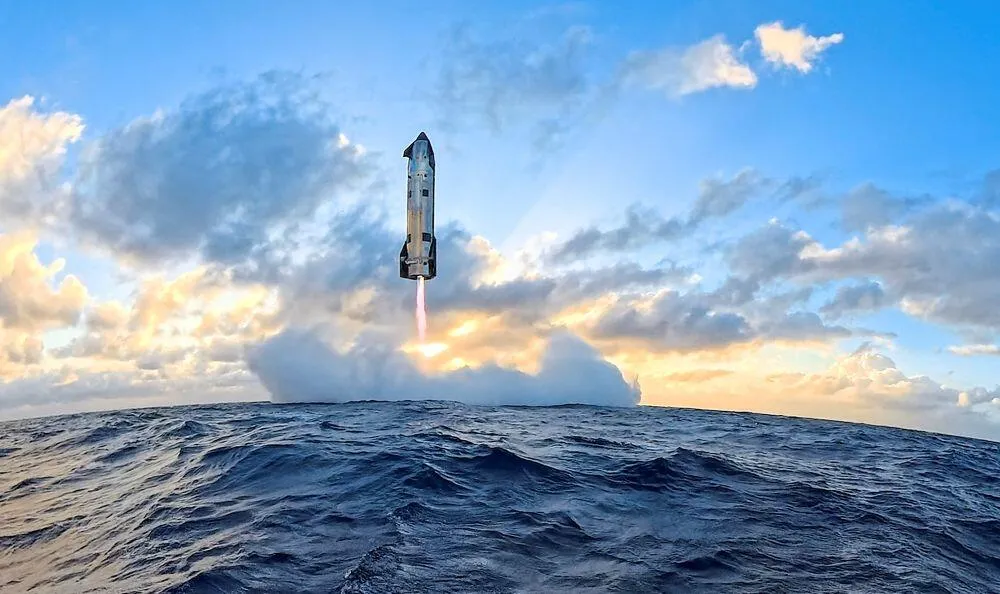
Starship V3 Ship 39 splashing down at the Indian Ocean (Credit: SpaceX)
FAA Mishap Investigation and Fleet Grounding
While SpaceX celebrated the successful orbital insertion, the hard landing of the booster triggered swift regulatory action. On May 27, 2026, the Federal Aviation Administration (FAA) officially classified the launch as a mishap due to the off-nominal performance of the Super Heavy booster during its flyback. The FAA has now grounded the Starship fleet and is requiring SpaceX to conduct a formal mishap investigation before the resumption of any Starship launches.
While there were no reports of public injury or property damage, the FAA stated it will oversee the SpaceX-led investigation, be involved in every step of the process, and must approve the final report and any corrective actions before the massive rocket is cleared to fly again.
Looking Ahead: Orbital Refueling and Artemis
With the V3 architecture now proven in flight, SpaceX is shifting its focus toward the ultimate prize: the Moon. Starship is slated to serve as the Human Landing System (HLS) for NASA's revised Artemis III mission in 2027, which will feature a complex docking test in low Earth orbit between the Orion spacecraft and the Starship lunar lander.

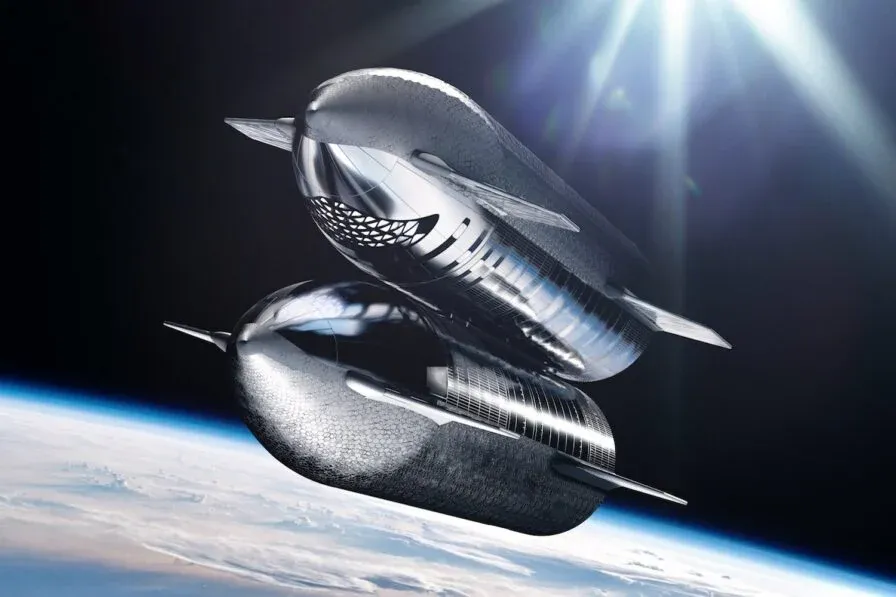
An illustration of two Starship spacecraft docked to one another in orbit. SpaceX
To make that lunar dream a reality, the next major hurdle is proving that the vehicle can be refueled in space. Looking ahead to late 2026, SpaceX is gearing up for a monumental orbital propellant transfer demonstration. This will involve launching two V3 Starships in rapid succession, docking them in orbit, and transferring super-chilled cryogenic fuels between them using pressure differentials. Mastering this complex orbital choreography is the final, critical puzzle piece required before Starship can leave Earth's orbit and return humanity to the lunar surface. However, this ambitious timeline now hinges on the swift resolution of the FAA's ongoing mishap investigation.