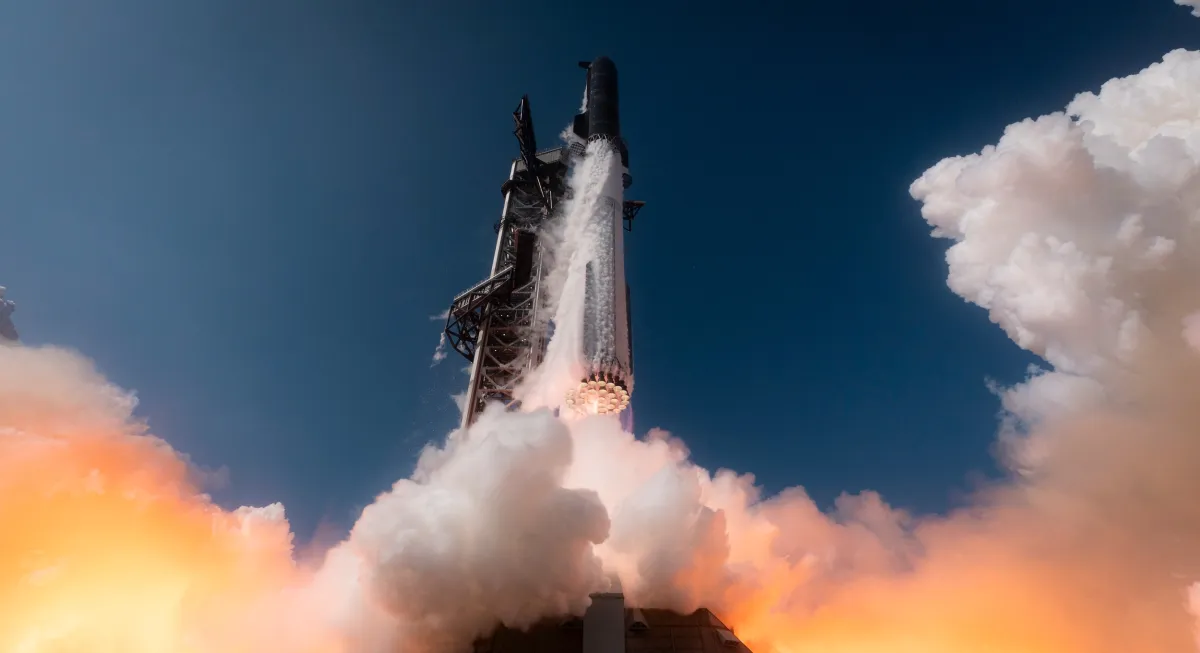


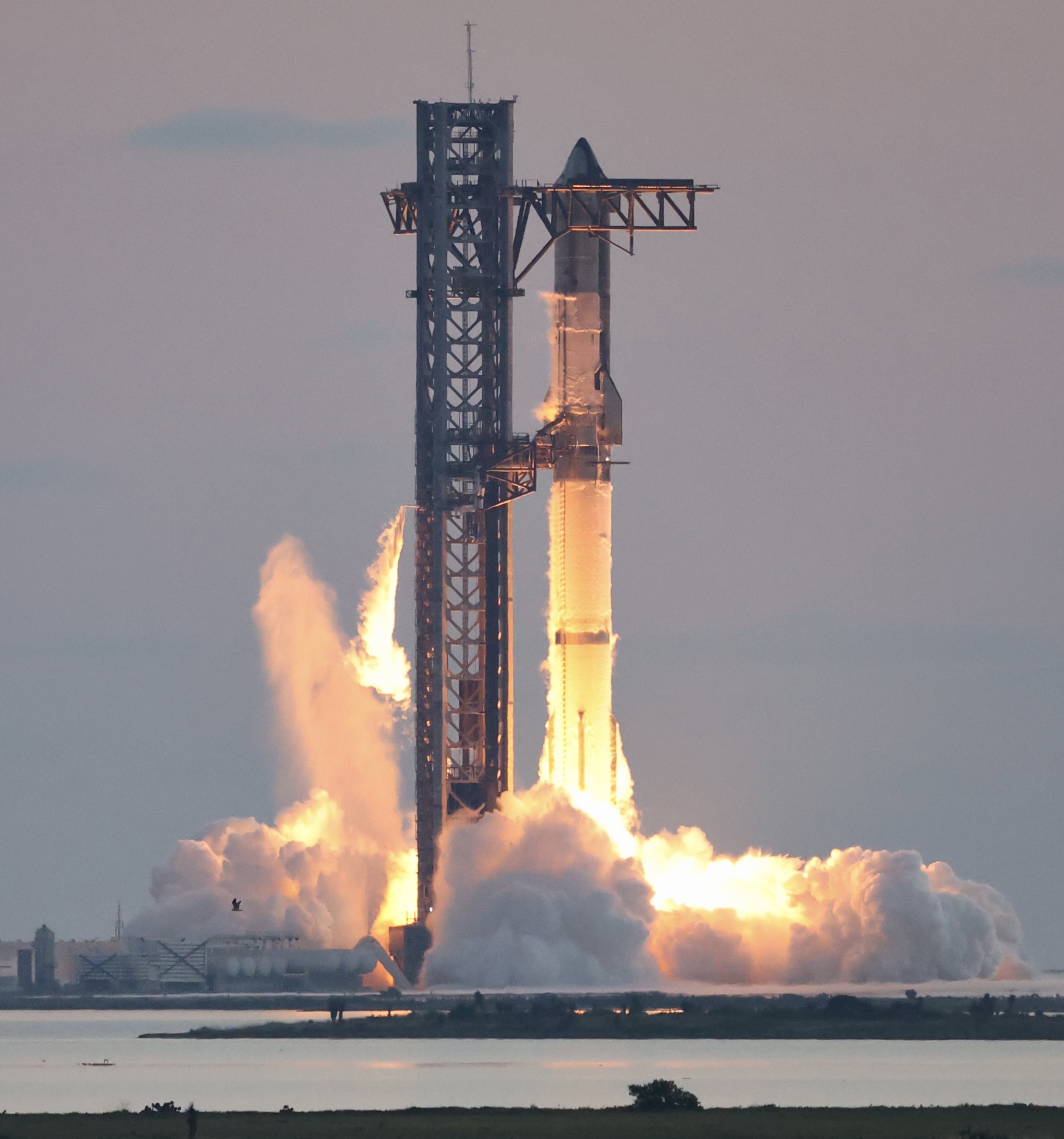
The aerospace industry is watching closely as SpaceX completely rewrites the rulebook for how rockets are designed, built, and flown. The development of the Starship launch architecture represents one of the most complex and ambitious engineering programs in the history of spaceflight. Conceived as a fully reusable, two-stage super heavy-lift launch vehicle, the Starship system is explicitly designed to fundamentally alter the economics of space access. By leveraging mass manufacturing and rapid reusability, the architecture aims to achieve unprecedented payload capacities to low Earth orbit (LEO), enable the deployment of massive orbital mega-constellations, and serve as the primary transportation infrastructure for crewed missions to the Moon and Mars.
Every great leap in aerospace begins with a philosophy. For SpaceX, that philosophy is unapologetically bold: build it, fly it, break it, and build it better. This hardware-rich, iterative approach allows engineers to learn from spectacular real-world failures rather than relying solely on cautious computer models. Historically, rockets were built with extreme precision over decades, designed to be expended and dropped into the ocean after a single use. Starship flips this paradigm. By building out of relatively inexpensive stainless steel rather than costly carbon composites, SpaceX can mass-produce vehicles and test them to their absolute limits.
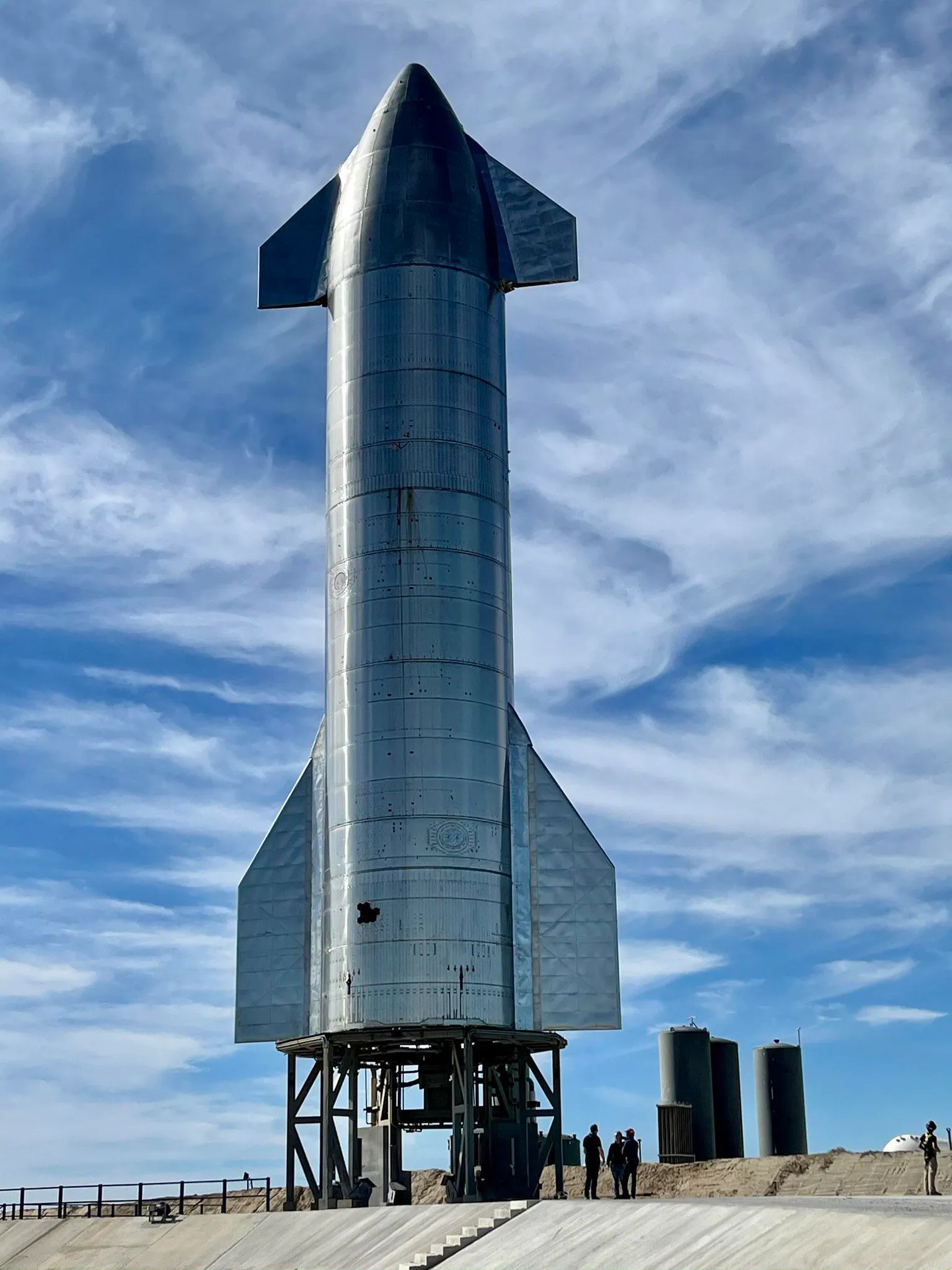
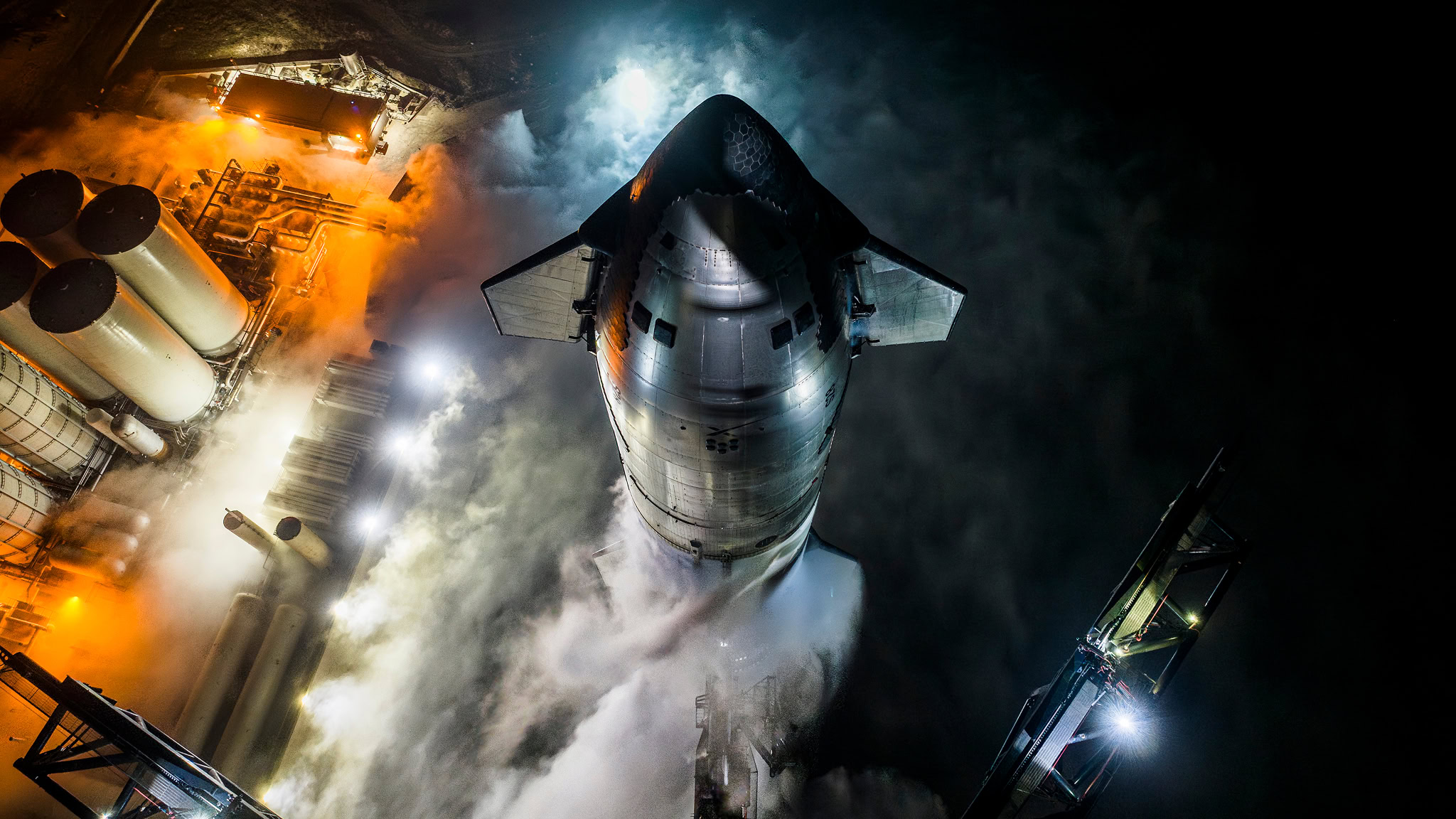
Starship SN8 on the pad (credit: SpaceX)
The physical envelope of the Starship system (comprising the Super Heavy booster and the Starship upper stage) has expanded steadily across its developmental blocks. This expansion is driven by the necessity to accommodate increasingly larger propellant loads without compromising aerodynamic stability during the intense heat of hypersonic reentry, the perilous phase where the ship slams back into the Earth's atmosphere at thousands of miles per hour.
Starship Vehicle Versions:
- Block 1 (V1): Overall Height: 121.3 m [398 ft] | LEO Payload Capacity: 15 t [33,000 lb] | Development Status: Retired
- Block 2 (V2): Overall Height: 123.1 m [404 ft] | LEO Payload Capacity: 35 t [77,000 lb] | Development Status: Retired
- Block 3 (V3): Overall Height: 124.4 m [408 ft] | LEO Payload Capacity: 100 t [220,000 lb] | Development Status: Active
- Block 4 (V4): Overall Height: 142.0 m [466 ft] | LEO Payload Capacity: 200 t [440,000 lb] | Development Status: In Development
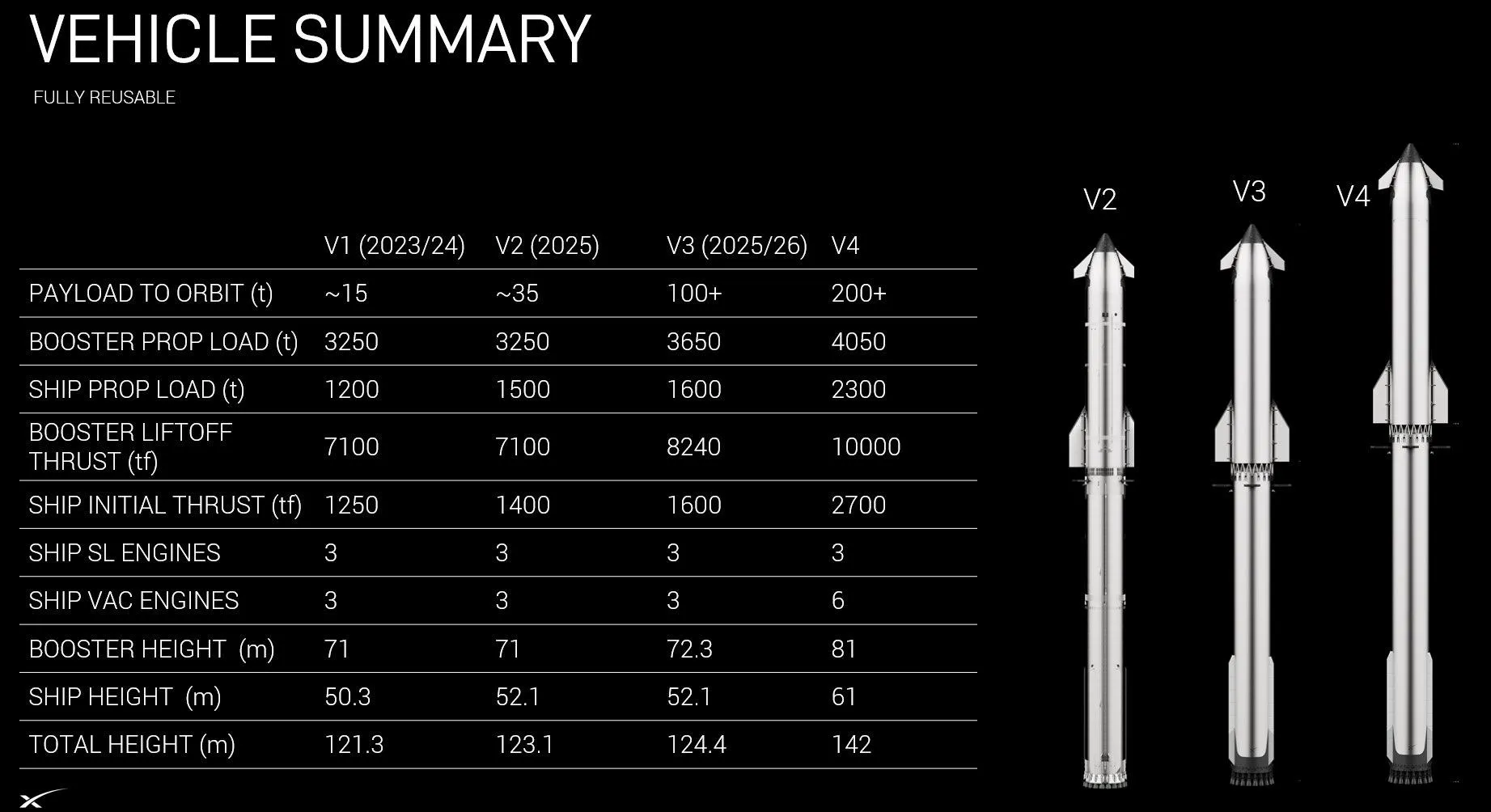
Starship V1 - V4 specs (credit: SpaceX)

The program recently transitioned from its Block 2 developmental phase into the highly anticipated Block 3 (also referred to as Version 3 or V3) architecture, which debuted on Flight 12 in May 2026. This transition involved fundamentally optimizing the geometry of the propellant tanks to expand fuel capacity to a staggering 1,600 metric tons [3.52 million lb].
Crucial structural modifications have been implemented in the Super Heavy V3 booster to mitigate the extreme thermal and acoustic stresses of launch. The number of aerodynamic grid fins, the waffle-like structures that steer the booster as it falls back to Earth, has been reduced from four to three. However, these remaining fins are now 50% larger, heavily reinforced, and engineered to include integrated load-bearing catch points for the launch tower. Furthermore, their actuating shafts have been relocated inside the main methane fuel tank to protect them from the extreme heat of "hot-staging", a complex maneuver where the upper stage engines ignite while still attached to the booster, allowing the rocket to maintain upward momentum during separation.
Propulsion Systems and the Raptor Engine Lineage
The beating heart of the entire Starship architecture is the Raptor engine. The Raptor utilizes a Full-Flow Staged Combustion (FFSC) cycle. In simple terms, most traditional rockets waste a small amount of fuel to power their internal pumps. An FFSC engine, however, converts all of its liquid propellants into a high-pressure hot gas before they enter the main combustion chamber. This state change eliminates waste exhaust, allowing for extraordinarily high chamber pressures and maximum thermodynamic efficiency.

Raptor Engine Lineage Specifications:
- Raptor 1: Thrust (Sea Level): 185 tf [408,000 lbf] | Specific Impulse (SL): ~320 seconds | Engine Mass: ~2,000 kg [4,409 lb] | Chamber Pressure: 270 bar [3,916 psi] | Thrust-to-Weight Ratio: 88.9
- Raptor 2: Thrust (Sea Level): 230 tf [507,000 lbf] | Specific Impulse (SL): ~327 seconds | Engine Mass: ~1,600 kg [3,527 lb] | Chamber Pressure: 300 bar [4,351 psi] | Thrust-to-Weight Ratio: 141.1
- Raptor 3: Thrust (Sea Level): 280 tf [617,000 lbf] | Specific Impulse (SL): ~350 seconds | Engine Mass: 1,525 kg [3,362 lb] | Chamber Pressure: 350 bar [5,076 psi] | Thrust-to-Weight Ratio: 183.6
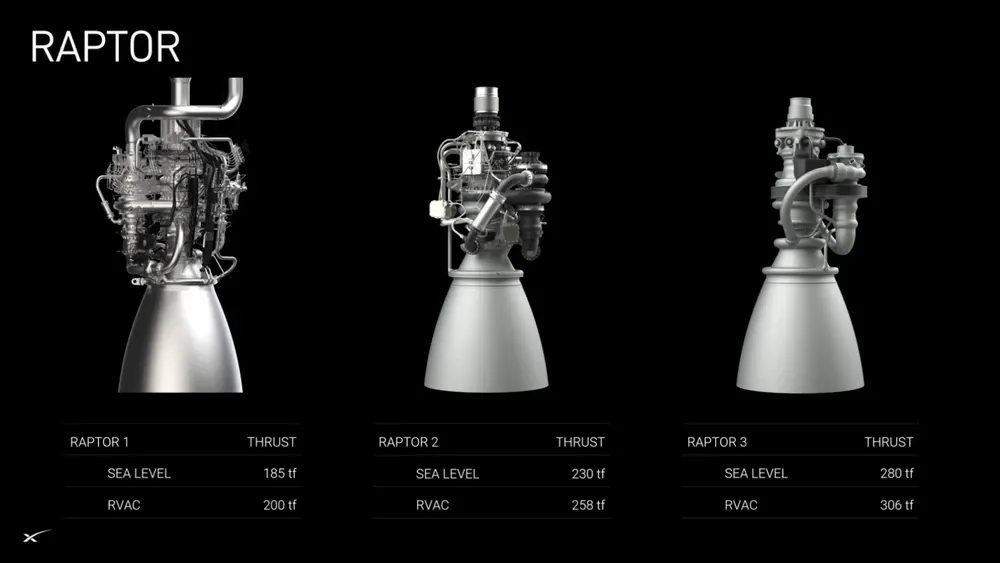
Raptor engines Variants (credit: SpaceX)

The evolution of the Raptor highlights a continuous drive toward higher thrust and reduced physical mass. The new Raptor 3 engine recently achieved a record-breaking chamber pressure of 350 bar [5,076 psi], producing 280 metric tons of force [617,000 lbf] while shrinking its physical mass down to just 1,525 kg [3,362 lb]. It also boasts an impressive Specific Impulse (ISP) of up to 350 seconds. ISP is a vital metric in rocket science that measures how efficiently an engine uses its fuel, much like the "miles-per-gallon" rating of a car. By integrating advanced sensors directly into the primary engine casting using 3D printing, engineers have completely stripped away the complex, messy external piping that characterized earlier versions.
As the vehicle's design and massive ground infrastructure rapidly mature at the Starbase facility in Texas, the true test of these engineering paradigms relies on exposing actual flight hardware to the violent physics of launch. This aggressive iteration forms the absolute bedrock of Starship's future success.